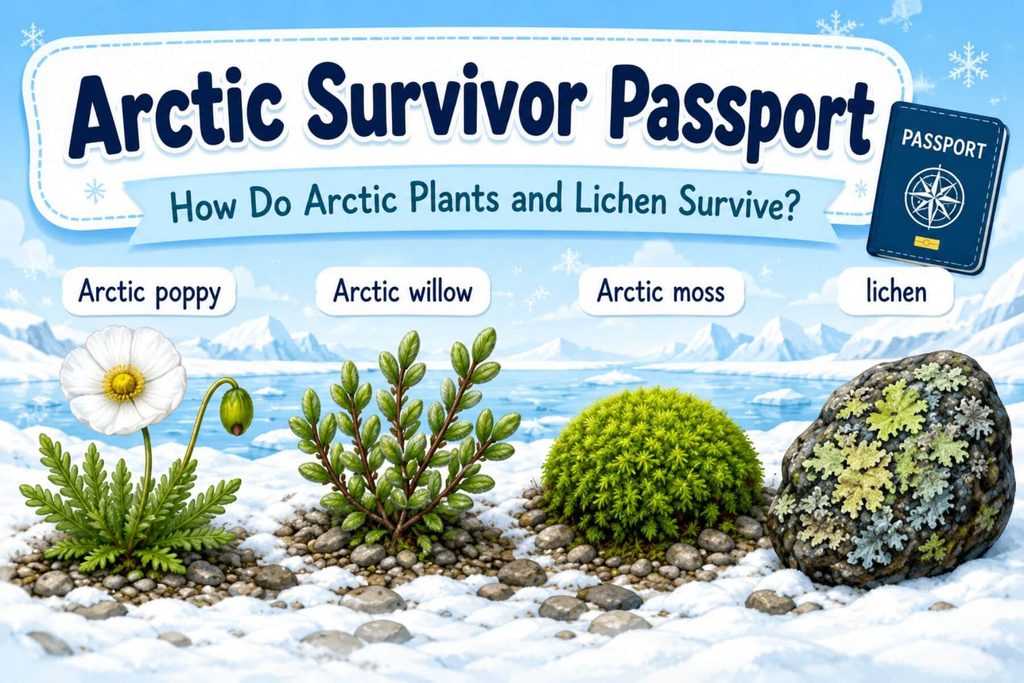
Arctic Survivor Passport
How can a delicate flower or a tiny patch of moss survive in the icy Arctic, where freezing winds howl for most of the year? For 2nd and 3rd graders, concepts like adaptation and extreme environments can feel a bit abstract.

How to Teach Marine Plant Life in Grades 2–3
Teaching primary students about polar ocean producers is a fantastic way to build foundational science concepts like photosynthesis, marine ecosystems, and producer-consumer relationships.

Learn About Arctic Tundra Plants Through Coloring
Help students in Grades 2–3 discover the iconic plants and lichens of the Arctic tundra through a creative and relaxing coloring activity.

How can I teach polar day and polar night to 2nd and 3rd graders?
For children, polar day and polar night can sound almost impossible. We are so used to the everyday pattern of morning, daytime, sunset, and night that the idea of weeks of daylight or darkness immediately sparks curiosity.

How to Teach Arctic Tundra Plants and Adaptations in Grades 2–3
Begin by introducing four important Arctic plants and producers: Arctic moss, lichen, Arctic poppy, and Arctic willow.
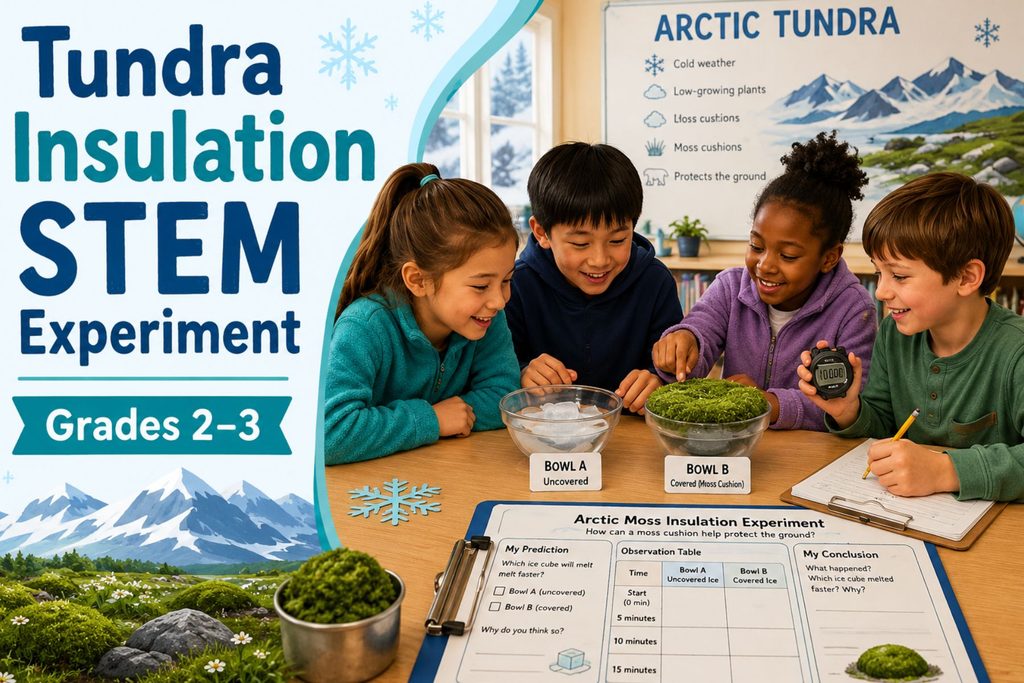
Tundra insulation STEM experiment
This tundra insulation STEM experiment helps students in Grades 2–3 investigate how insulating materials can protect living things from the cold Arctic environment.

Teaching Food Chains and Food Webs in Grades 2–3
The Polar Food Web Worksheets help students see how energy moves through an ecosystem.

Arctic Ecosystem Diorama Project for Grades 2–3
As students build their diorama, they add Arctic plants, lichens, ocean producers, and animals such as krill, fish, seals, and polar bears.

Penguin Adaptations for Kids: How Penguins Survive in Extreme Habitats
How can a bird survive freezing winds, dive hundreds of feet underwater, and swim faster than many other birds?
Penguins have some of the most fascinating animal adaptations on Earth.

Teaching Polar Animal Adaptations | NGSS Science Activities for Grades 3–4
Teach polar animal adaptations with engaging Grades 3–4 science activities. Explore fur, blubber, feathers, camouflage, movement, and NGSS structure and function.