How Can Line Tracing Help Prepare Preschoolers for Kindergarten?
Line tracing helps preschoolers strengthen fine motor skills, improve pencil control and hand-eye coordination, and prepare for writing letters and numbers.
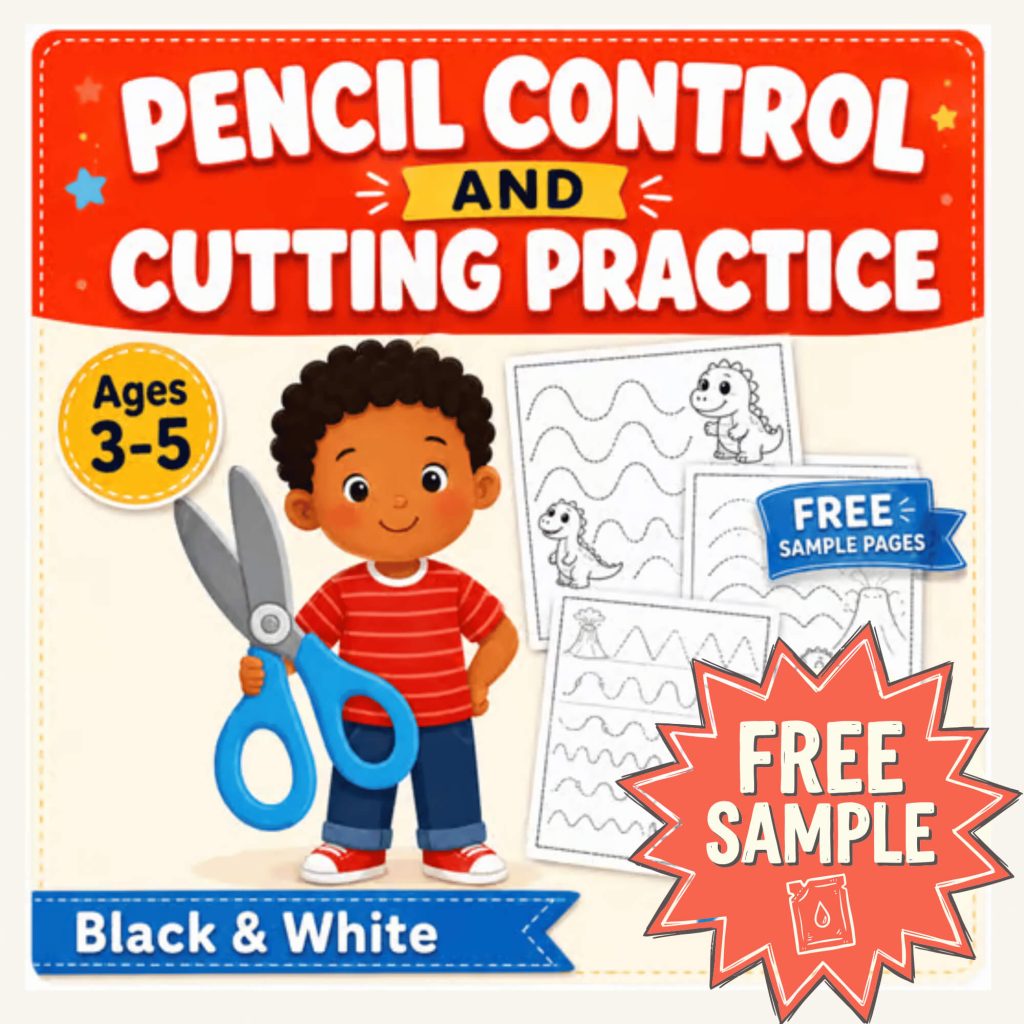
Back-to-School Line Tracing Activities for Preschool and Kindergarten
The beginning of a new school year is the perfect time to strengthen important fine motor and pre-writing skills. Simple line tracing activities help young learners practice pencil control, hand-eye coordination, and the small hand movements they will later need for handwriting.
Why Is Line Tracing Important?
Before children begin forming letters and numbers, they need plenty of opportunities to practice controlling a pencil. Early writing develops gradually through drawing, symbolic marks, letter-like forms, and eventually recognizable letters. The National Association for the Education of Young Children provides additional information about supporting emergent writing in preschool.Tracing straight, curved, wavy, and zig-zag lines helps children:
- develop stronger hand muscles;
- improve pencil grip and control;
- build hand-eye coordination;
- follow directions and visual paths;
- prepare for writing letters and numbers.
These activities are especially helpful for Preschool, PreK, and Kindergarten students who are just beginning their handwriting journey.
Easy Back-to-School Practice
Line tracing worksheets are easy to include in a daily classroom routine. They can be used for:
- morning work;
- fine motor centers;
- independent practice;
- early finishers;
- homeschool lessons;
- occupational therapy activities.
Start with short, straight lines and gradually introduce curves, waves, loops, and zig-zag paths. Children can also color the pictures after completing each page, adding another enjoyable fine motor activity.
Combine Tracing and Cutting Skills
Once children feel comfortable following lines with a pencil, they can practice cutting along similar paths. Moving from tracing to cutting helps develop scissor control, spatial awareness, and coordination. Once children feel comfortable following lines with a pencil, they can practice cutting along similar paths. Moving from tracing to cutting helps develop scissor control, spatial awareness, and coordination. According to Head Start’s guidance on preschool motor development, developing fine motor skills helps children use their hands and fingers for increasingly precise tasks, including drawing shapes and cutting paper with scissors.
The Preschool Pencil Control and Cutting Skills Workbook includes 128 black-and-white printable pages with progressive tracing, pre-writing, and scissor practice activities. The pages feature engaging animal and dinosaur themes that young learners can trace, cut, and color.
Download the free printable sample to try one of the activities with your students.
Prefer a printed copy? My First Line Tracing Workbook is also available as a 120-page paperback on Amazon! Perfect for little learners who love practicing their pencil skills.
Get your printed copy on Amazon!

Frequently Asked Questions (FAQ)
What age group is this line tracing workbook designed for?
This workbook is specifically designed for children aged 3 to 6 years old, primarily in Preschool, Pre-K, and Kindergarten. Children develop these skills at different rates. The CDC’s developmental milestones include holding a crayon or pencil with the fingers and thumb by age four and writing some letters of their name by age five.
How does line tracing help my child prepare for school?
Line tracing strengthens hand muscles, improves pencil grip, and builds hand-eye coordination, which are essential foundational skills for writing letters and numbers.
Can these worksheets be used for cutting practice too?
Yes, once children master tracing, the same lines can be used for scissor practice to develop scissor control and spatial awareness.
The printable pages feature engaging animal and dinosaur themes that children can trace, cut, and color.
Yes, a free printable sample is available for download directly through the blog post link.
Developmental Progression of Line Writing
According to occupational therapy frameworks, children must master a sequential progression of shapes and lines before they can successfully write the alphabet: https://pmc.ncbi.nlm.nih.gov/articles/PMC12343210/
| Age Range | Typical Graphomotor Abilities | Recommended Tracing Activities |
|---|---|---|
| 2–3 Years | Making random marks, basic tool holding. | Thick, vertical, and horizontal lines. |
| 3–4 Years | Improved grip, can follow simple boundaries. | Circles, squares, and simple curved paths. |
| 4–5 Years | Refined control, copies intersecting lines. | Diagonal lines, zigzags, and simple mazes. |
| 5–6 Years | Writing readiness, higher precision. | Letter-like forms, numbers, and complex loops. |
Professional References and Further Reading