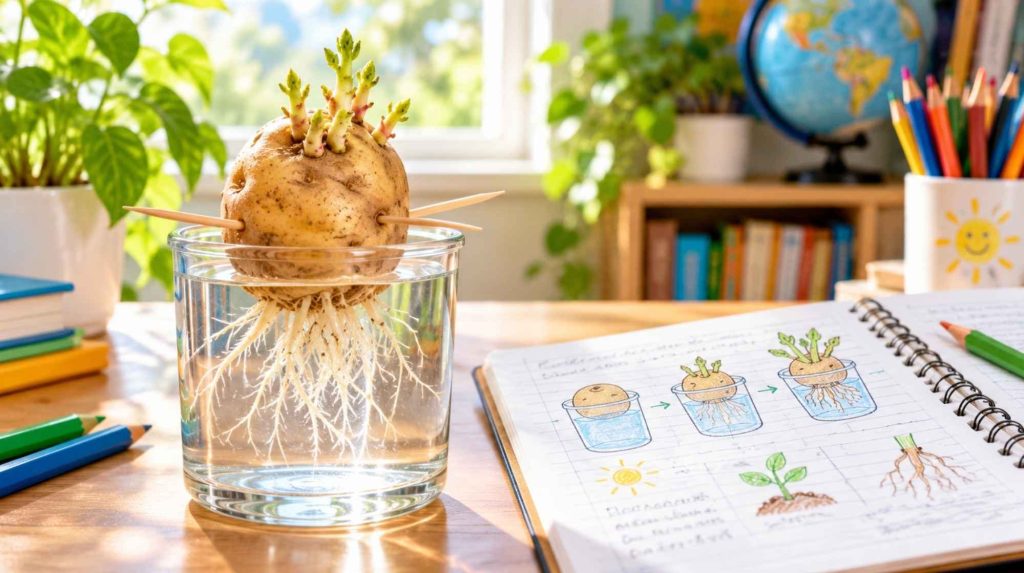
This easy potato experiment for kids is a simple way to introduce tubers, buds, plant parts, and underground plant growth.
When young students think about how plants grow, they usually picture one thing first: a seed.
Plant a seed in the soil, add water and sunlight, and eventually a new plant appears.
But plants have more than one way to reproduce.
Some plants can grow new plants from underground structures such as bulbs and tubers. One of the easiest examples to explore in an elementary classroom is probably already sitting in your kitchen:
a potato!
A sprouting potato makes a simple, inexpensive science investigation that allows students to observe plant growth up close while learning about tubers, buds, underground plant parts, stored food, and vegetative reproduction.
And the best part? You can turn one potato into an entire hands-on plant science lesson.
What Is a Tuber?
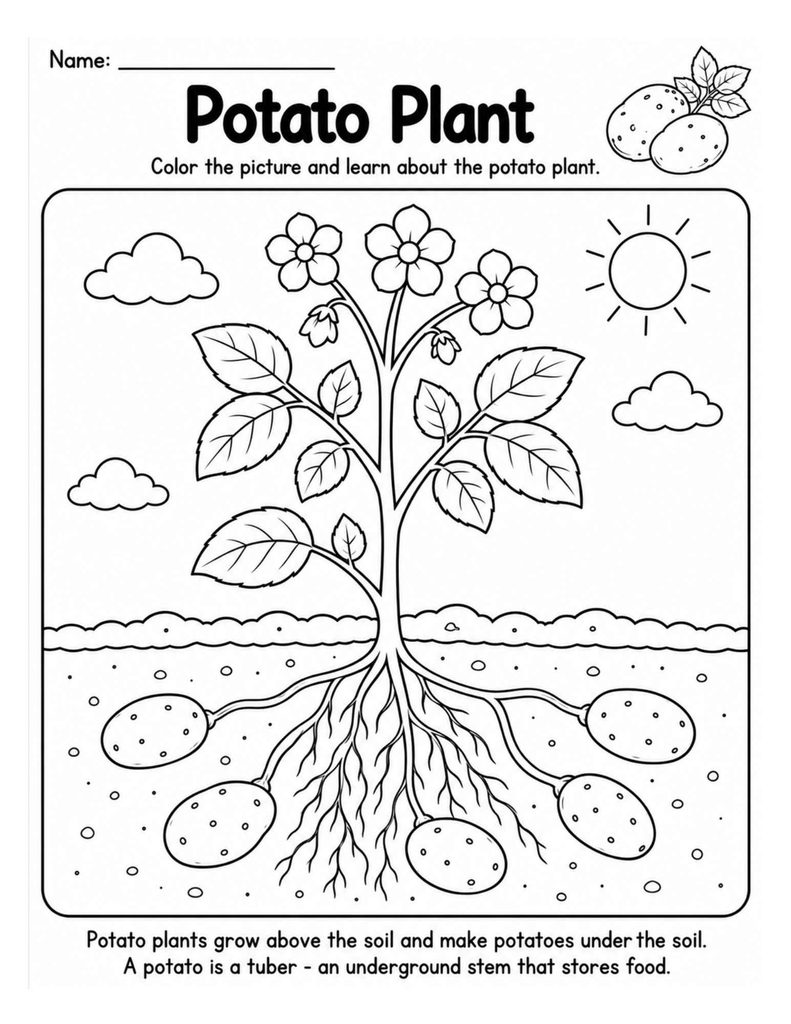
A tuber is an enlarged underground plant structure that stores food for the plant.
A potato is a stem tuber.
One simple way to explain this to young students is to describe the potato as the plant’s underground food-storage system.
The plant makes food through photosynthesis in its leaves, and some of that energy is stored underground in the potato tubers.
That stored food can later support new growth.
And this is where things get interesting for students.
Those tiny marks on the surface of a potato that we call “eyes” are actually buds.
Given the right conditions, these buds can begin to grow into new shoots.
Start With a Potato Investigation
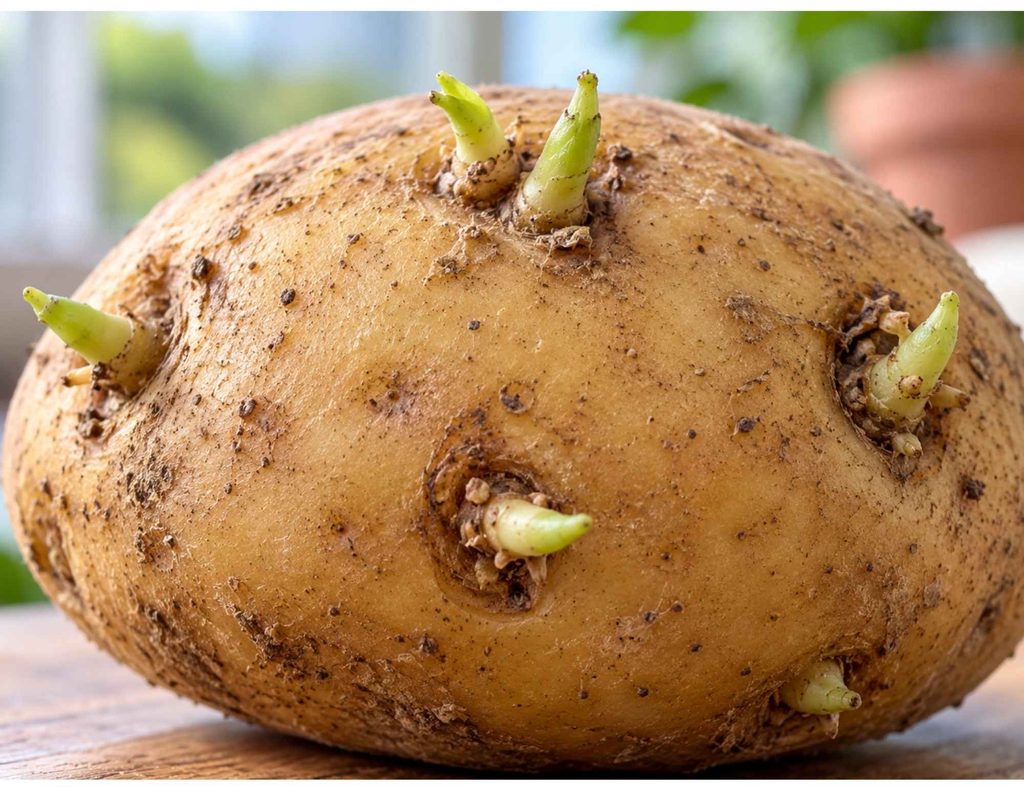
Before beginning the experiment, let students investigate a real potato closely.
Give each student or small group a potato and, if possible, a magnifying glass.
Ask students to find the potato’s eyes.
Try questions such as:
- How many eyes can you find?
- Are all the eyes the same size?
- Do you see any that have already started sprouting?
- Where are most of the eyes located?
- What do you predict will grow from them?
Students can draw their potato in a science notebook and mark several of the eyes they observe.
This simple activity introduces an important idea:
A new plant does not always have to begin with a seed.
Easy Potato Sprouting Experiment for Kids
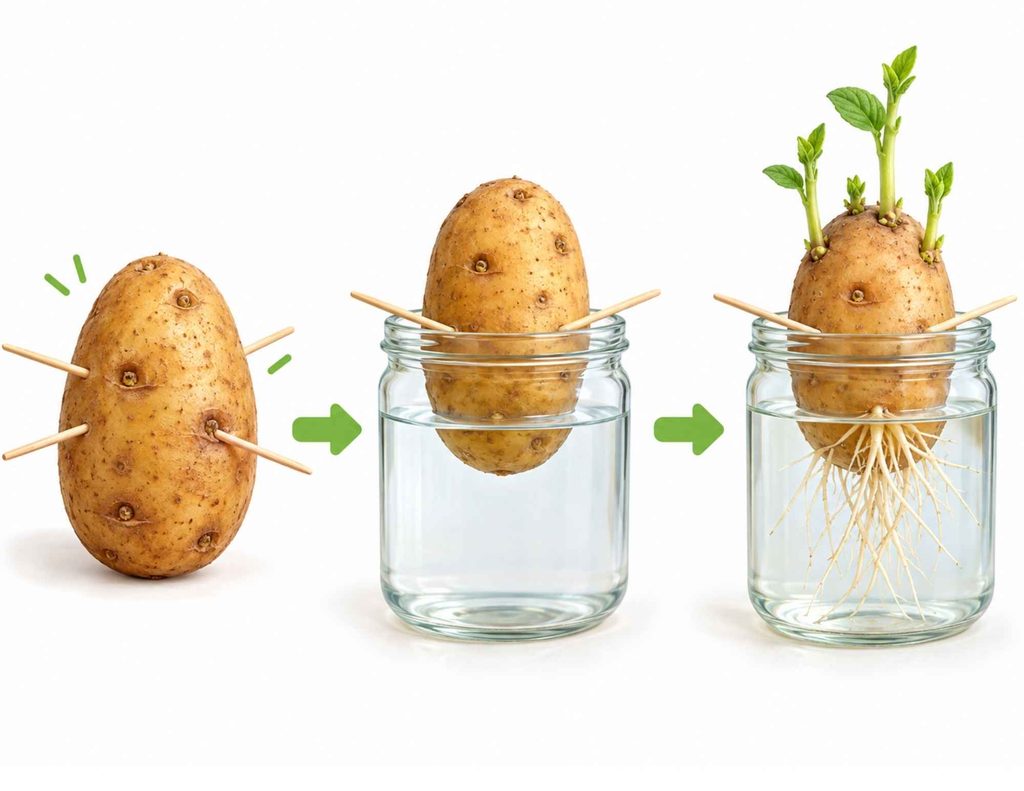
This experiment makes plant growth much easier for students to observe.
Because the potato is suspended over a clear container, students can watch roots and shoots develop instead of having the most interesting changes hidden underground.
You Will Need
- 1 potato with visible eyes or small sprouts
- 3–4 toothpicks
- 1 clear glass or jar
- Water
- A bright location
- A science notebook or observation sheet
1. Examine the potato.
Before placing it in water, have students find and identify several eyes.
Explain that these are buds from which new shoots can grow.
2. Insert the toothpicks.
Push three or four toothpicks around the middle of the potato.
The toothpicks will rest on the rim of the glass and support the potato.
3. Place the potato over the glass.
Position the potato so that its lower portion reaches the water while most of the potato remains above it.
4. Add water.
Fill the container until the bottom of the potato is in contact with the water.
5. Find a bright location.
Place the experiment somewhere students can observe it easily. Check the water regularly and add more when needed. Then the waiting—and the science—begins.
What Can Students Observe?
One of the best parts of this investigation is that students can return to it repeatedly.
Instead of simply being told how a plant grows, they can collect evidence themselves.
Over the following days and weeks, students may notice:
- potato eyes beginning to swell
- new shoots emerging
- shoots becoming longer and greener
- roots developing
- changes in the potato itself
- differences in growth between individual eyes
Not every potato will grow at exactly the same rate, which creates another useful scientific discussion.
Ask:
Why might one potato sprout faster than another?
Why did one eye grow while another did not?
What conditions might affect plant growth?
Add a Potato Observation Journal
Turn the experiment into an ongoing science investigation by having students record their observations.
For younger students, a combination of drawing, measuring, labeling, and short written observations works especially well.


Try a Potato Olympics Measurement Activity

If your students enjoy measurement activities, you can extend the investigation before the potatoes even begin sprouting.
Give each student or group a potato and create a mini Potato Olympics.
Students can predict and then measure:
- the potato’s weight
- its circumference
- the number of eyes or buds
They can record both their prediction and their actual measurement and compare the results.
This is an easy way to combine elementary science and math in one activity.
My Potato Plant resource includes a ready-to-use Potato Olympics recording page, where students estimate and measure weight, circumference, and potato eyes before recording their results.
Turn a simple potato into a science and measurement activity! Students can predict and measure weight, circumference, and the number of potato eyes before comparing their results.Want the ready-to-print recording sheet? It’s included in my Potato Plant Bundle.
→ Explore the Potato Plant Bundle on TPT https://www.teacherspayteachers.com/Product/Potato-Plant-Bundle-Life-Cycle-Parts-of-a-Potato-Potato-Worksheets-16066936
Potato Plant Parts: What Grows Above and Below the Soil?

The experiment also opens the door to a bigger question:
Which parts of a potato plant grow above the ground, and which grow underground?
Above the soil, students can identify:
- leaves
- flowers
- stems
Below the soil, they can investigate:
- roots
- potatoes or tubers
A cut-and-paste sorting activity works particularly well here because students physically separate the plant into above-ground and underground structures.
You can also have students draw their own potato plant, adding a soil line and labeling the structures they would see above and below the surface.
Tuber or Root? Potato vs. Sweet Potato
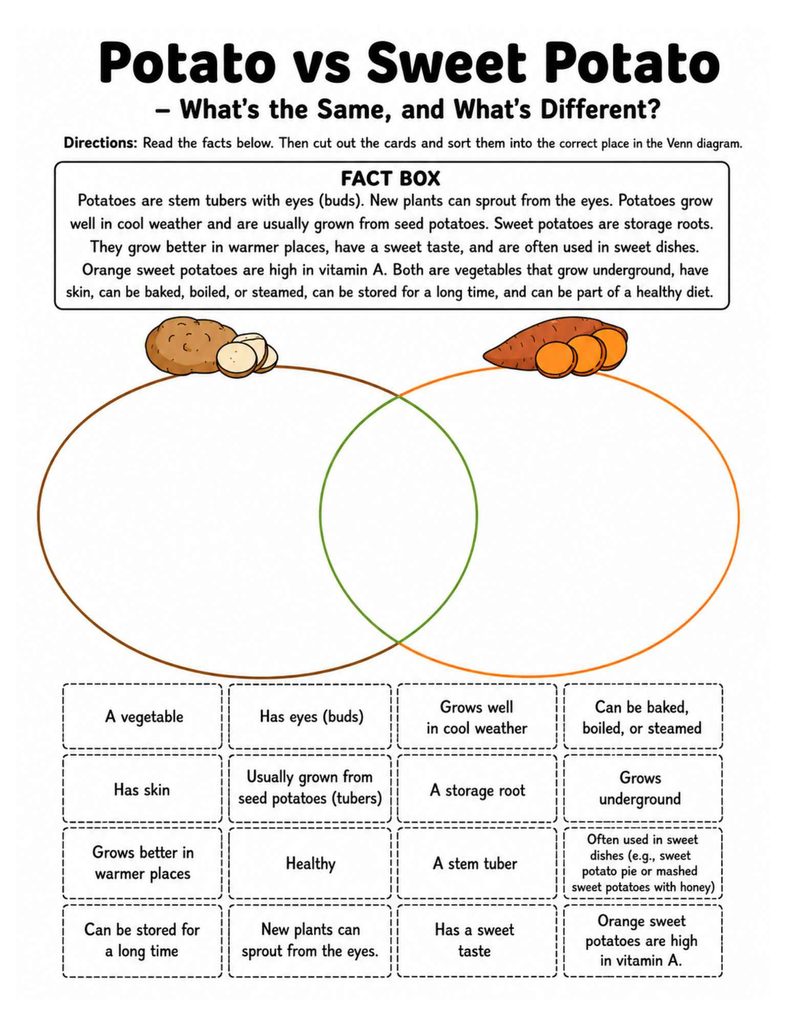
This is one of my favorite misconceptions to explore with elementary students:
A potato grows underground, but a potato is not a root.
A potato is a modified underground stem called a stem tuber.
Compare it with a sweet potato.
Potato
A potato is a stem tuber.
It has visible eyes or buds, and new shoots can grow from those buds.
Sweet Potato
A sweet potato is a storage root.
It also grows underground and stores food, but it is a different plant structure.
For younger students, the most important takeaway is simple:
Both grow underground and store food, but they are not the same type of plant structure.
A Venn diagram works especially well for this comparison.
Students can sort facts such as:
- has eyes or buds
- stem tuber
- storage root
- grows underground
- has skin
- can be cooked
- new plants can sprout from the eyes
This moves students beyond simply memorizing vocabulary and gets them comparing real plant structures.
Looking for Ready-to-Use Potato Plant Activities?

If you want to continue the experiment without creating all of the follow-up activities yourself, I put together a Potato Plant Bundle for Kindergarten through 3rd Grade.
The resource is designed to move from simple observation to plant structure, vocabulary, comparison, measurement, and review.
The Potato Plant Bundle includes:
- Potato Life Cycle activities
- Parts of a Potato Plant worksheet
- Label the Potato activity
- Above Ground or Underground sorting
- Potato vs. Sweet Potato Venn diagram
- Potato Mini Quiz
- Potato Olympics measurement activity
- Photo vocabulary cards
- Coloring and drawing activities
- Answer keys
Students can practice identifying the flower, leaves, stem, roots, soil, and potato tubers, as well as recognizing the skin, flesh, eyes, and sprouts of a potato.
The resource also includes real-photo vocabulary cards for the potato plant, leaves, flower, stem, roots, tubers, sprouts, and a cut-open potato—useful for science centers and visual vocabulary support.
Take a look at the Potato Plant Bundle on Teachers Pay Teachers →
Connect Tubers to Other Ways Plants Reproduce
Potatoes can also become part of a larger plant reproduction unit.
After students understand seed reproduction, introduce other ways plants can produce new plants.
For example:
- Potato – tuber
- Tulip – bulb
- Strawberry – runner
- Fern – spores
- Bean – seed
Students can sort plant pictures according to how each new plant begins.
This helps correct one of the most common oversimplifications in early plant science:
Not every new plant starts from a seed. read more : https://lolliartscience.com/2026/09/29/plant-life-cycles-k2/
Simple Questions for Your Science Notebook
Finish the investigation with a few short questions:
- What is a potato tuber?
- What are the “eyes” on a potato?
- What grew from the potato during our investigation?
- Where did you see roots growing?
- Where did you see shoots growing?
- Why can a potato begin growing before it is planted in soil?
- How is a potato different from a sweet potato?
- Which parts of a potato plant grow above the ground?
- Which parts grow underground?
- What do you think would happen if we planted our sprouted potato in soil?
For younger students, these can easily become drawing prompts or oral discussion questions.
FAQ
A potato is a stem tuber, an enlarged underground stem that stores food for the plant. The stored energy helps support new growth when the potato begins to sprout.
No. Potatoes grow underground, but they are not roots. A potato is a modified underground stem called a tuber.
The “eyes” of a potato are buds. Under the right conditions, these buds can produce new shoots that grow into a potato plant.
A potato can be placed partially in water to observe roots and shoots developing. This makes a simple classroom investigation because students can watch changes that would normally be hidden underground.
Students can investigate plant parts, tubers, buds, roots, shoots, stored food, measurement, prediction, observation, and plant growth.
A potato is a stem tuber, while a sweet potato is a storage root. Both grow underground and store food, but they are different plant structures.
The stems, leaves, and flowers grow above ground. The roots and potato tubers develop below the soil.
Start with a real potato investigation, let students find and count the eyes, set up a sprouting experiment, record observations, and follow up with labeling, sorting, measurement, and comparison activities.
Want all 19 of these life cycles ready to print and go? Check out my-Life-Cycle-of-a-Plant-Bundle. It includes comprehensive activity packs for everything from Apples to Ferns, complete with diagrams, matching games, and black-and-white pages for easy coloring!

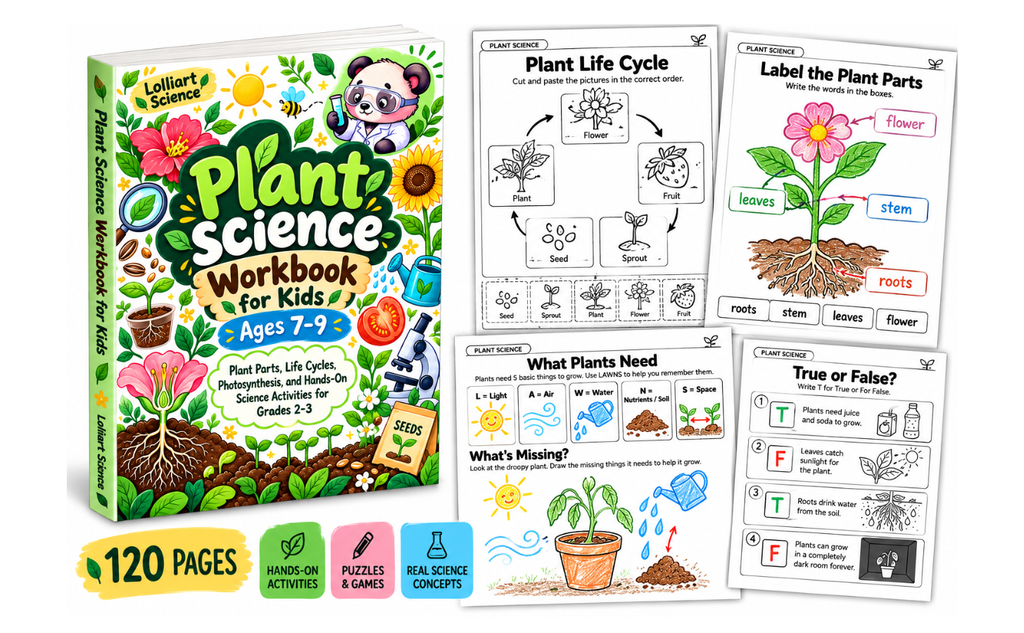
Make plant science exciting with this 120-page workbook designed for kids ages 7–9 (Grades 2–3)! Explore plant parts, life cycles, photosynthesis, and how plants grow through engaging reading passages, hands-on activities, coloring pages, puzzles, and science challenges. Build science knowledge while encouraging curiosity, observation, and critical thinking.