Managing big emotions in the classroom or at home—whether it’s frustration, anger, anxiety, or simply feeling overwhelmed—can be one of the biggest challenges for teachers and parents alike.
That is where a Calm Corner comes in! But what exactly is a calm corner, why is it so effective, and why does a cute tiger theme work like magic for young learners? Let’s dive in!
1. What is a Calm Corner, and Why Do Kids Need One?
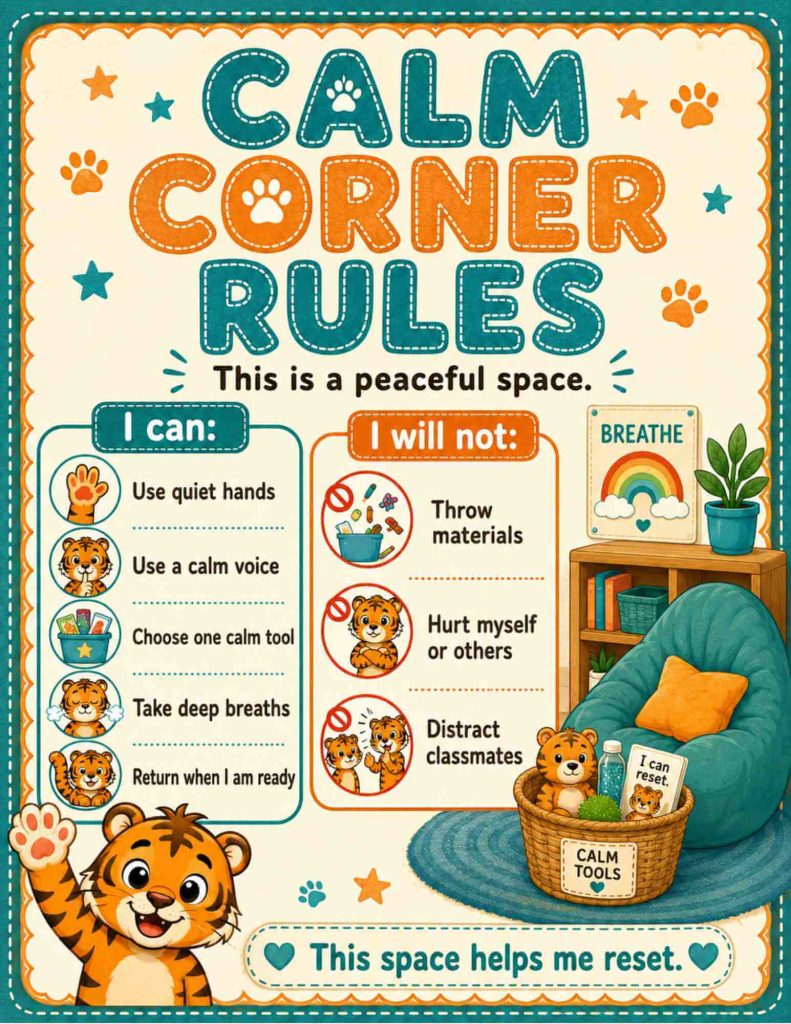
A Calm Corner is not a time-out space or a punishment area. Instead, it is a safe, welcoming, and quiet space where students can take a moment to pause, process their emotions, and practice self-regulation. The U.S. Department of Education’s Institute of Education Sciences includes calm corners among strategies that can support students who are feeling stressed.
Key Benefits of a Calm Corner:
- Social-Emotional Learning (SEL): Helps children identify and name their feelings while learning strategies for managing emotions and behavior. These skills connect closely with the CASEL framework for social and emotional learning, particularly the areas of self-awareness and self-management.
- Smooth Transition Back to Learning: Rather than letting a tense situation escalate, a calm corner gives kids a quick reset so they can return to class focused and ready to learn.
- Emotional Safety: A calm space gives children an opportunity to recognize strong feelings and practice healthy ways to respond to them. The U.S. Department of Health and Human Services’ Head Start program highlights quiet calming spaces as one way to support the development of self-regulation in young children.
2. Why Choose a “Cute Tiger” Theme? 🐯
For elementary students (especially Pre-K through Grade 3), abstract concepts like emotional regulation can be tricky to grasp without engaging visual anchors.
That’s where our friendly tiger character comes to the rescue!
- A Friendly & Reassuring Companion: A friendly tiger mascot can make emotional-regulation activities feel more approachable and less intimidating for young children.
- Interactive & Playful Breathing Exercises: A tiger theme naturally inspires fun visual activities—like Tiger Paw Breathing (tracing paw pads while breathing) or Hot Cocoa Breathing (smelling the cocoa and blowing to cool it down)!
- Inviting Classroom Decor: Bright, warm, and cohesive visuals turn the corner into an attractive, cozy nook rather than an isolated area.
3. What’s Included in a Complete Tiger Calm Corner Kit?
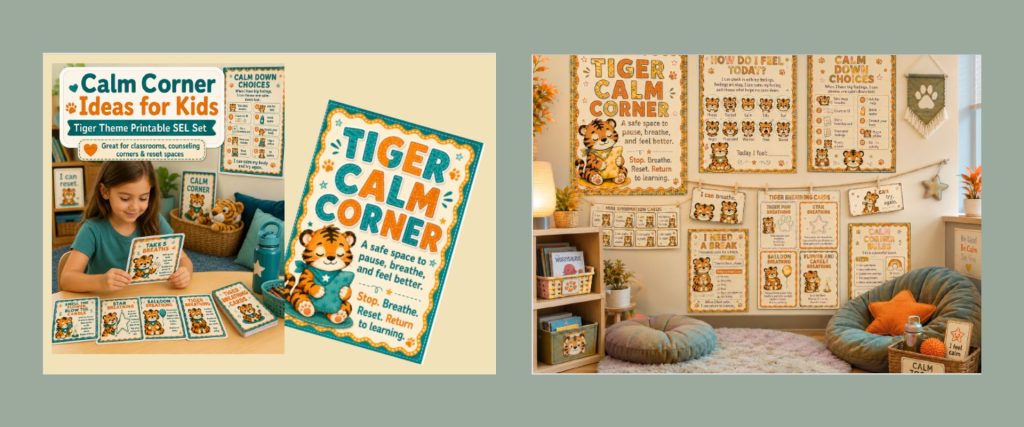
An effective SEL kit gives students a step-by-step roadmap to reset their minds and bodies:
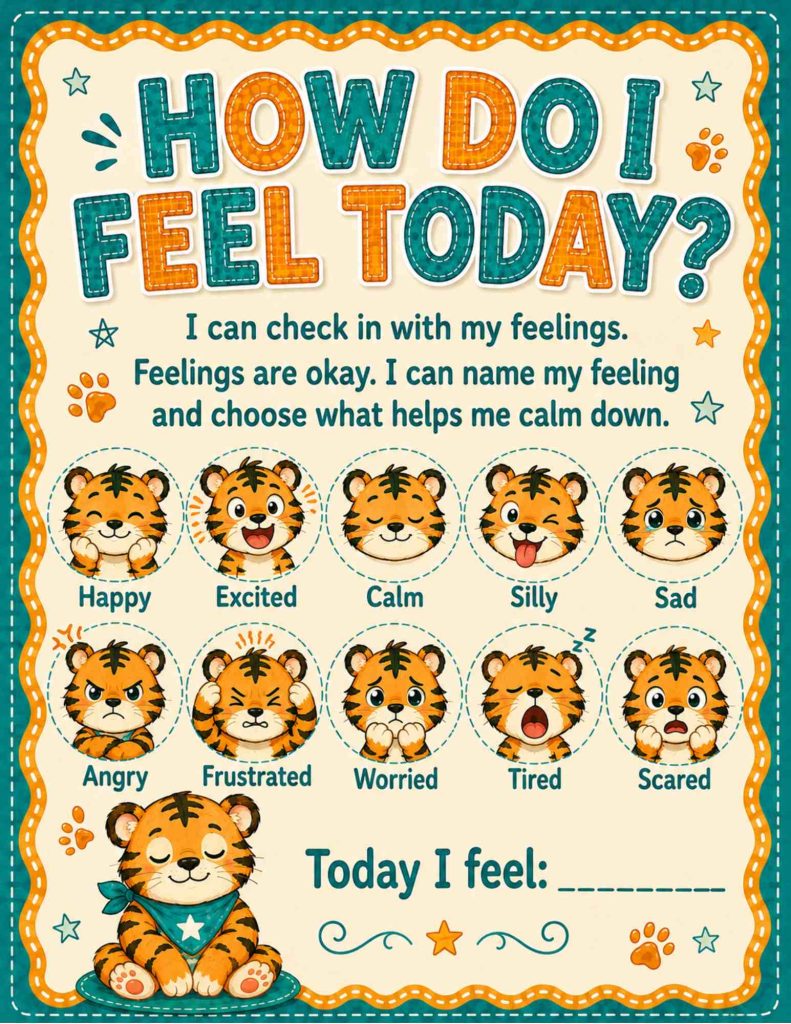
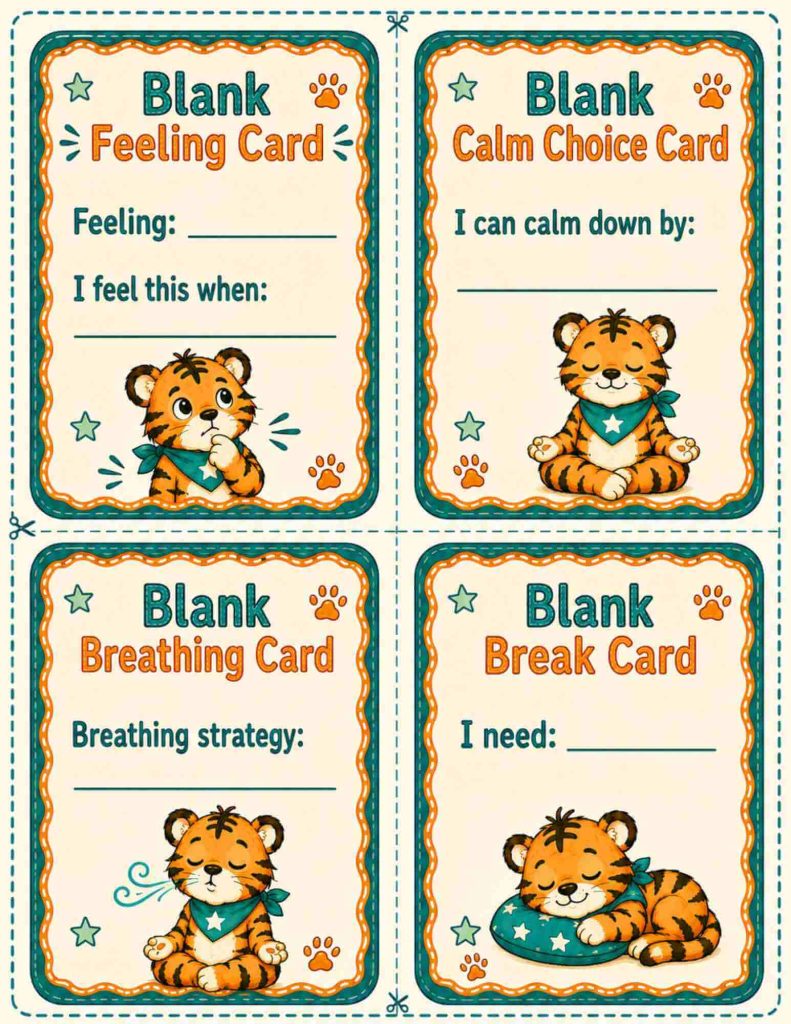
- Feelings Check-In Cards: Visual emotion cards help students recognize, label, and talk about how they feel—such as happy, angry, worried, sad, or tired. The National Association for the Education of Young Children (NAEYC) emphasizes helping young children understand and manage emotions and describes the use of safe, calming spaces to support this process.
- Breathing Cards: Guided visual exercises (e.g., Star, Balloon, or Paw Breathing) that lower heart rates and restore calm.
- Calm-Down Choice Cards & Rules: Clear, actionable choices for self-regulation (e.g., drawing feelings, reading a book, stretching, taking 5 deep breaths).
- Problem-Solving Steps: Simple, clear steps to guide kids through resolving conflicts peacefully.
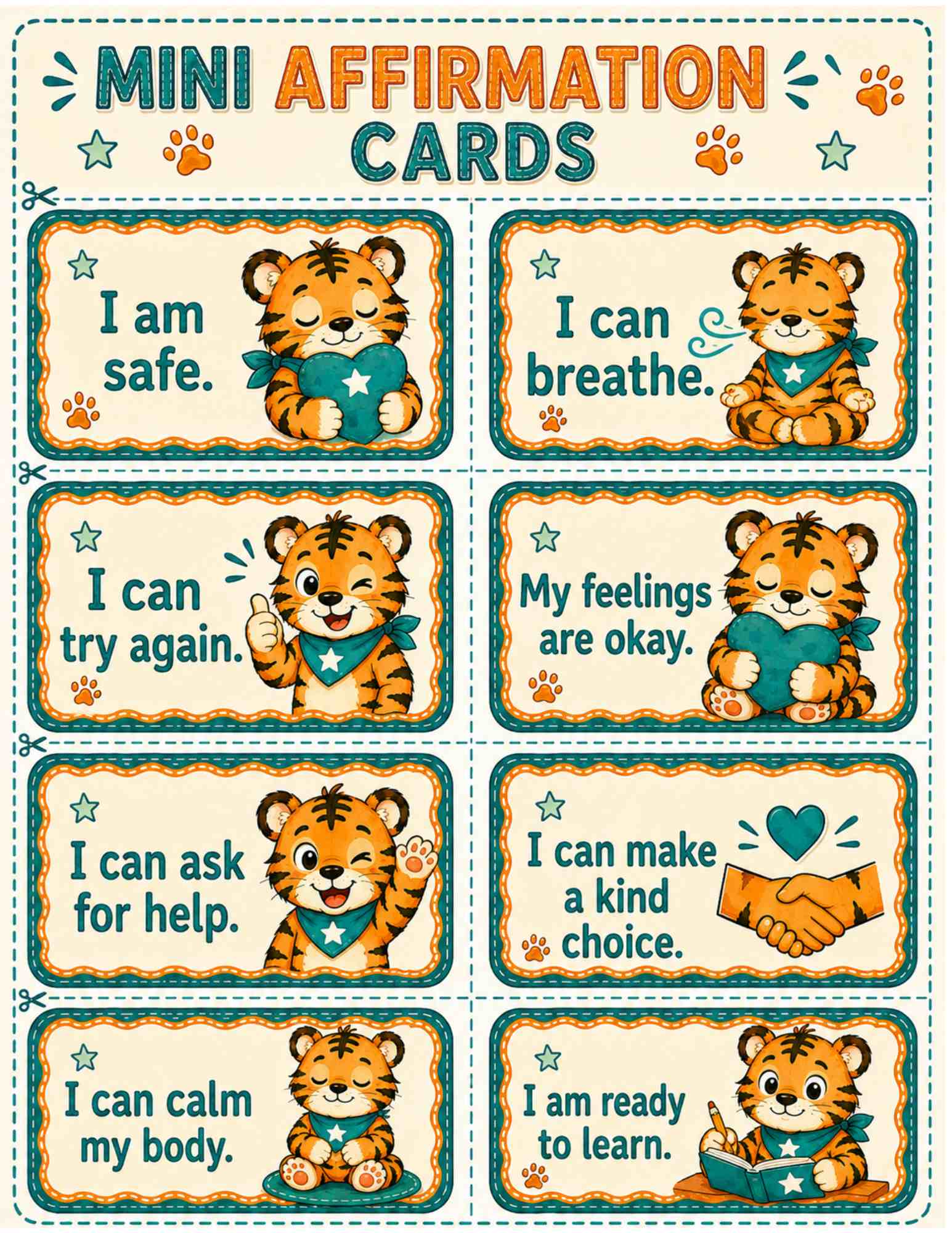
- Mini Affirmation Cards: Positive self-talk cards that build confidence and reassurance (“I am safe,” “I can calm my body,” “My feelings are okay”).
Final Thoughts
A Calm Corner is more than just cute classroom decor—it can provide children with a structured place to practice self-regulation strategies they can use in everyday situations. Research summarized by the Harvard Center on the Developing Child explains that executive function and self-regulation skills develop over time and can be strengthened through practice and supportive experiences. 🧡🐾
Frequently Asked Questions About Calm Corners
What is a Calm Corner in a classroom?
A Calm Corner is a designated, welcoming space where students can take a short break when they feel overwhelmed, frustrated, worried, angry, or upset. It gives children a place to recognize their emotions, use calming strategies, and prepare to return to learning.
Is a Calm Corner the same as a time-out?
No. A Calm Corner is not intended as punishment. Students use the space to practice self-regulation skills such as deep breathing, identifying feelings, stretching, drawing, or using positive self-talk.
What should I put in a classroom Calm Corner?
A Calm Corner can include feelings cards, breathing exercise cards, calm-down choice cards, simple problem-solving steps, positive affirmation cards, books, drawing materials, and a few quiet sensory tools. Clear visual instructions are especially helpful for younger students.
What age is a Calm Corner best for?
Calm Corners can be adapted for many ages, but visual Calm Corner materials are especially useful for Pre-K through Grade 3. Younger children often benefit from pictures, simple choices, and step-by-step prompts that make emotional regulation strategies easier to understand.
How does a Calm Corner help students with big emotions?
A Calm Corner gives students a structured way to pause and choose a healthy response before returning to an activity. Over time, regularly practicing strategies such as breathing, naming emotions, and positive self-talk can help children develop stronger self-regulation skills.
How long should a child stay in the Calm Corner?
There is no single correct amount of time. The goal is not to complete a set number of minutes, but to give the child enough time to use a calming strategy and feel ready to return. For young students, keeping the process simple and relatively brief can help the Calm Corner remain a regulation tool rather than an escape from classroom activities.
Why use a tiger theme for a Calm Corner?
A friendly tiger mascot makes emotional regulation activities feel approachable and engaging for young learners. Tiger-themed visuals can also be incorporated into breathing exercises, affirmation cards, classroom rules, and calm-down choices, creating a consistent and inviting space.
Can I use a Calm Corner at home?
Yes. A Calm Corner can work at home as well as in the classroom. Families can create a small quiet space with emotion cards, breathing prompts, books, drawing supplies, or other calming choices that help children practice managing big feelings independently.
Sources & Further Reading
For more information about self-regulation, social-emotional learning, and supportive classroom environments, explore these trusted resources:
- Institute of Education Sciences, U.S. Department of Education – Strategies for Developing Trauma-Sensitive Classrooms
- Head Start, U.S. Department of Health and Human Services – Developing Self-Regulation in Young Children
- CASEL – What Is the CASEL Framework?
- Harvard Center on the Developing Child – A Guide to Executive Function
- NAEYC – Helping Children Understand and Manage Emotions