with clear-container bulb experiment + observation journal
Have you ever planted something that looked like a small brown ball and watched green leaves and colorful flowers appear from it?
Some plants do not begin their new growth from seeds. Instead, they can grow from bulbs hidden underground.
Tulips, daffodils, onions, garlic, and hyacinths are familiar examples of plants that grow from bulbs.
A bulb may look simple from the outside, but inside it is a clever underground storage system. It contains a tiny developing plant and stored food that helps the plant begin growing when conditions are right.
Let’s take a closer look at what makes bulbs so special.

What Is a Bulb?
A bulb is an underground plant structure that stores food and contains a developing plant.
You can think of a bulb as a tiny plant packed inside its own lunchbox.
The plant does not need to begin its growth from nothing. The bulb already contains stored resources that can support the new roots and shoots as they begin to grow.
This is especially useful for plants that need to survive periods when conditions are not ideal for growth, such as cold winters.
When warmer conditions return, the plant can begin growing again.
What Is Inside a Bulb?
If you cut an onion in half, you can see some of the main parts of a bulb very clearly.
A typical bulb contains:
Protective outer covering
The dry, papery outside helps protect the bulb.
Fleshy scales
The thick layers inside store food for the growing plant.
A developing shoot
Near the center is the young plant that can eventually grow upward.
Basal plate
The bottom of the bulb is a short stem-like structure from which the roots grow.
Roots
New roots develop from the base and grow downward into the soil.
For younger students, you can simplify this to three main ideas:
protection + baby plant + stored food
That makes the structure of a bulb much easier to understand.

How Does a Bulb Grow?
Bulb growth happens gradually.
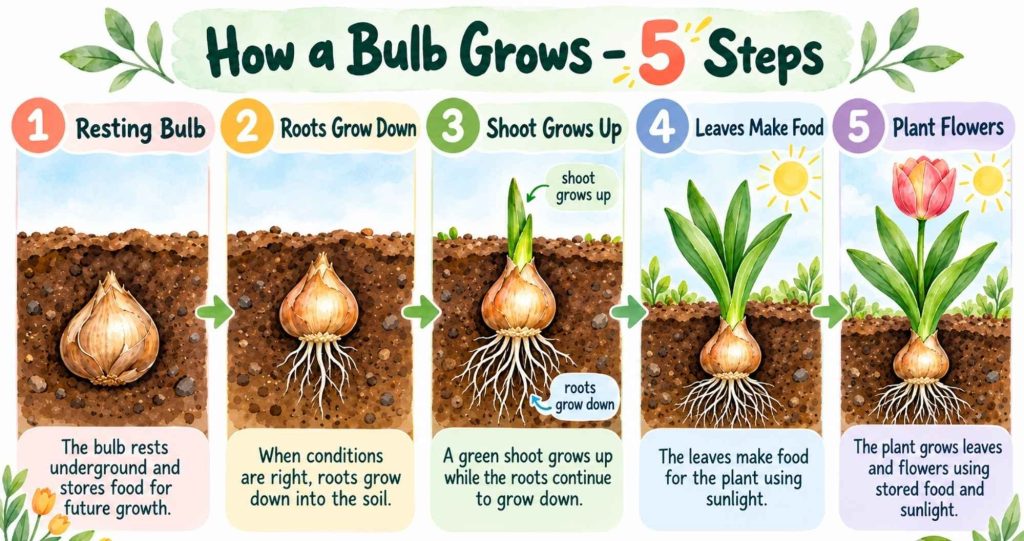
1. The Bulb Rests
For part of the year, many bulbs remain underground with little or no growth visible above the soil.
The plant is still alive.
Its developing structures and stored food remain protected inside the bulb.
2. Roots Begin to Grow
When conditions become suitable, roots begin growing from the bottom of the bulb.
The roots grow downward into the soil, where they absorb water and minerals.
This is one of the first changes children may notice when observing a bulb in a clear container
3. A Shoot Grows Up
Next, a green shoot begins growing from the top of the bulb.
While the roots grow downward, the shoot grows upward toward the light.
Soon, leaves begin to appear.
4. Leaves Make Food
Once the leaves are exposed to sunlight, they can make food for the plant through photosynthesis.
At first, the plant relies heavily on food stored inside the bulb.
Later, the leaves begin making sugars that help support continued growth.
5. The Plant Flowers
Some bulb plants eventually produce flowers.
Tulips, daffodils, and hyacinths are familiar examples.
After flowering, the leaves continue an important job: they make and store food that can help the bulb grow again during another season.
This is why leaves are such an important part of a bulb plant’s life cycle.
Plants That Grow from Bulbs
There are many familiar bulb plants that work well when teaching elementary science.
🌷 Tulips

Tulips grow from underground bulbs and produce colorful flowers in spring.
Inside the bulb is a developing plant surrounded by layers that store food.
A simple tulip growth sequence is:
Bulb → Sprout → Plant → Flower
After flowering, tulips can also produce seeds, and many tulip bulbs can form additional bulbs underground.
read more : https://lolliartscience.com/2026/09/26/tulip-life-cycle-activities-grade-3/
🌼 Daffodils

Daffodils are another well-known spring bulb.
They often begin growing early in the year, sending green shoots through the soil before producing their yellow or white flowers.
Like tulips, their bulbs store food underground.
🧅 Onions

An onion is an excellent example for classroom observation because its layers are easy to see.
The thick layers of an onion bulb store food.
If an onion begins to sprout, children can observe green shoots growing from the top and roots developing from the bottom.
read more : https://lolliartscience.com/2026/09/12/onion-growth-experiment-for-kids/
🧄 Garlic
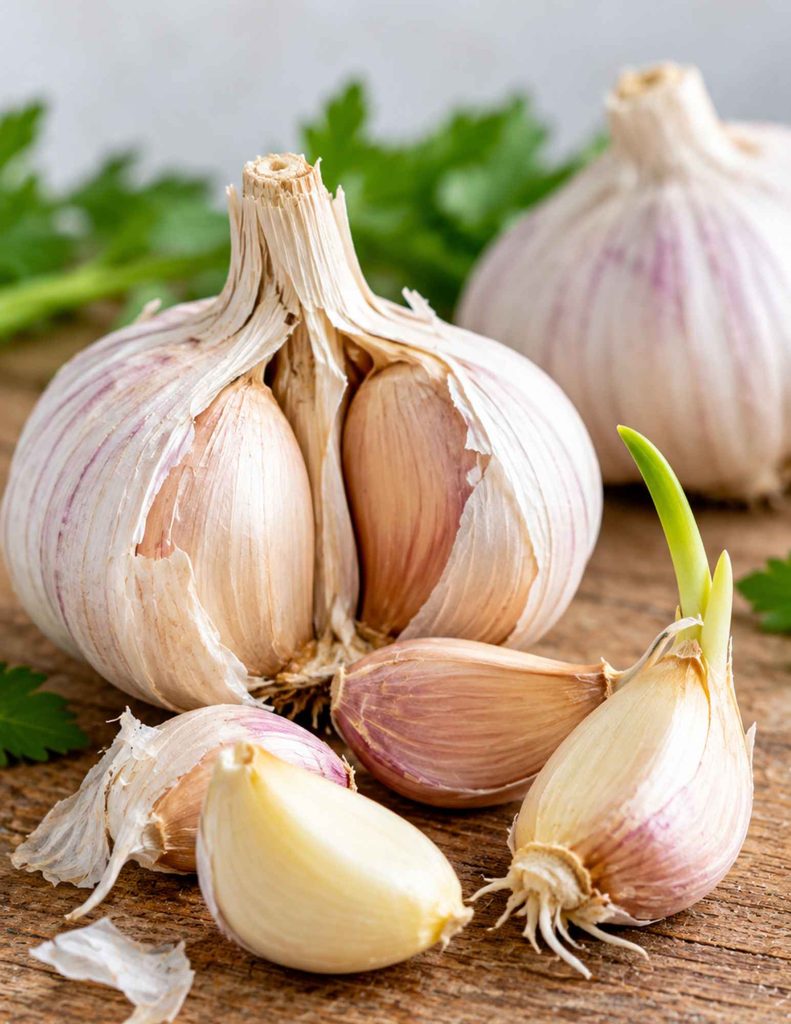
Garlic is a compound bulb.
Instead of one solid bulb, it is divided into smaller sections called cloves.
Each clove can contain a growing point and can produce a new garlic plant when planted.
This makes garlic especially interesting for comparing different kinds of bulb structures.
🌸 Hyacinths
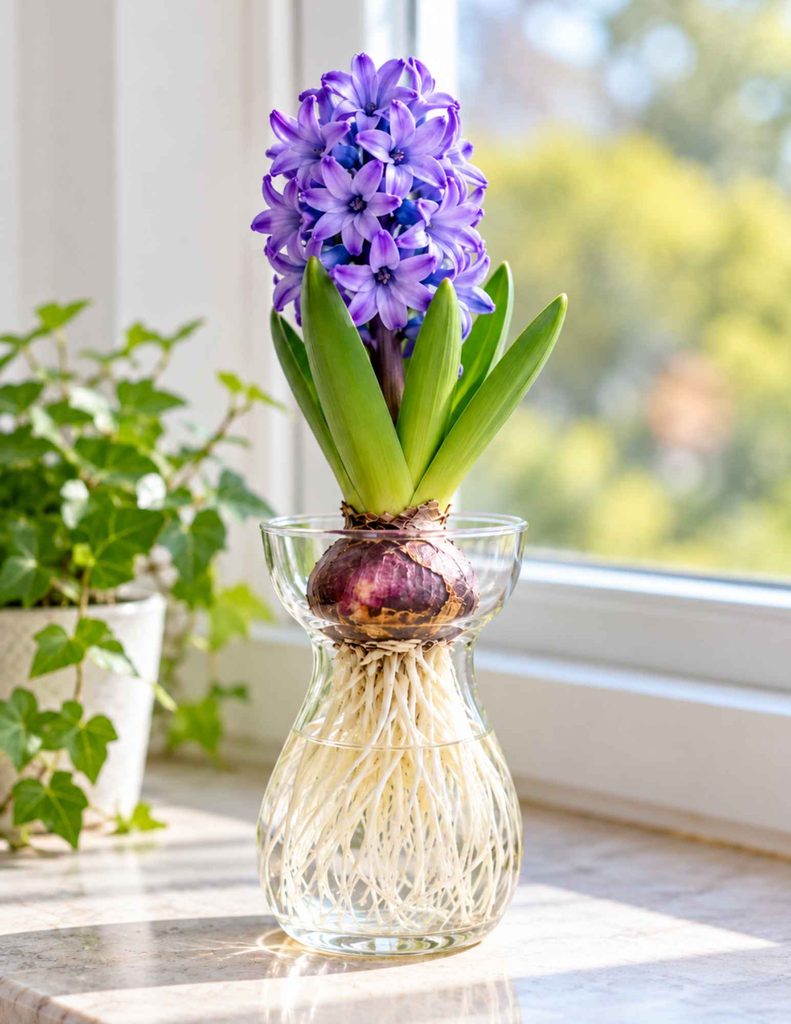
Hyacinths grow from large bulbs and produce clusters of strongly scented flowers.
They are also useful for classroom observation because some prepared hyacinth bulbs can be grown indoors where students can watch roots and shoots develop.
Do Bulbs Grow Differently from Seeds?
Seeds and bulbs can both produce new plant growth, but they are not the same structure.
A seed contains an embryo and usually a supply of stored food inside a protective seed coat.
A bulb, however, is made from modified plant parts. It already contains a developing shoot surrounded by fleshy structures that store food.
A simple comparison for children is:
| Seed | Bulb |
|---|---|
| Contains an embryo | Contains a developing plant |
| Has a seed coat | Often has a papery outer covering |
| Usually contains stored food | Stores food in thick, fleshy layers |
| Germinates | Sprouts and grows new roots and shoots |
Both are useful ways for plants to begin new growth, but their structures are different.
Are All Underground Plant Parts Bulbs?
This is an important science distinction.
Children may hear many underground structures casually called “bulbs,” but botanically they are not all true bulbs.
For example:
Potatoes are tubers.
They are swollen underground stems that store food.
Crocuses grow from corms.
Irises commonly grow from rhizomes.
Strawberries can spread through runners.
These structures all help plants survive or reproduce, but they are built differently.
For elementary learners, this can become a great extension activity:
Bulb, Tuber, Runner, or Seed?
Students can sort familiar plants according to the way they grow.
Try It: Grow a Bulb in a Clear Container
One of the best ways to teach bulb growth is to let students see what normally happens underground.
Growing a bulb in a clear glass jar or plastic cup makes the roots visible while the shoot grows above them.
What You’ll Need
- A large bulb suitable for indoor growing, such as a paperwhite narcissus
- A clear jar, vase, or plastic cup
- Small pebbles, rocks, or glass marbles
- Water
How to Set It Up
1. Add the pebbles.
Fill most of the container with small rocks or pebbles.
2. Examine the bulb.
Ask students to find the flatter root end and the more pointed top.
3. Place the bulb.
Set it on the pebbles with the root end facing down.
4. Add water.
Add enough water to reach just below or barely touch the base of the bulb.
Avoid submerging the entire bulb because too much moisture can cause it to rot.
5. Observe the growth.
Place the container in a suitable bright location and check it regularly.
Students may soon notice white roots growing downward and a green shoot beginning to grow upward.
Turn It Into a Science Investigation
Before growth begins, ask students:
What do you think will grow first — the roots or the shoot?
Then have them observe the bulb over several weeks.
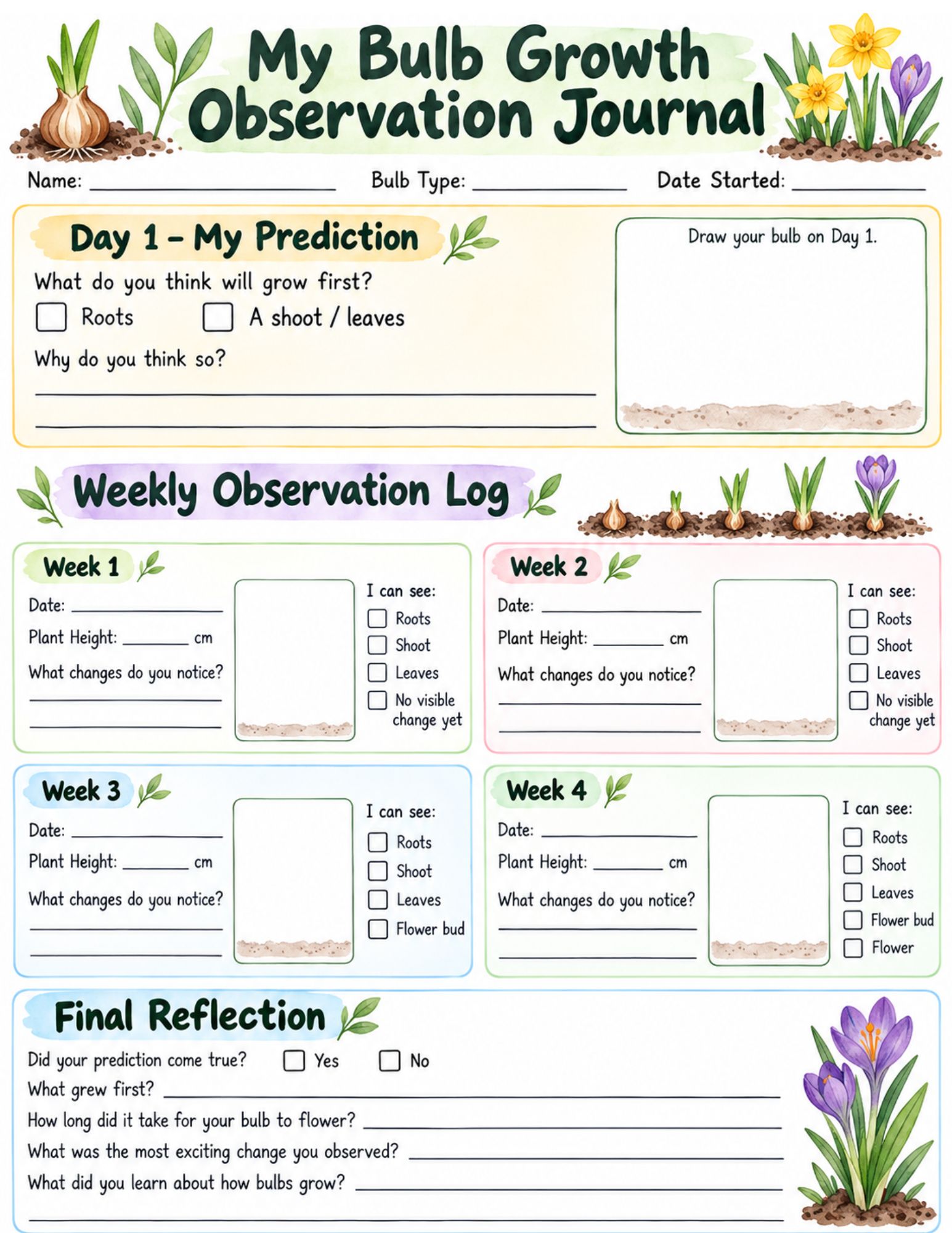
Students can record:
- the date
- plant height
- root growth
- shoot growth
- number of leaves
- appearance of a flower bud
- changes in the bulb itself
They can also draw the bulb each week.
At the end of the investigation, ask:
What grew first?
Which direction did the roots grow?
Which direction did the shoot grow?
How did the plant change from week to week?
Did your original prediction come true?
This turns a simple planting activity into a real observation-based science investigation.
A Simple Bulb Growth Sequence for Kids
For younger elementary students, you can summarize the process as:
Bulb → Roots and Sprout → Growing Plant → Flower
For older students, you can add more detail:
Resting Bulb → Root Growth → Shoot Growth → Leaves → Flowering Plant → Food Stored for Future Growth
Both versions help children recognize that plant growth is a process, not a single event.

Why Teach Children About Bulbs?
Learning about bulbs helps students understand that not every new plant starts in exactly the same way.
Many children first learn the familiar sequence:
seed → seedling → plant → flower
Bulbs provide an opportunity to expand that idea.
Plants can grow and reproduce using several different structures, including:
seeds, bulbs, tubers, runners, and spores.
Comparing these methods helps students begin to see just how diverse plant life really is.

Frequently Asked Questions About Plants That Grow from Bulbs
Common plants that grow from bulbs include tulips, daffodils, hyacinths, onions, and garlic. Some other underground plant structures, such as tubers, corms, and rhizomes, are different from true bulbs.
A bulb contains a developing plant, fleshy layers that store food, a basal plate, and roots. Many bulbs also have a dry, papery outer covering that helps protect them.
When conditions are suitable, roots begin growing downward from the bulb. A shoot grows upward, leaves develop, and the plant begins making food through photosynthesis. Some bulb plants later produce flowers.
No. Many bulb plants can grow from bulbs without starting from seeds. Some bulb plants can also produce seeds after flowering.
A seed contains an embryo inside a protective seed coat, usually with stored food. A bulb is an underground plant structure made from modified plant parts and already contains a developing shoot and stored food.
No. Potatoes are tubers, which are swollen underground stems. They store food, but their structure is different from a true bulb.
Yes. Garlic is a compound bulb made up of several smaller sections called cloves. Each clove can grow into a new garlic plant.
Some bulbs, especially paperwhite narcissus and prepared hyacinth bulbs, can be grown indoors with water and pebbles. The bulb itself should not remain submerged because too much moisture can cause rot.
Paperwhite narcissus bulbs are a good choice because they are commonly used for indoor growing and students can easily observe root and shoot growth in a clear container.
🌱 Explore Plant Life Cycles
Want to make bulb and plant life cycles easier to teach?
Explore these ready-to-use plant life cycle resources with sequencing, labeling, cut-and-paste activities, reading pages, and other hands-on science practice designed for young learners.

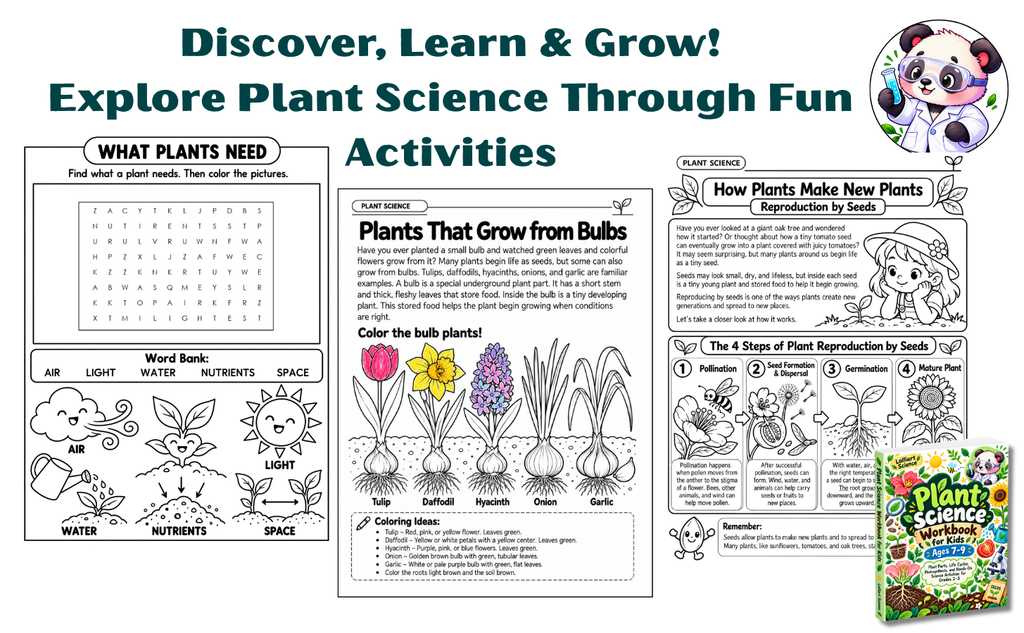
Discover how roots, stems, leaves, and flowers help plants grow! Through illustrated worksheets, creative STEM challenges, and coloring activities, children ages 7–9 can explore plant structures and their functions while developing observation, problem-solving, and science skills.