What Are the Best Activities for Teaching the Bean Life Cycle to Young Learners?
The best bean life cycle activities combine science with coloring, tracing, labeling, sequencing, reading, and vocabulary practice. These activities help students learn the stages from seed to bean pod while developing science vocabulary, reading comprehension, handwriting, and logical thinking.
Teaching the bean life cycle is a wonderful way to help young learners explore science while developing their English vocabulary. The different stages can be introduced through simple, hands-on activities that combine coloring, speaking, reading, writing, and sequencing.
These activities can also support NGSS 3-LS1-1, which asks students to develop models showing that organisms have life cycles involving growth, reproduction, and death.
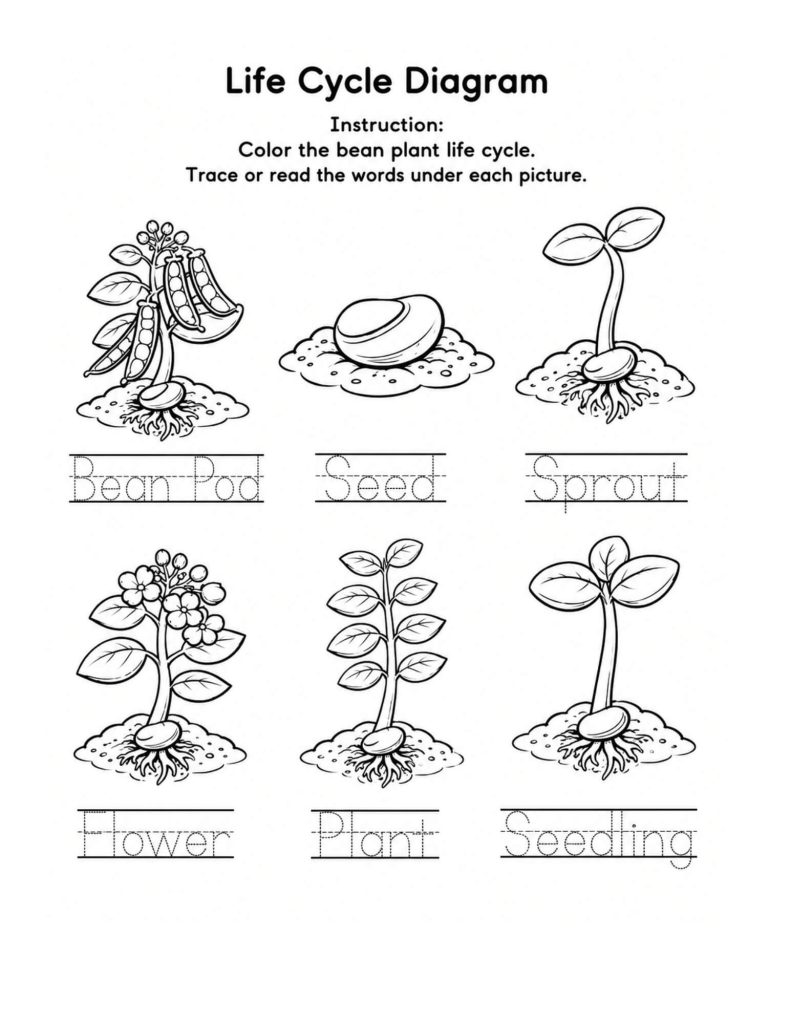
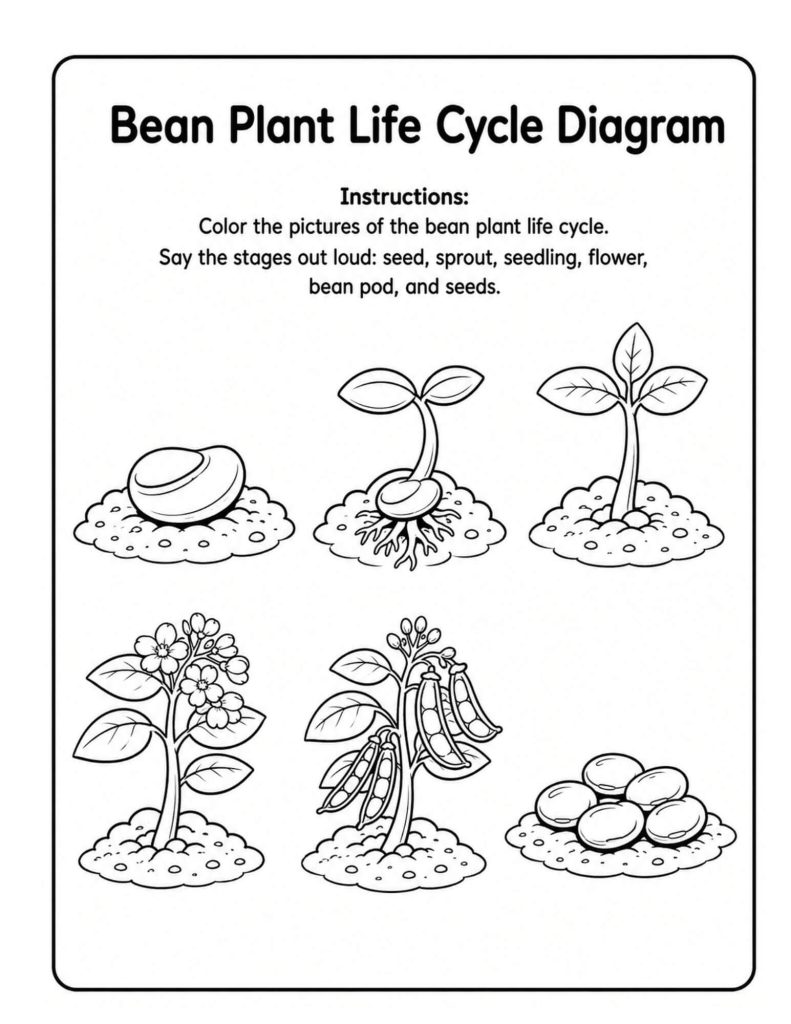
Coloring and Oral Vocabulary Practice
Coloring activities allow children to observe the details of each stage, from the seed and sprout to the flowering plant and bean pod. As they color, students can say the names of the stages aloud, repeat new vocabulary, and describe what they see. This type of activity supports visual learning, pronunciation, and early science language development. Teachers can extend the activity by growing real bean plants and observing how seeds emerge, develop leaves, produce flowers, and eventually form pods. The University of Minnesota Extension’s bean-growing guide provides additional background information about planting and growing beans.
Tracing, Reading, and Labeling
Tracing and labeling worksheets help children connect each picture with the correct life cycle word. Students can trace the stage names, read them aloud, and match them to the illustrations. These activities strengthen letter formation, word recognition, reading confidence, and understanding of the correct life cycle sequence.
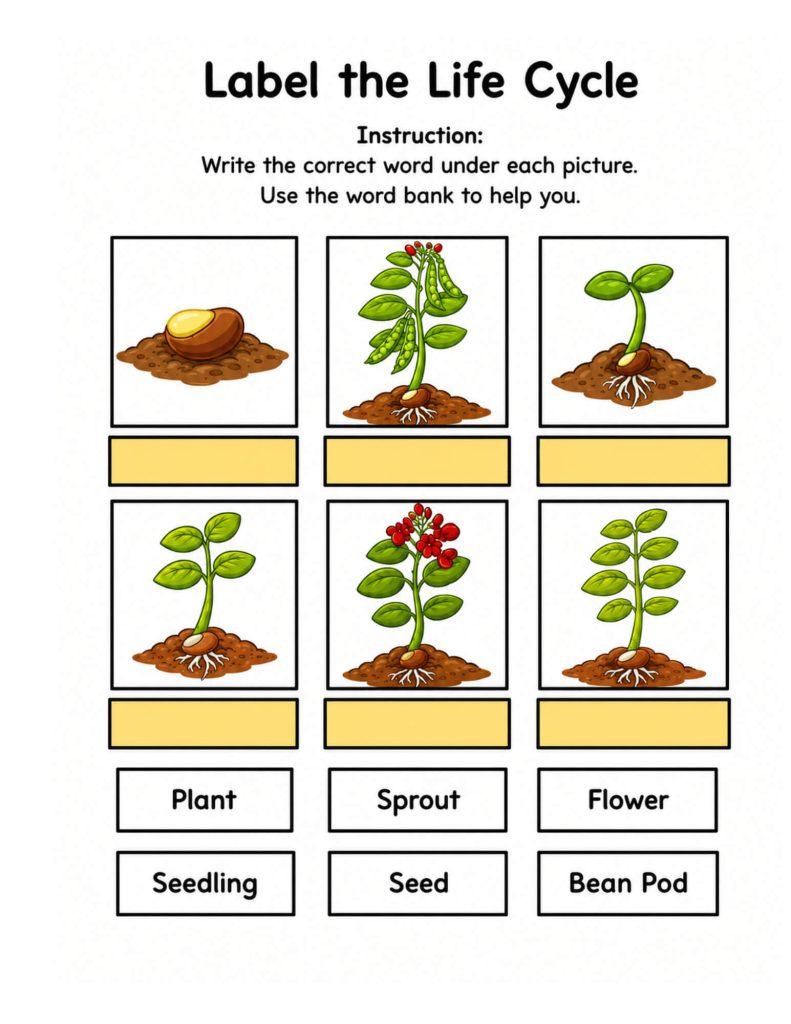
Labeling and Word Bank Activities
Labeling worksheets help students connect each stage of the bean life cycle with the correct vocabulary. Using a word bank provides extra support while children identify the pictures and write the matching words. This activity develops spelling, handwriting, word recognition, and science vocabulary.
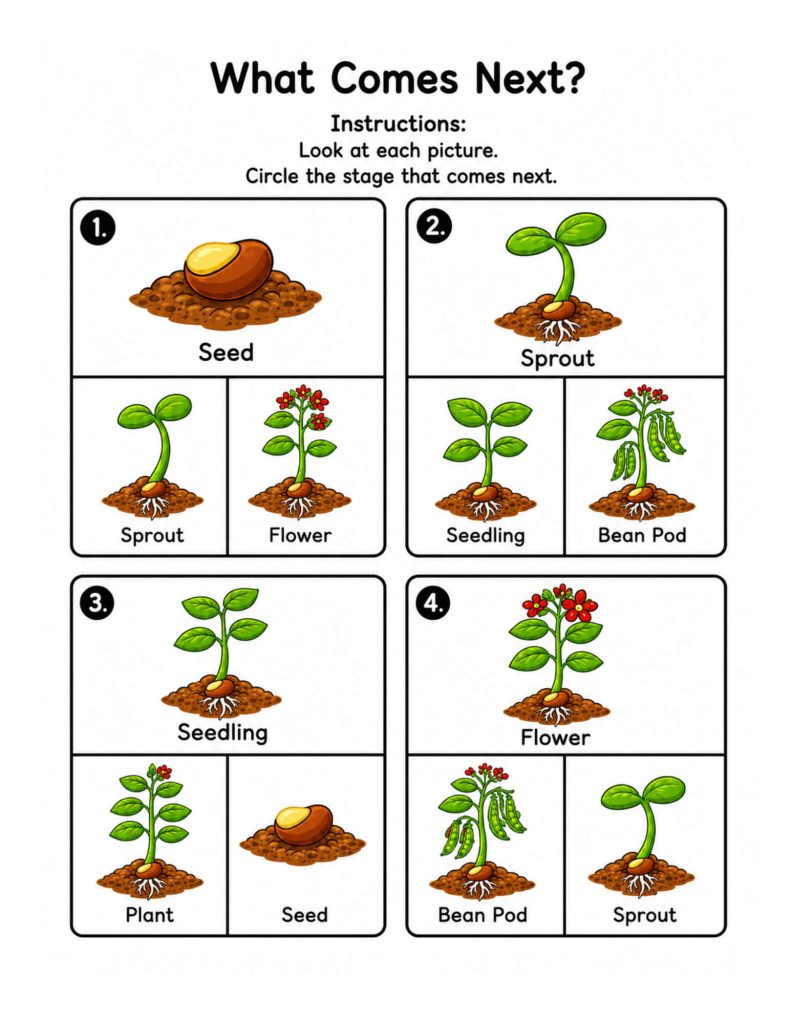
Sequencing and “What Comes Next?” Activities
“What comes next?” tasks encourage children to think about the order of the bean plant’s growth. Students look at a life cycle stage and choose the picture that follows it. These activities strengthen sequencing skills, logical thinking, visual comprehension, and understanding of how a plant changes over time. The USDA’s Planting the Seeds for Healthier Eating lesson also uses bean planting to help children identify and describe the sequence of a plant’s life cycle.
Comprehension and Vocabulary Review Activities
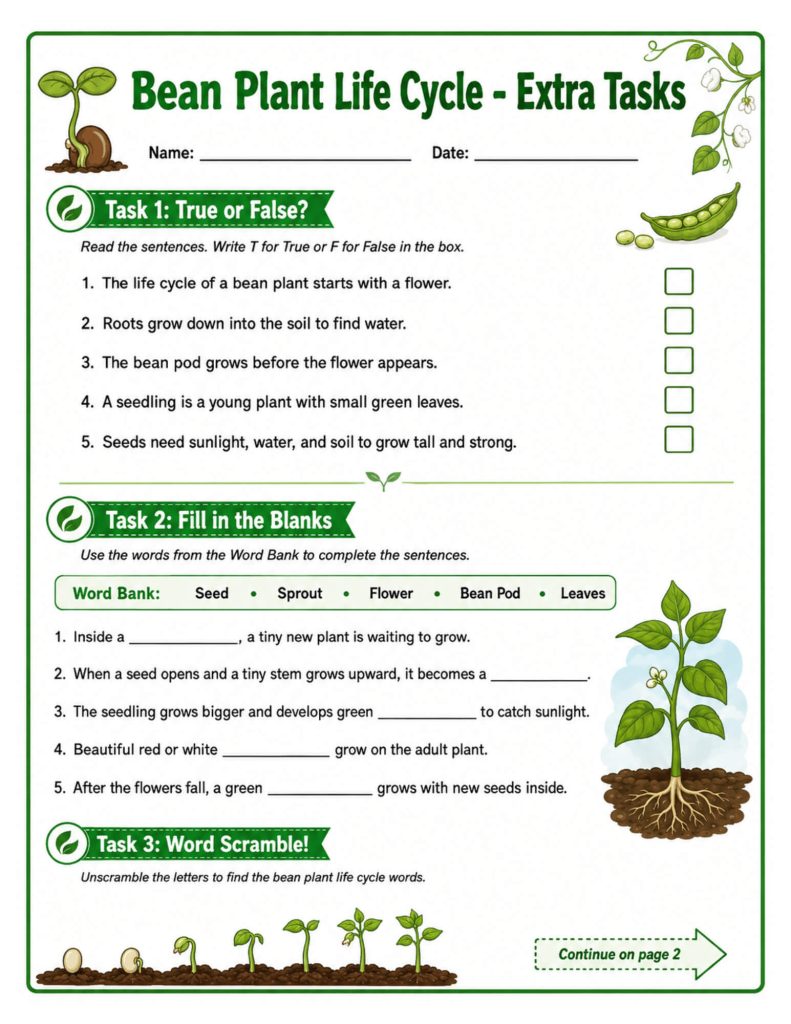
Extra practice worksheets help students review the bean plant life cycle in several engaging ways. True-or-false questions check reading comprehension and understanding of key facts, while fill-in-the-blank activities encourage children to use important vocabulary in context.
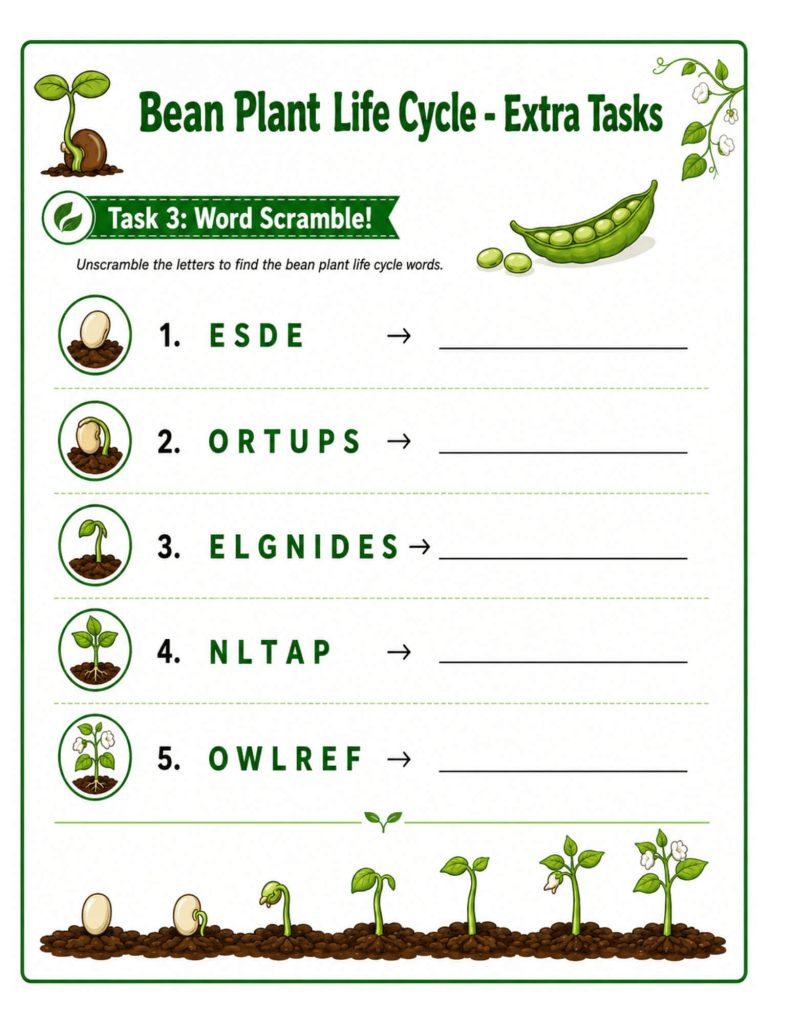
Word scramble tasks add a playful spelling challenge. Students rearrange letters to form life cycle words such as seed, sprout, flower, and bean pod. Together, these activities reinforce science knowledge, reading skills, spelling, and subject-specific vocabulary.
Extend the Lesson with a Bean Germination Experiment
For a simple hands-on extension, place bean seeds between a clear plastic bag and a moist paper towel. Students can observe the seeds each day and record the appearance of the root, shoot, stem, and first leaves. Penn State Extension describes this child-friendly bean germination activity as an easy introduction to plant growth.
FAQ
The bean life cycle begins with a seed. The seed sprouts and gradually develops into a flowering plant that produces bean pods.
Teachers can use coloring, tracing, labeling, sequencing, reading, word scrambles, true-or-false questions, and fill-in-the-blank activities to reinforce the stages and related vocabulary.
Students can arrange pictures in the correct order or complete “What comes next?” activities. These tasks help children understand how a bean plant changes over time.
Coloring encourages children to observe the details of each life cycle stage. Students can also name and describe each stage while they color, supporting visual learning and science vocabulary.
Teachers can use labeled illustrations, word banks, tracing pages, and oral repetition. Connecting each word to a picture helps students understand and remember terms such as seed, sprout, flower, and bean pod.
Yes. Tracing, labeling, reading, spelling, and comprehension activities help students develop handwriting, word recognition, reading confidence, and subject-specific vocabulary.
True-or-false questions, fill-in-the-blank tasks, labeling worksheets, and sequencing activities can help teachers assess students’ understanding of the stages and key vocabulary.