Have your students ever wondered what it would be like if the Sun stayed in the sky all night—or did not rise at all?
For children, polar day and polar night can sound almost impossible. We are so used to the everyday pattern of morning, daytime, sunset, and night that the idea of weeks of daylight or darkness immediately sparks curiosity.
That makes polar day and polar night a fascinating topic for elementary science.
For 2nd and 3rd grade students, this Arctic phenomenon can also become much more than a science lesson. It is a natural way to practice informational reading, vocabulary, compare-and-contrast skills, cause and effect, writing, and even social-emotional learning.
Here are some simple ways to turn polar day and polar night into an engaging Arctic mini-unit.
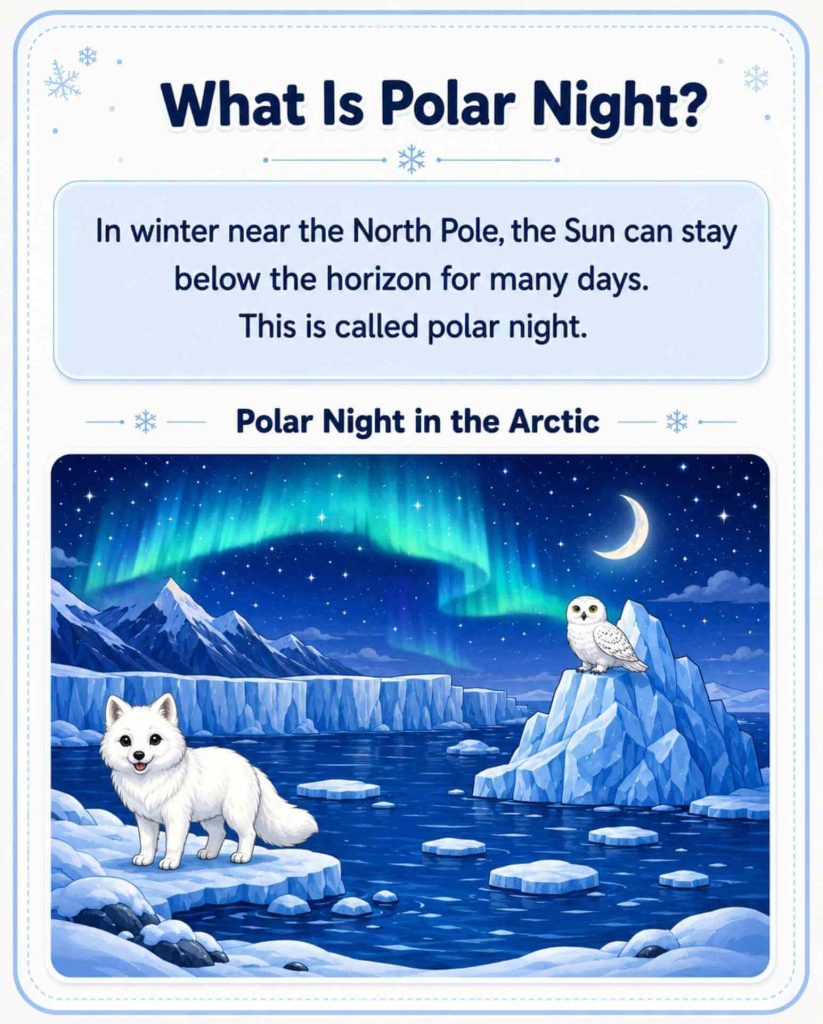
What Are Polar Day and Polar Night?
Before introducing activities, students need a simple understanding of the two terms.
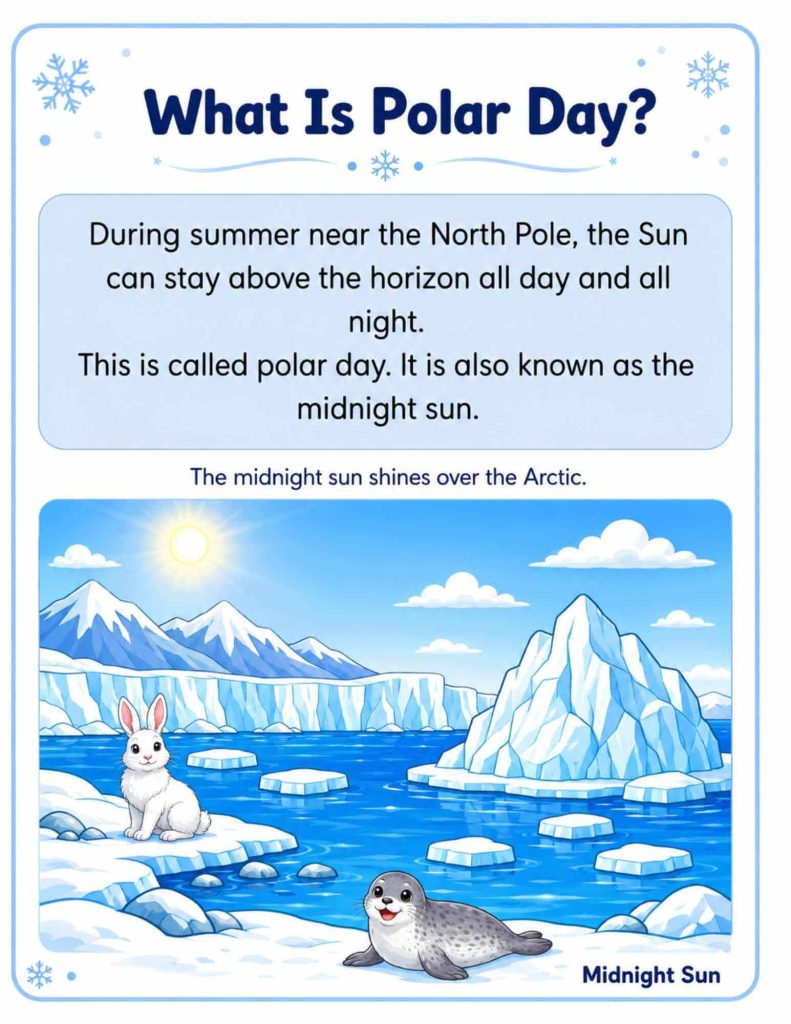
Polar Day
During summer in parts of the Arctic, the Sun can stay above the horizon for 24 hours or longer.
This is called polar day.
It is also commonly known as the midnight sun because the Sun may still be visible late at night.
Polar Night
During winter, the opposite can happen.
In some Arctic locations, the Sun stays below the horizon for 24 hours or longer. This is called polar night.
For young learners, a simple comparison works well:
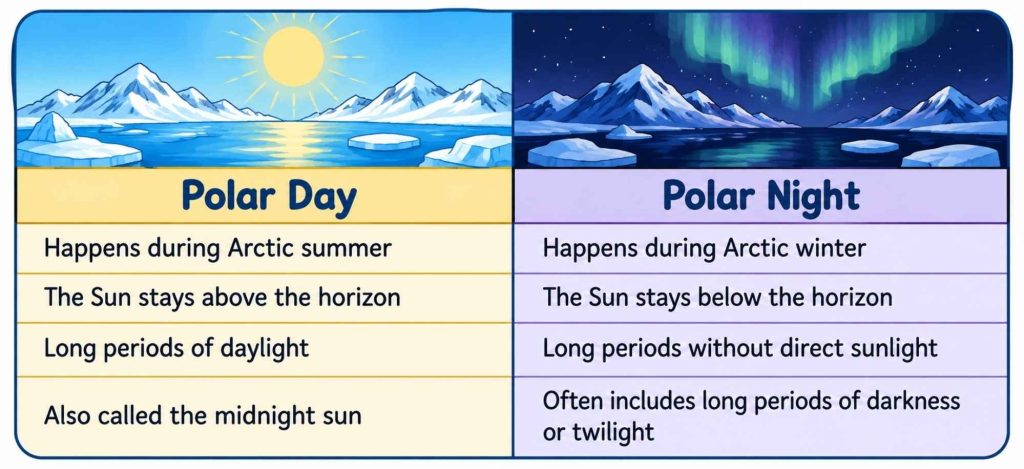
Why Does This Happen?
Second and third graders do not need a complicated astronomy lesson to understand the basic idea.
Earth is tilted as it travels around the Sun.
Because of this tilt, different parts of Earth receive different amounts of sunlight during the year.
During Arctic summer, the northern part of Earth is tilted toward the Sun. In areas far enough north, the Sun may remain above the horizon even during the night.
During winter, the northern part of Earth is tilted away from the Sun. In some places, the Sun may remain below the horizon for days or even weeks.
A globe and flashlight can make this much easier for children to visualize.
Turn off the classroom lights, use the flashlight as the Sun, and slowly rotate a tilted globe. Students can observe how some northern areas continue receiving light while other areas remain in shadow.
1. Begin With a Polar Day vs. Polar Night Comparison
One of the easiest ways to introduce the topic is with two simple informational texts.
After reading about polar day and polar night, create a class anchor chart.
Write:
POLAR DAY
and
POLAR NIGHT
Then ask students questions such as:
- When does it happen?
- Is the Sun above or below the horizon?
- What might the sky look like?
- What would people need?
- How might everyday life feel different?
This moves students beyond memorizing definitions and encourages them to think about what these conditions actually mean for people living and working in the Arctic.
Want to explore more of the Arctic? After learning about polar day and polar night, bring this fascinating habitat to life with our Arctic Ecosystem Diorama Project for Grades 2–3! Students can build their own 3D Arctic habitat while exploring polar animals, food chains, and the connections between living things.
2. Explore the Life of an Arctic Scientist
Once students understand polar night, give the concept a real-world connection.
Ask:
What would it be like to work outside during polar night?
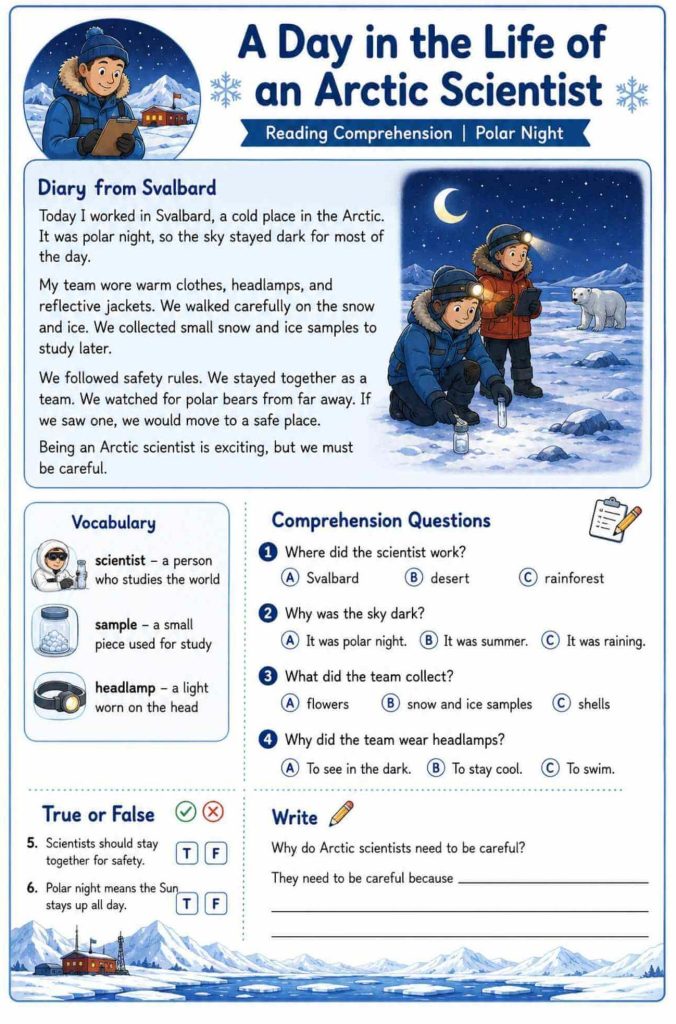
Students can read a short informational passage or diary entry about an Arctic scientist working in a place such as Svalbard.
For example, scientists may:
- wear warm layers;
- use headlamps;
- wear reflective clothing;
- collect snow and ice samples;
- work together for safety;
- observe Arctic wildlife from a safe distance.
This creates an excellent opportunity to combine science and reading comprehension.
Students can practice skills such as:
- identifying key details;
- answering multiple-choice questions;
- determining whether statements are true or false;
- using vocabulary in context;
- writing a short response based on the text.
Vocabulary might include words such as:
scientist – a person who studies the world
sample – a small amount collected for study
headlamp – a light worn on the head
Instead of teaching these words in isolation, students see how they are used in a meaningful Arctic setting.
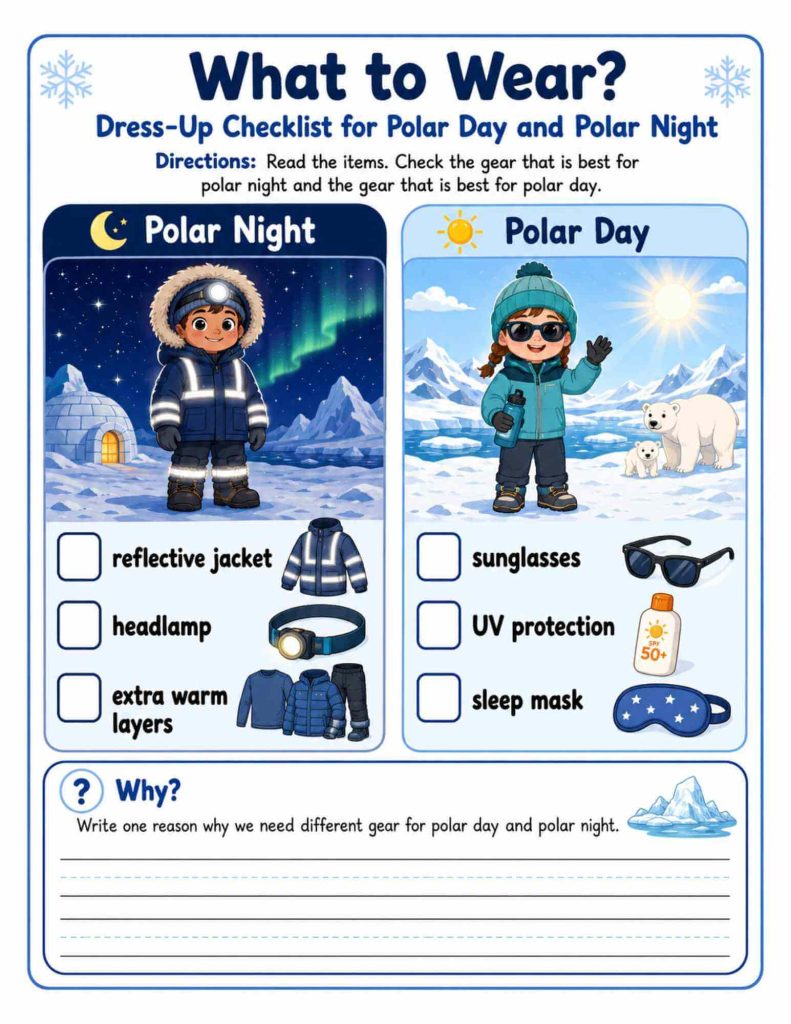
3. Ask Students: What Would You Wear?
A simple clothing activity can turn the lesson into a problem-solving challenge.
Ask students to imagine that they are preparing for two different Arctic experiences:
During Polar Night
Which items might be useful?
- headlamp
- reflective jacket
- extra warm layers
During Polar Day
What could help when the Sun stays up for a very long time?
- sunglasses
- sun protection
- sleep mask
Then ask the most important question:
Why?
This small step turns a matching activity into a cause-and-effect lesson.
Instead of simply checking a box, students need to explain their thinking.
For example:
A headlamp is useful during polar night because it helps people see when it is dark.
Or:
A sleep mask can help during polar day because the sky may still be light when it is time to sleep.
That type of reasoning is exactly what we want students to practice in elementary science.
To explore how Arctic light conditions affect living things, continue with [Teaching Food Chains and Food Webs in Grades 2–3] and help students understand how energy moves through polar ecosystems.
4. Help Students Imagine What Polar Night Feels Like
Polar day and polar night also provide an interesting opportunity to connect science with social-emotional learning.
Ask your students:
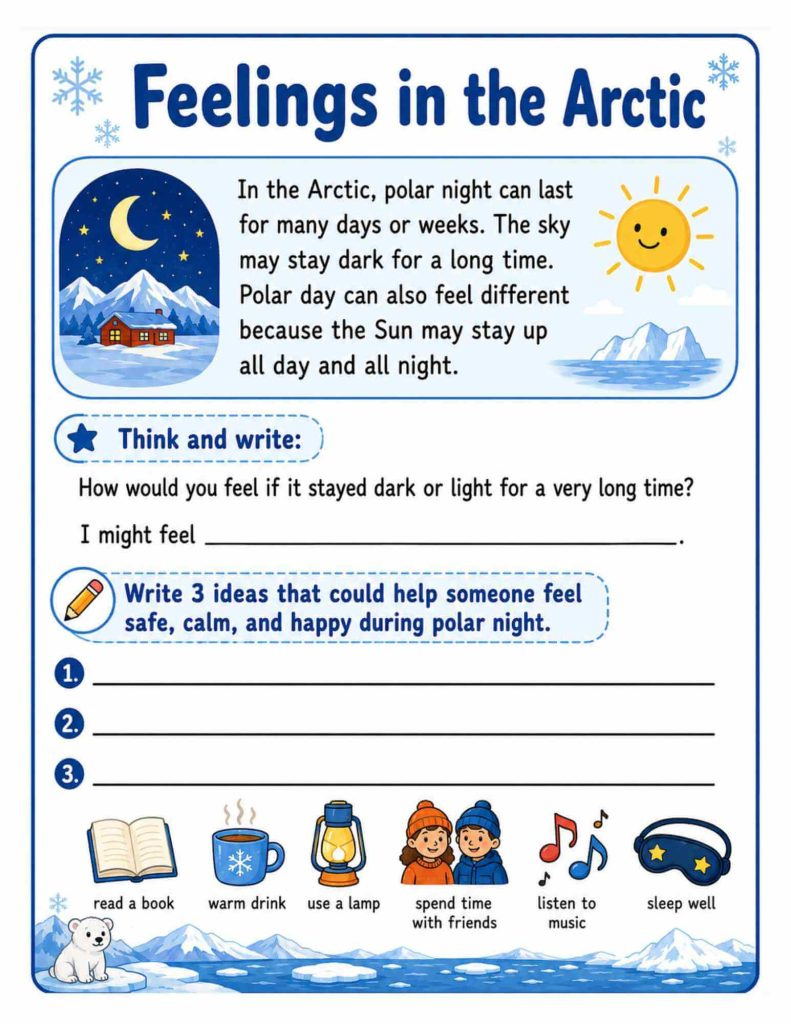
How would you feel if it stayed dark for a very long time?
Some children may say:
- tired
- calm
- nervous
- cozy
- curious
- lonely
- excited
There is no single correct emotional response.
The discussion can then move toward another question:
What could help someone feel safe, calm, and happy during a long Arctic winter?
Students might suggest:
- reading a book;
- having a warm drink;
- using lamps;
- spending time with friends or family;
- listening to music;
- following a healthy sleep routine.
This makes the Arctic feel less like an abstract place on a map and more like a real environment where people adapt their everyday routine
5. Compare Everyday Life During Polar Day and Polar Night
Once students understand both concepts, try a simple classroom comparison activity.
Divide a chart into two sides.
Polar Day
Ask:
What would you see?
Students might write:
- bright sky
- Sun
- snow
- ice
Then:
What might you need?
Possible answers:
- sunglasses
- sunscreen
- sleep mask
Finally:
What might be difficult?
Students may suggest:
- knowing when it is bedtime;
- sleeping while it is still light.
Polar Night
Ask the same questions.
Students might identify:
- dark skies;
- stars;
- the Moon;
- artificial lights;
- headlamps.
They may also recognize that people need ways to stay visible and safe in low-light conditions.
This works especially well as a sticky-note activity, partner discussion, or science notebook page.
6. Add an Arctic Scientist Writing Activity
After learning about Arctic scientists, students can imagine becoming one.
Try this writing prompt:
A Day in the Life of an Arctic Scientist
Imagine you are an Arctic scientist working during polar night. Describe your day. What do you wear? What do you study? What do you see?
For younger or less confident writers, provide sentence starters:
Today I am working in __________.
The sky is __________.
I am wearing __________.
My team is studying __________.
I can see __________.
We have to be careful because __________.
Third graders can expand the activity into a short diary entry or informational paragraph.
This is a simple way to bring science, reading, and writing together in one lesson.
7. Try a Simple Three-Day Arctic Mini-Unit
You do not need an entire month-long Arctic unit to explore these ideas.
They work well as a short three-day mini-unit.
Day 1: Discover Polar Day and Polar Night
Introduce the two concepts using informational texts or visual posters.
Create a class Polar Day vs. Polar Night chart.
If possible, demonstrate Earth’s tilt using a globe and flashlight.
Day 2: Life During Polar Night
Read about an Arctic scientist.
Practice vocabulary and reading comprehension.
Discuss why scientists need special clothing, equipment, and safety procedures.
Day 3: Apply What You Learned
Have students sort or select clothing for polar day and polar night.
Discuss how long periods of light and darkness may affect everyday life.
Finish with an Arctic scientist or polar night writing activity.
Why Polar Day and Polar Night Work So Well in Grades 2–3
One reason I love this topic for elementary students is that it naturally connects several subjects.
Students are learning about patterns in nature and changes in daylight, but at the same time they are practicing:
- informational reading;
- science vocabulary;
- compare and contrast;
- cause and effect;
- making inferences;
- explaining their reasoning;
- opinion and informational writing;
- real-world problem solving.
And because the idea of the midnight sun feels so unusual, students usually have plenty of questions.
That curiosity gives teachers a natural starting point for deeper learning.
Bring Polar Day and Polar Night Into Your Classroom
If you would like the activities already prepared, my Polar Day & Polar Night Arctic Activity Pack combines science, reading, vocabulary, comprehension, writing, and real-world application for 2nd and 3rd grade.
Students can explore:
- what polar day is;
- what polar night is;
- the midnight sun;
- life as an Arctic scientist;
- Arctic science vocabulary;
- reading comprehension;
- polar day vs. polar night clothing;
- safety in Arctic environments;
- feelings and everyday life during long periods of daylight or darkness;
- short written responses.
The activities can be used together as a short Arctic mini-unit or individually during a winter, polar regions, Earth science, or Arctic-themed unit.
Frequently Asked Questions About Polar Day and Polar Night
Polar day is a time when the Sun stays above the horizon for 24 hours or longer. It happens during summer in some parts of the Arctic. Polar day is also called the midnight sun because the Sun can still be visible even late at night.
Polar night happens during winter in some Arctic locations when the Sun stays below the horizon for 24 hours or longer. Depending on the location and time of year, the sky may still have some twilight, so polar night does not always mean complete darkness all day.
Polar day and polar night happen because Earth is tilted as it travels around the Sun. During Arctic summer, the northern part of Earth is tilted toward the Sun. During winter, it is tilted away from the Sun. This changes how much sunlight Arctic regions receive during different parts of the year.
Not always. Even when the Sun stays below the horizon, some Arctic locations may experience periods of twilight. The amount of light depends on the location and the time of year.
Polar day and polar night both last at least 24 hours by definition. In locations farther north, these conditions can continue for days or even weeks.
Polar day is commonly called the midnight sun. The name comes from the unusual sight of the Sun remaining above the horizon even around midnight.
Start with a simple comparison chart showing when each phenomenon occurs and whether the Sun is above or below the horizon. A globe and flashlight demonstration can help students visualize how Earth’s tilt changes the amount of sunlight received in Arctic regions.
Students can then practice reading comprehension, vocabulary, compare-and-contrast skills, cause and effect, and short writing activities.
One simple activity is to use a flashlight as the Sun and a tilted globe as Earth. Darken the classroom, shine the flashlight toward the globe, and slowly rotate it. Students can observe how some northern areas remain in light while others stay in shadow.
Another option is to have students compare what clothing and equipment people might need during polar day and polar night.
During polar night, people may use headlamps, reflective clothing, warm layers, and artificial lighting. During polar day, sunglasses, sun protection, and sleep masks can be useful because daylight may continue late into the night.
These examples are a good way to introduce students to the idea that people change their routines and use different tools to adapt to environmental conditions.
A polar day and polar night lesson can support much more than science. Students can practice:
informational reading
science vocabulary
compare and contrast
cause and effect
making inferences
explaining evidence and reasoning
informational writing
real-world problem solving
This makes the topic especially useful for an integrated Grades 2–3 Arctic science mini-unit.