Polar ecosystems may look cold and empty at first, but they are filled with living things that depend on one another for food. From tiny phytoplankton to krill, fish, seals, and polar bears, each organism has a place in the Arctic food chain.
Exploring a simple polar food chain is an engaging way for second- and third-grade students to learn how animals get their food and how living things in a habitat are connected.
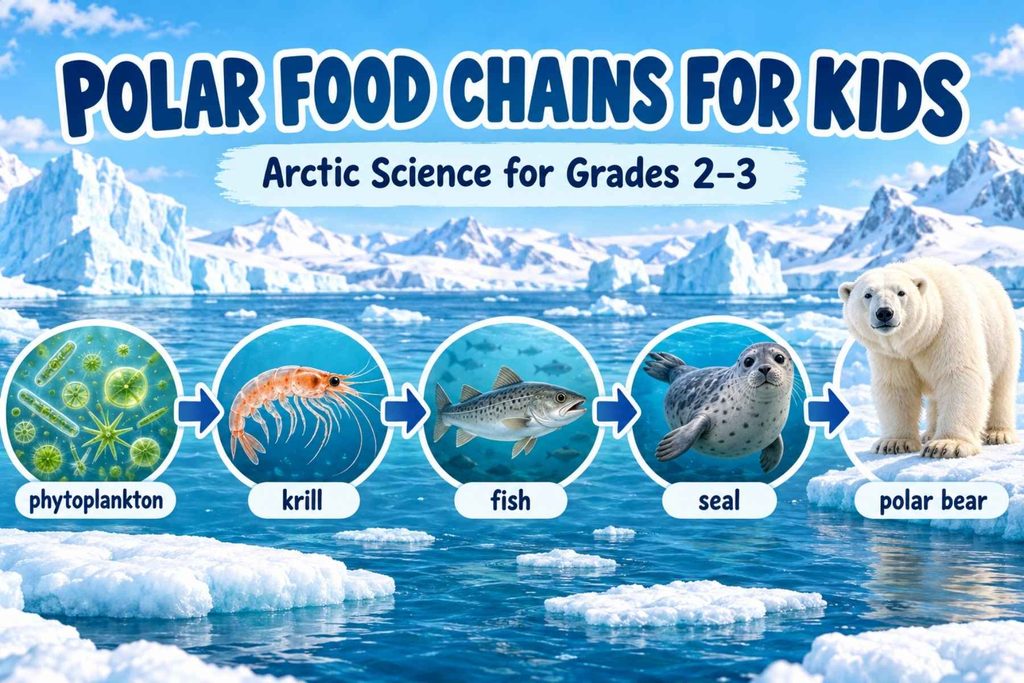
Arctic Science for Grades 2–3

2. What Is a Food Chain?
A food chain shows how living things are connected through food. It can also help children see how energy moves through an ecosystem.
In a simple food chain, arrows point from the food toward the animal that eats it. Follow the arrows!
Each arrow shows where the food — and the energy stored in that food — goes next.
3. Start With the Producer: Phytoplankton
Every food chain needs a starting point. In the Arctic Ocean, tiny organisms called phytoplankton use sunlight to make their own food.Because phytoplankton make their own food, they are called producers. Krill eat phytoplankton. Arctic cod can eat krill. Seals can eat fish such as Arctic cod, and polar bears may hunt seals.

4. Build an Arctic Food Chain
After introducing the food chain, let students build one themselves.
Give students pictures of phytoplankton, krill, Arctic cod, a seal, and a polar bear. Ask them to arrange the organisms from the producer to the top predator.
5. Food Chain or Food Web?
A food chain shows one pathway through an ecosystem.
In nature, however, most animals eat more than one type of food. When several food chains connect, they form a food web.
For example, Arctic cod may be eaten by seals, while other Arctic predators may also eat fish or seals. This means that the animals are connected in more than one way.

6. What Happens When One Part of the Food Chain Changes?
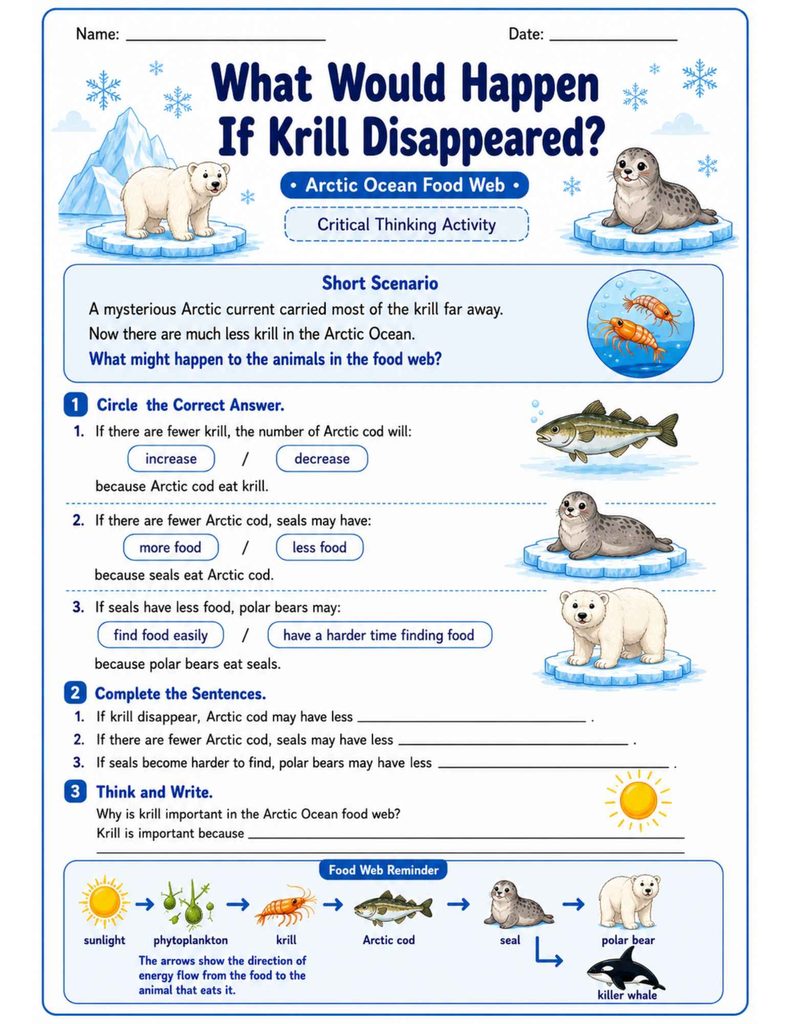
What Would Happen If Krill Disappeared?
Once students understand the food chain, ask a simple question:
What might happen if there were suddenly much less krill in the Arctic Ocean?
7. Arctic vs. Antarctic Food Chains
Students often think the Arctic and Antarctica have the same animals. Comparing the two polar regions is an easy way to reinforce the idea that different habitats support different communities of living things.
Arctic example
phytoplankton → krill → Arctic cod → seal → polar bear
Antarctic example
phytoplankton → krill → fish → penguin → leopard seal

8. Easy Polar Food Chain Activity for the Classroom
You don’t need a complicated experiment to explore polar food chains. Try this simple sequence:
- Show students an Arctic food chain.
- Identify the producer.
- Follow the arrows and name what each animal eats.
- Let students arrange food chain picture cards.
- Remove one organism — such as krill — and discuss what might happen next.
For second graders, focus on identifying and sequencing the organisms. For third graders, extend the activity by asking students to explain why changing one part of the food chain could affect other organisms.
Want an easy way to continue this lesson?
My Arctic Ocean Food Chains and Food Webs printable resource includes food chain building activities, producer and consumer practice, Arctic and Antarctic comparisons, food web activities, critical-thinking questions, and black-and-white student pages for easy classroom use. https://www.teacherspayteachers.com/Product/Arctic-Ocean-Food-Chains-and-Food-Webs-Polar-Ecosystems-Worksheets-Grades-13-15815432
Frequently Asked Questions About Polar Food Chains
A polar food chain shows how living things in Arctic or Antarctic ecosystems are connected through food. It helps students understand which organisms produce food, which animals eat other organisms, and how energy moves through an ecosystem.
One simple Arctic food chain is: phytoplankton → krill → Arctic cod → seal → polar bear. This sequence is easy for elementary students to follow and works well for sequencing and cut-and-paste activities.
Phytoplankton are producers because they use sunlight to make their own food. They form an important starting point in many ocean food chains.
Krill are an important food source for many animals. In a simple Arctic food chain, krill eat phytoplankton and may be eaten by fish such as Arctic cod. If krill numbers decrease, animals higher in the food chain may also have less food available.
A food chain shows one pathway of feeding relationships. A food web shows several connected food chains and helps students see that animals may have more than one food source or predator.
In this resource, polar bears and killer whales are shown as top predators in the Arctic Ocean food web.
No. The two regions share some organisms, such as krill and phytoplankton, but they also have different animals. For example, polar bears are associated with the Arctic, while penguins and leopard seals appear in the Antarctic food chain activity. ArcticOceanFoodChainsandFoodWeb…
Start with a simple visual food chain, identify the producer and consumers, and have students follow the arrows from one organism to the next. Then extend the lesson with picture sorting, cut-and-paste sequencing, matching activities, or a question such as “What would happen if krill disappeared?”