with free sample
What would you discover on a journey from the sunny ocean surface to its deepest trenches? Learning about ocean zones helps children explore how underwater habitats change with depth—and how animals survive in different conditions.
These ocean zones coloring pages combine coloring, simple reading, and observation. Here is a short guide to the five ocean layers, followed by classroom ideas for bringing them to life.
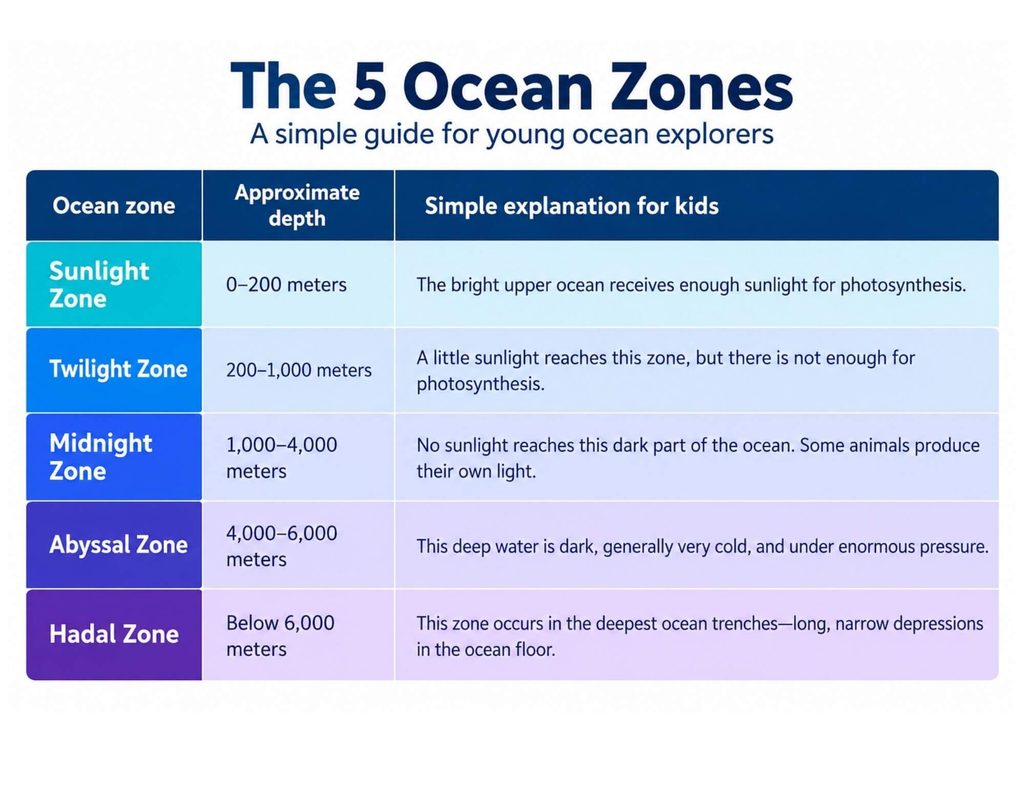
The 5 Ocean Zones Explained for Kids
Scientists divide the ocean into depth zones. As we travel downward, sunlight fades and water pressure increases. The depths below are approximate boundaries used to describe these habitats.
Explore Ocean Habitats Through Coloring
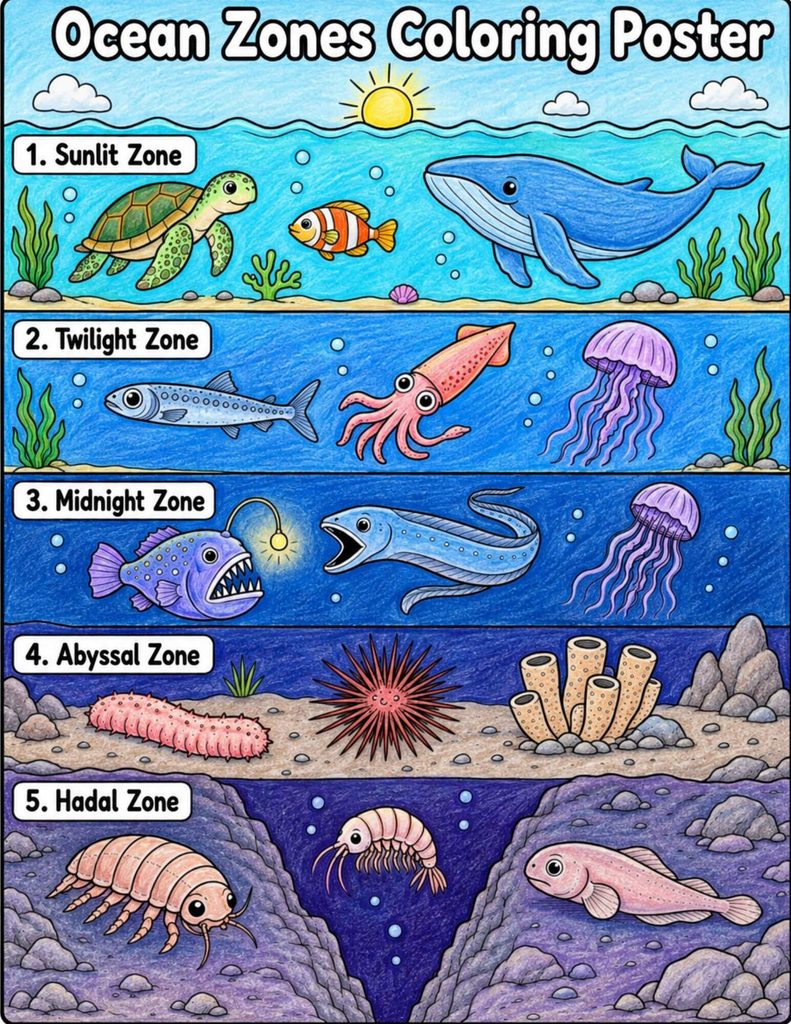
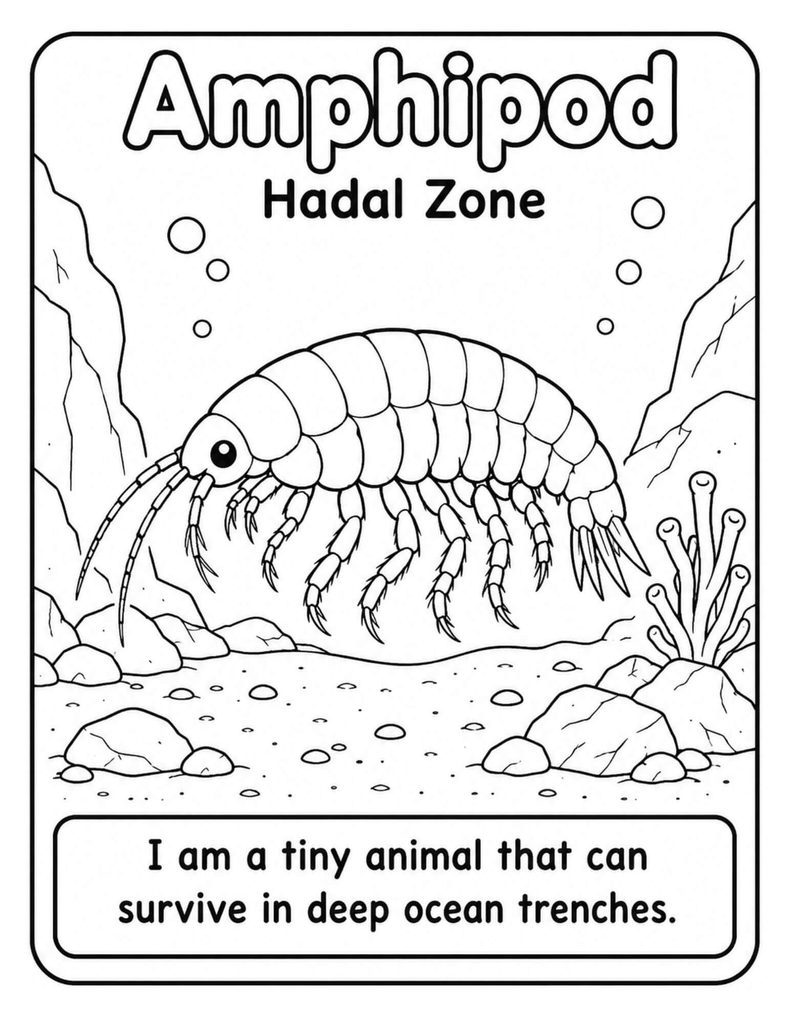
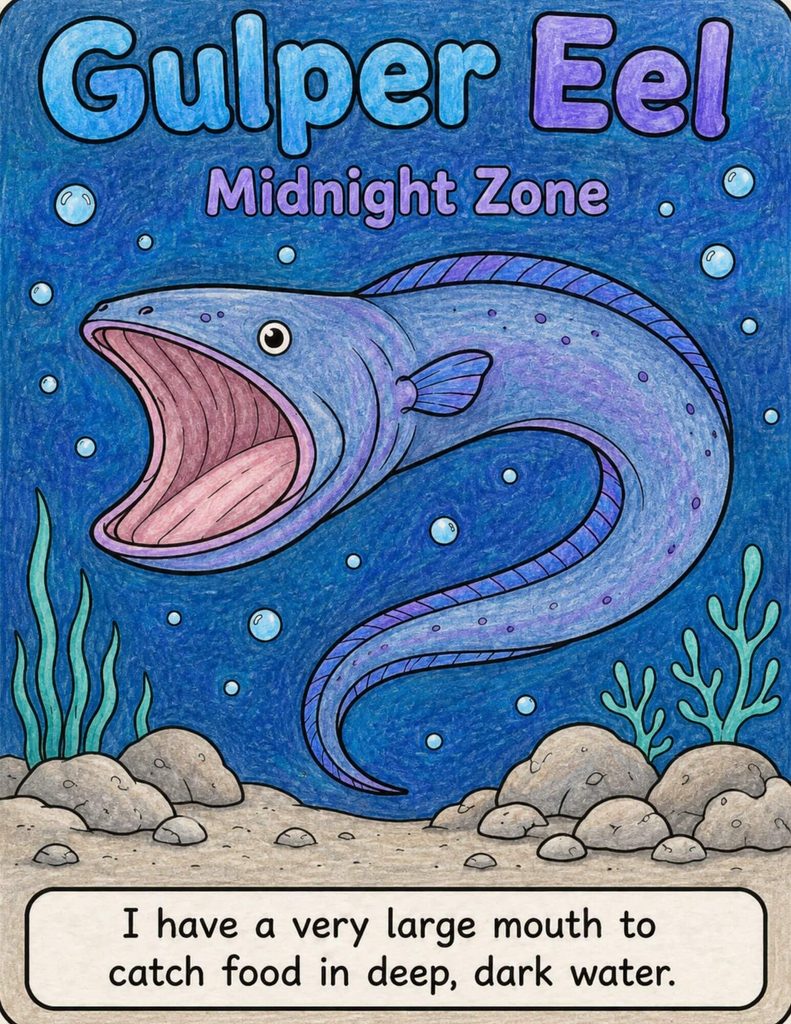
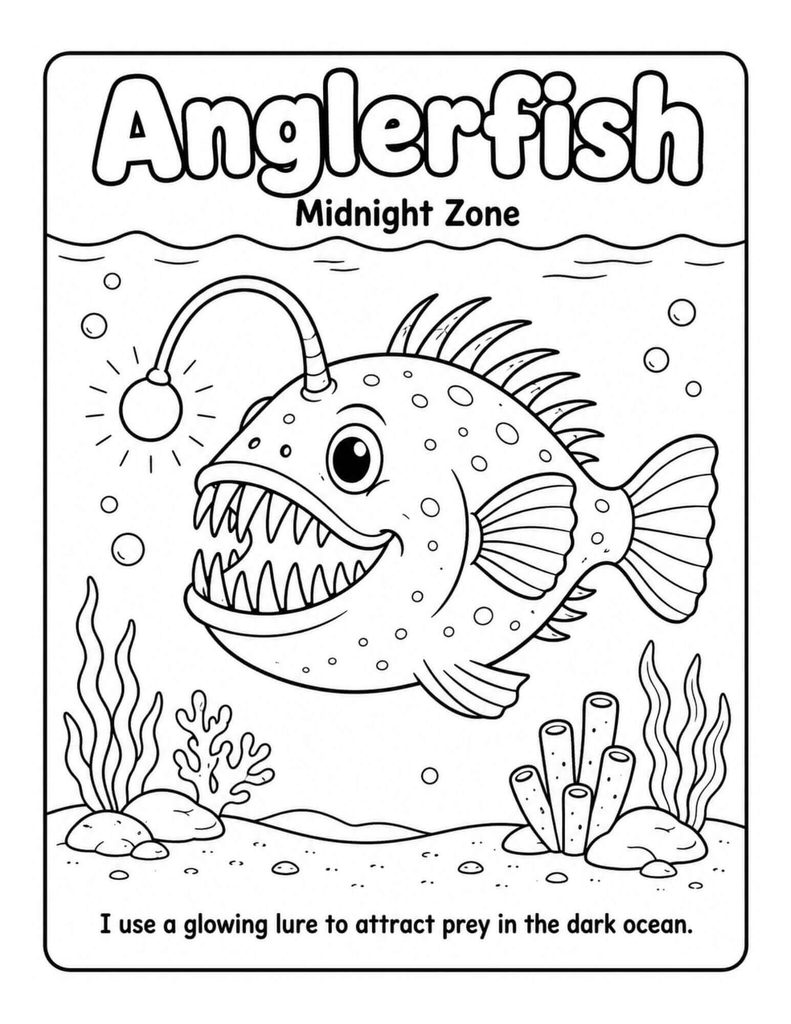
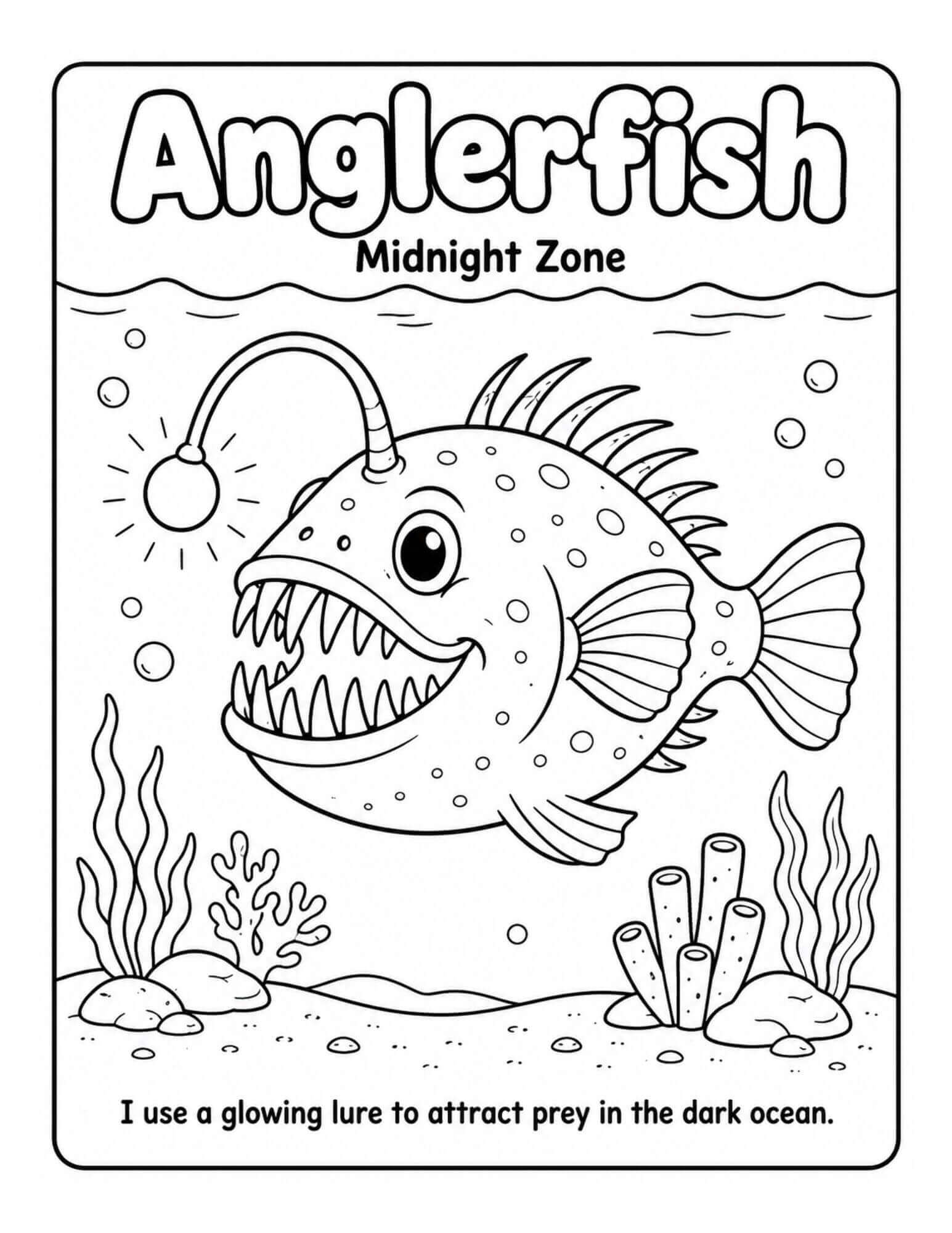
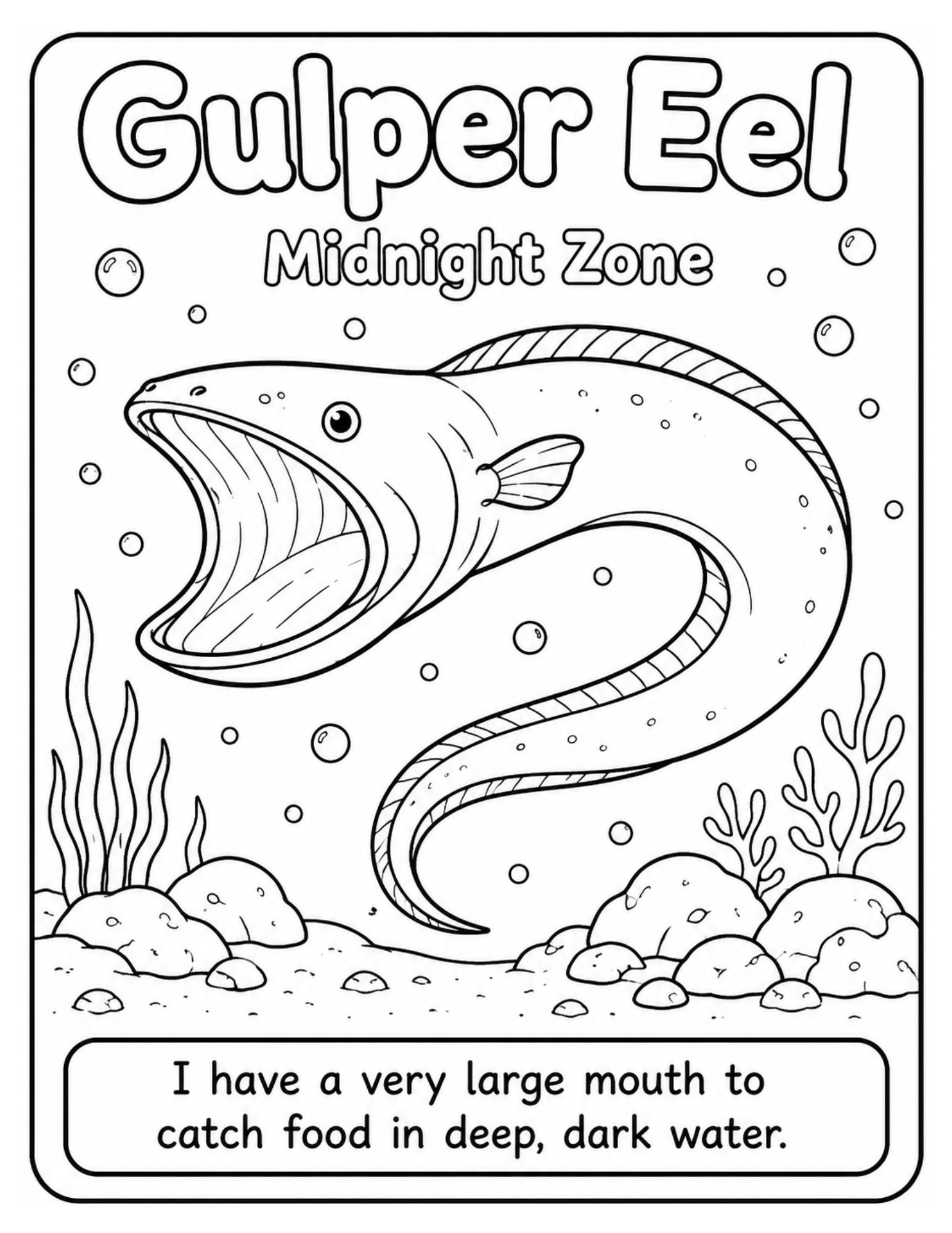
The Lolliart Science collection includes 15 full-page animal coloring sheets, an ocean zones coloring poster, and smaller versions of the animal pages. Each animal sheet pairs an illustration with a short sentence.
Start with the poster. Follow the zones downward together, then invite children to use progressively darker blues to represent decreasing sunlight. Explain that the colors are a model: the midnight, abyssal, and hadal zones all receive no sunlight.
Next, let each child choose an animal. Read its sentence together and look closely at its body before coloring. Discuss:
- What do you notice about its mouth, shell, fins, or other features?
- How might one of these features help it survive?
- How is it similar to or different from another animal?
Use real animal photographs alongside the drawings so children can compare a simplified illustration with a living organism.
For a shared display, arrange the finished animal pages around the poster. Children can introduce their animal using the sentence starter: “One feature I noticed is…”
Frequently Asked Questions About Ocean Zones
Water absorbs and scatters sunlight, so less light reaches deeper water. The twilight zone receives only faint sunlight, and below about 1,000 meters, sunlight no longer reaches the water. NOAA explains this change in light with depth.
Not always. Some animals move between depths to feed, while others stay within a more limited range. The depth where an animal lives depends on its species and needs. A zone label is a useful introduction, but it does not describe every member of an animal group.
The abyssal zone extends approximately 4,000–6,000 meters below the surface. The hadal zone begins below about 6,000 meters and occurs in deep ocean trenches. Both lack sunlight and have very high water pressure.
Coloring gives children a simple starting point for noticing ocean animals, learning new vocabulary, and asking questions about underwater life. Explore the Ocean Zones Coloring Pages collection from Lolliart Science to add a creative activity to your ocean habitat lessons.