with free sample
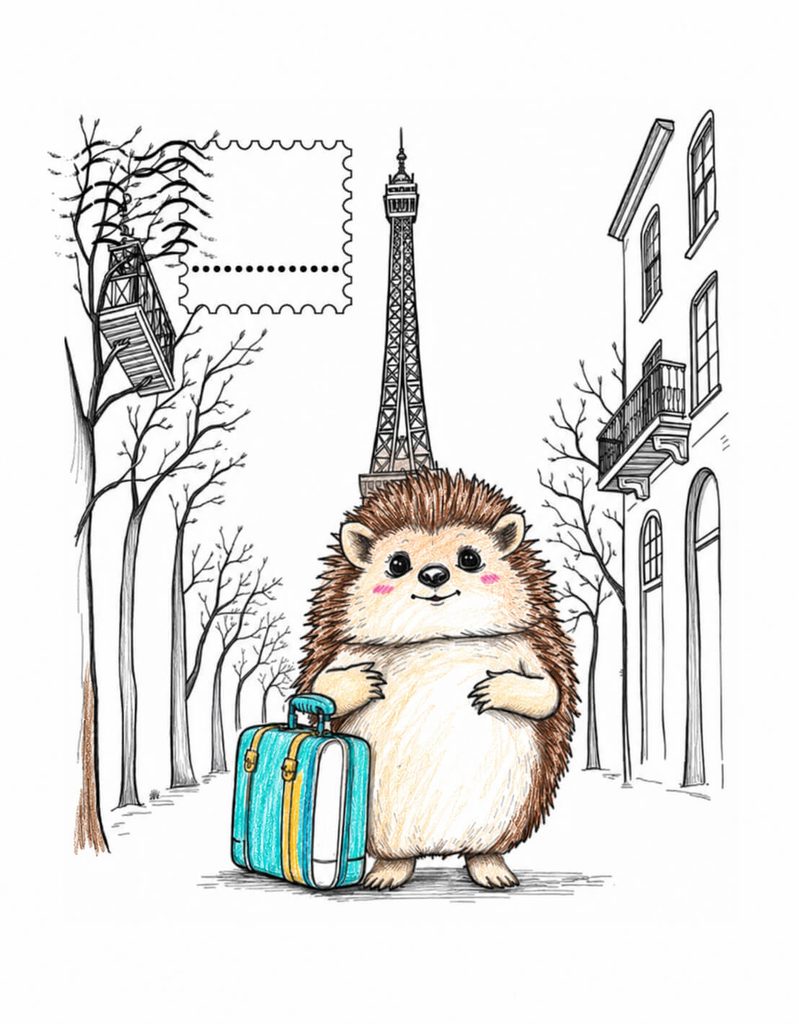
A little hedgehog, a suitcase, and a famous place to explore: sometimes that is all you need to begin a geography conversation.
World landmarks coloring pages can become the starting point for a small classroom adventure. With a globe, a photograph, and a few questions, children can connect the picture in front of them to a real place in the world.
My World Landmarks Coloring Pages collection includes 32 coloring pages featuring a traveling hedgehog beside landmarks and destinations around the world. Here are some simple ways to use these pages for early geography learning in kindergarten through third grade.
Start with a picture and a question
Before handing out the crayons, invite children to look closely at one page.
What do they notice? A tall tower? An arch? A bridge stretching across the water? What would they like to find out?
The hedgehog gives the activity a playful thread: “Where has our traveler arrived today?” Children do not need to recognize the landmark already. Their observations give you a place to begin.
Introduce a landmark as a recognizable feature of a place. Some landmarks are built by people, while others are natural features. This collection offers opportunities to explore both buildings and a natural landmark such as Mount Fuji.
Use a simple routine: look, locate, color, share
Choose one destination at a time and repeat four steps:
- Look: Show a real photograph alongside the coloring page. Name something children can see in both.
- Locate: Find the country on a globe or world map. Add the city when it is useful and age appropriate.
- Color: Let children explore the illustration and talk about its details.
- Share: Ask each child to say one thing they noticed or learned.
For example, the Taj Mahal page can introduce a landmark in Agra, India. Find India together, show a photograph, and invite children to notice the central dome and tall towers. The official Taj Mahal website provides background information and photographs for teacher preparation.
You do not need a long list of dates or facts. One place name, one map connection, and one thoughtful observation are enough for an introductory activity.
Connect landmarks to places on a map
A coloring page becomes a geography activity when children connect its subject to a location.
Start by finding your own country. Then locate the destination and ask: “Are these places in the same country or different countries?” With older children, introduce the continent and look for oceans between locations.
Use clear examples to distinguish a landmark, a city, and a country:
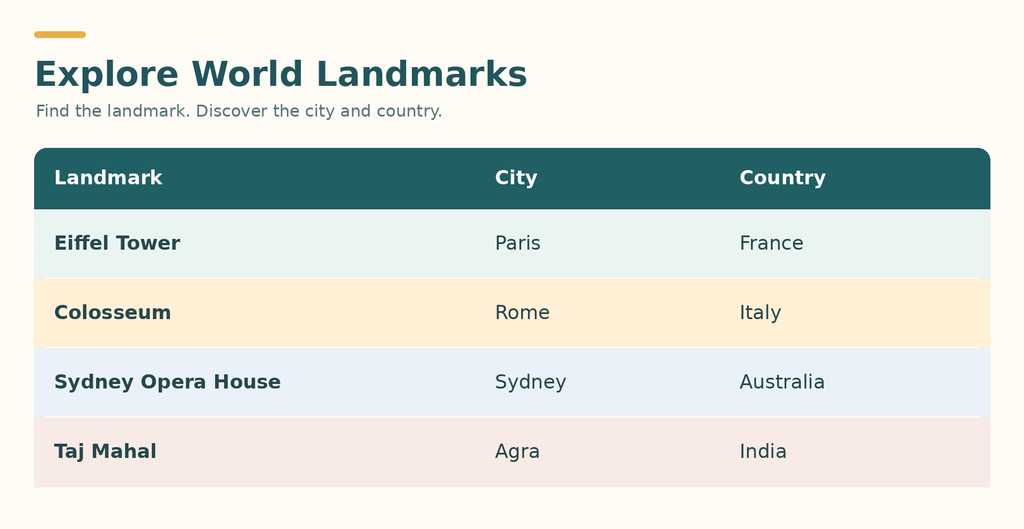
For younger learners, pointing to a country with adult help may be enough. Older students can add labels and explain how the place names fit together.
Turn the pages into a travel journal
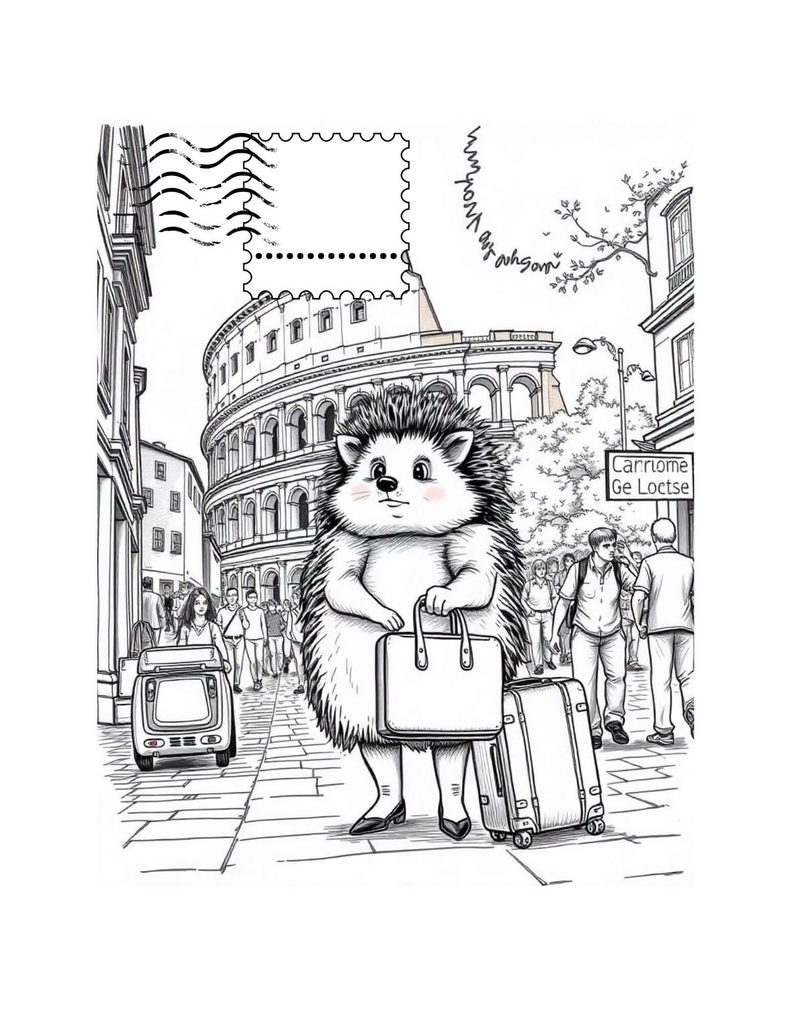
The suitcase and postage-style details make a travel journal a natural extension of these illustrations.
After coloring, children can use the back of the page or a separate sheet to complete a short entry:
- Today our hedgehog visited…
- This place is in…
- I noticed…
- I wonder…
Kindergarten children can dictate a sentence or draw a detail. First graders might complete one sentence frame. Second and third graders can write a short imaginary postcard using the location and an observation from the lesson.
Collect finished pages over several weeks to create a class travel book. The journal prompts are an activity you can add to the coloring pages; they are not separate worksheets included in the resource.
Compare two destinations
Choose two illustrations and place them side by side. Try the Eiffel Tower and the Leaning Tower of Pisa, or the Sydney Opera House and the Colosseum.
Ask children to compare visible features:
- What shapes do you see?
- Which parts are curved, pointed, or straight?
- Can you find repeated windows, arches, or columns?
- What looks similar? What looks different?
Then return to the map. Are the landmarks in the same country? Can children find both destinations?
Use photographs to check observations. The coloring pages are playful illustrations, so photographs provide a helpful reference for the real structures and their surroundings.
Make an “Our World Travels” display
Place a world map at the center of a bulletin board and arrange selected finished pages around it. Add a small numbered marker to each destination and a matching number beside its picture.
Children can revisit the display to find places they remember or introduce a destination to a partner. Try prompts such as “Show me a place in Italy” or “Find a landmark we explored in Asia.”
Keep the display manageable by adding a few destinations at a time. You can also include a photograph or drawing of a familiar local landmark, connecting the wider world to the children’s own surroundings.
Keep the activity flexible for different ages
| Age group | Suggested focus | Simple response |
|---|---|---|
| Kindergarten | Notice a feature and locate a country with help | Point, draw, or dictate a sentence |
| Grade 1 | Connect a landmark with its country | Complete a short sentence frame |
| Grades 2–3 | Locate, compare, and describe destinations | Add labels or write a short postcard |
Some illustrations contain small architectural details. Children can color selected sections, use a limited palette, or finish over more than one session. Completing every detail does not need to be the lesson’s goal.
Look beyond the landmark
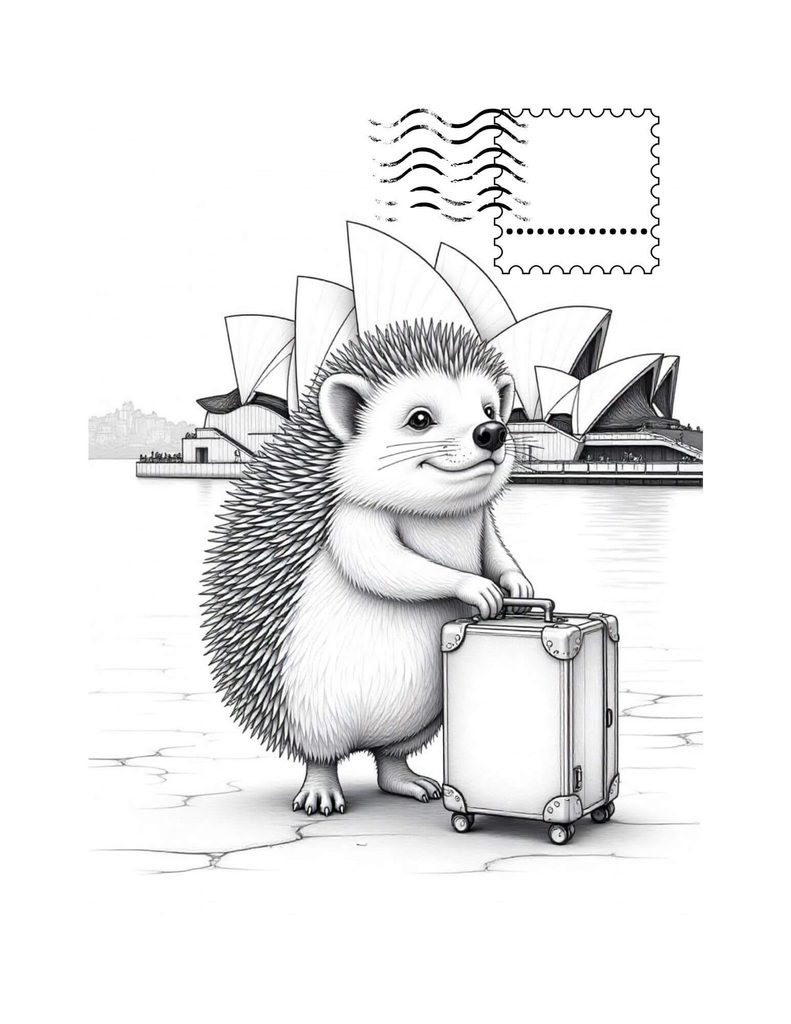
A famous building is one small part of a place. Pair the activity with an age-appropriate book or photographs that also show everyday life: parks, homes, schools, streets, and people.
Make room for children’s connections without expecting anyone to represent an entire country or culture. A child may want to share a family story, a place they have visited, or a question about somewhere unfamiliar.
The traveling hedgehog is a fictional guide. Explain that the real places exist, while the animal’s adventures are pretend.
Try a small geography adventure
You can use these world landmarks coloring pages for a weekly destination activity, a teacher-guided social studies center, a homeschool geography session, or an art-and-writing project.
The collection includes 32 coloring pages and six illustrated location-reference pages. Supply your own map or globe, real photographs, and any writing materials you want to add.
Choose a page from my World Landmarks Coloring Pages & Geography Activities for Kids, Grades K–3, open a map, and begin with a question: “Where shall our little traveler go today?”
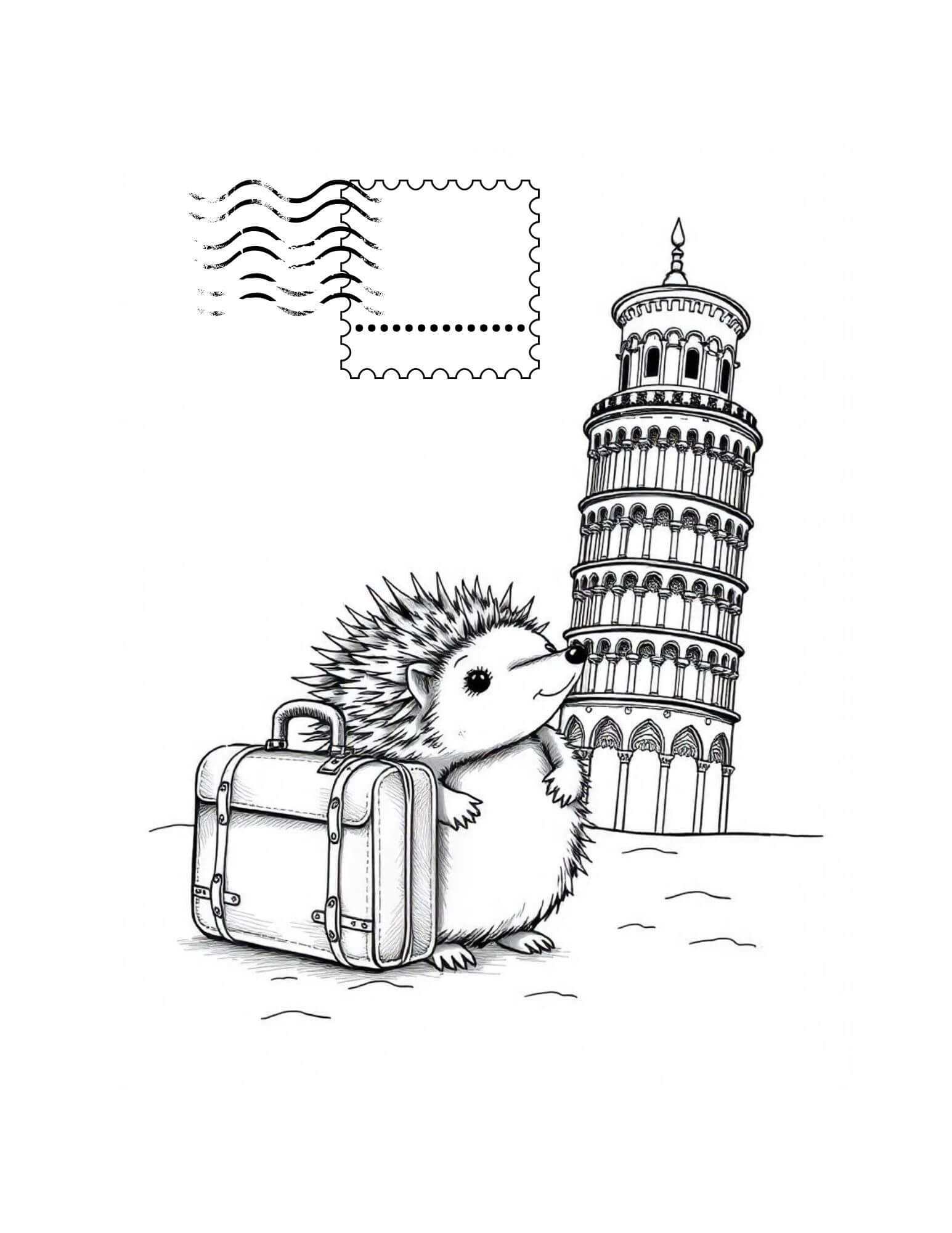
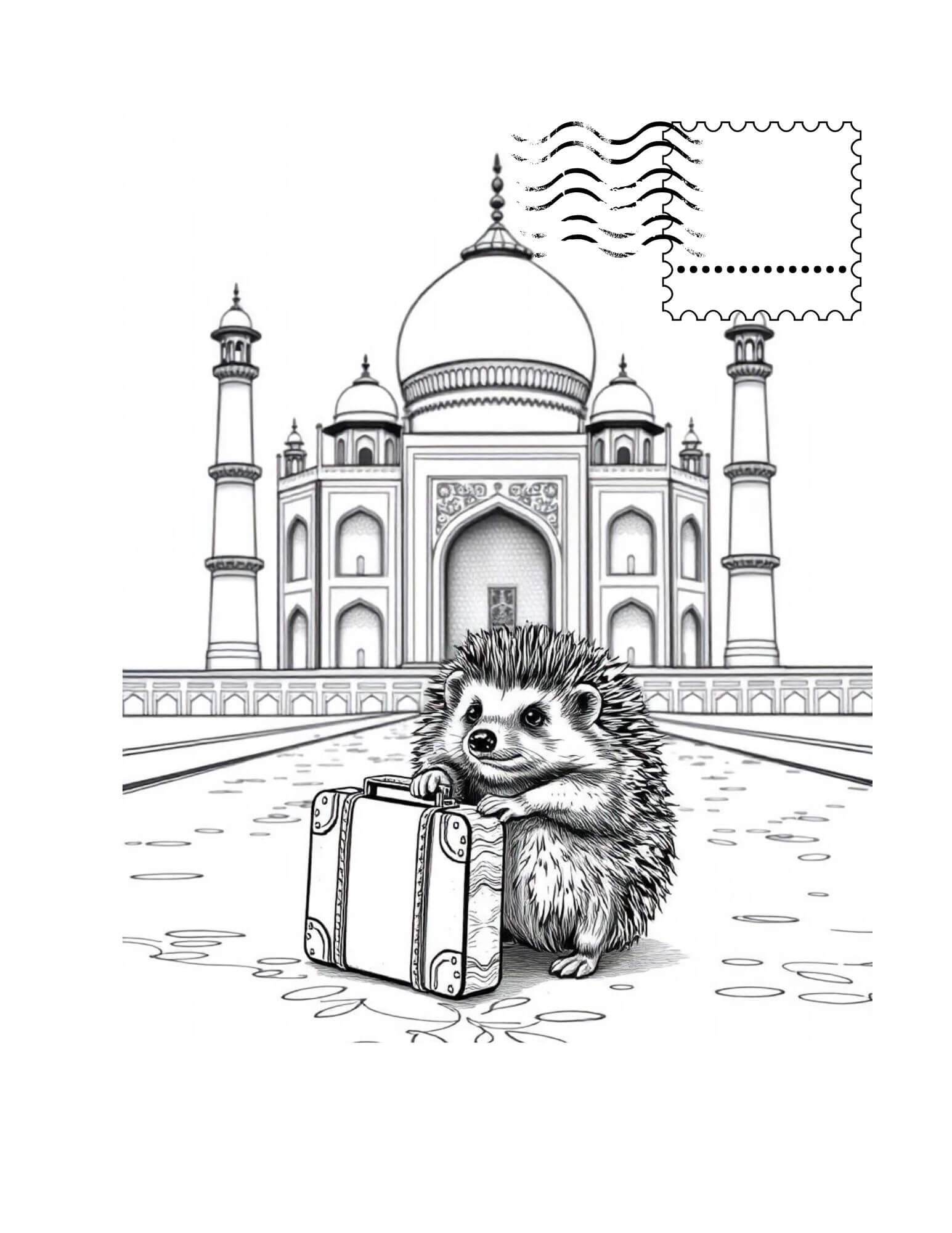
Pair each coloring page with a world map or globe. Find the country together, introduce the landmark, and compare the illustration with a real photograph. After coloring, invite children to share one detail they noticed.
Yes! Kindergarten children can explore the pictures, color larger areas, and locate countries with adult help. Older students in Grades 1–3 can add city and country names, compare landmarks, or write a short imaginary postcard.
The collection includes 32 coloring pages featuring a traveling hedgehog at landmarks around the world, plus six illustrated location-reference pages. Add your own map, photographs, and writing materials to turn the pages into geography lessons or a travel journal.