With free sample
How Can Coloring Activities Help Students Learn About Arctic Tundra Plant Adaptations?

How Do Arctic Tundra Plants Survive the Cold?
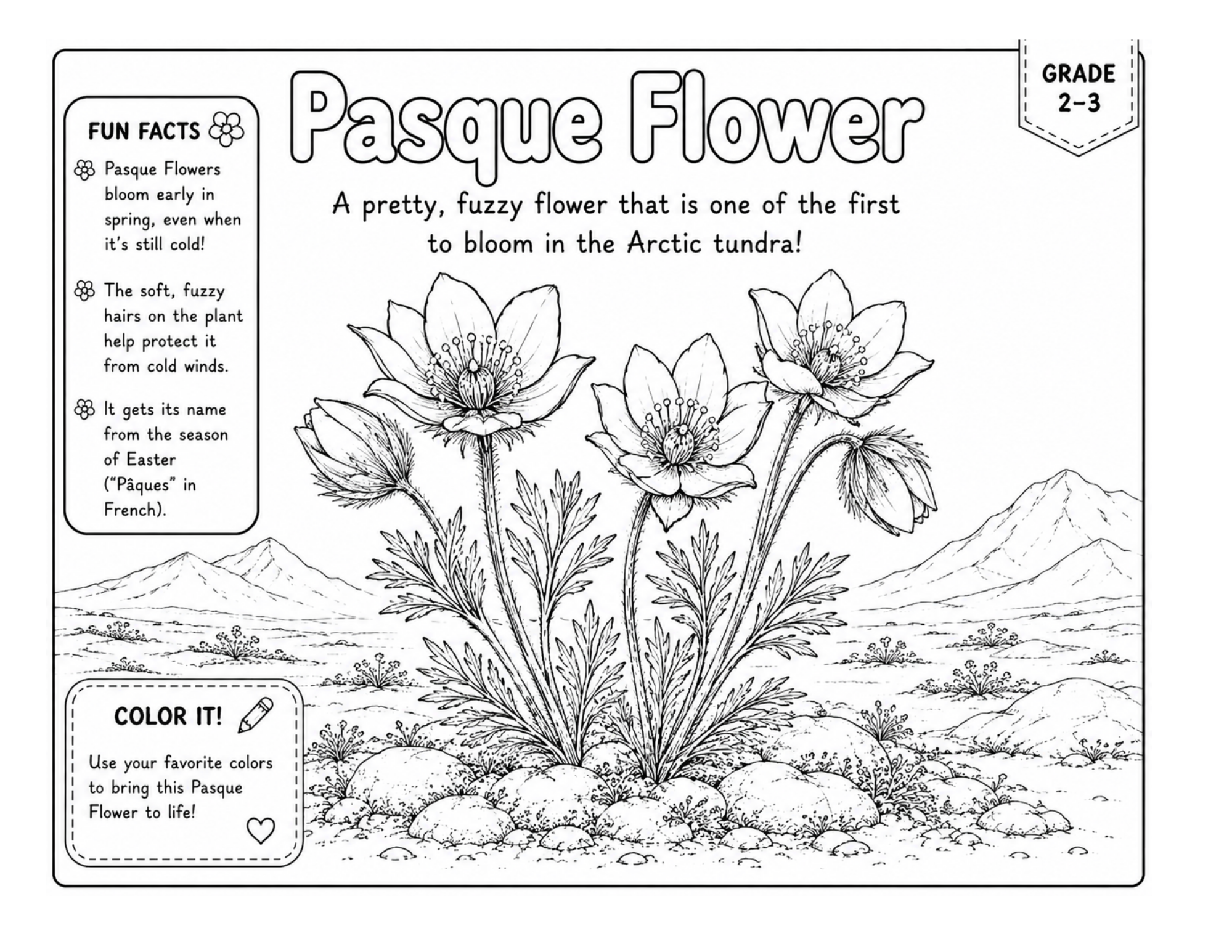
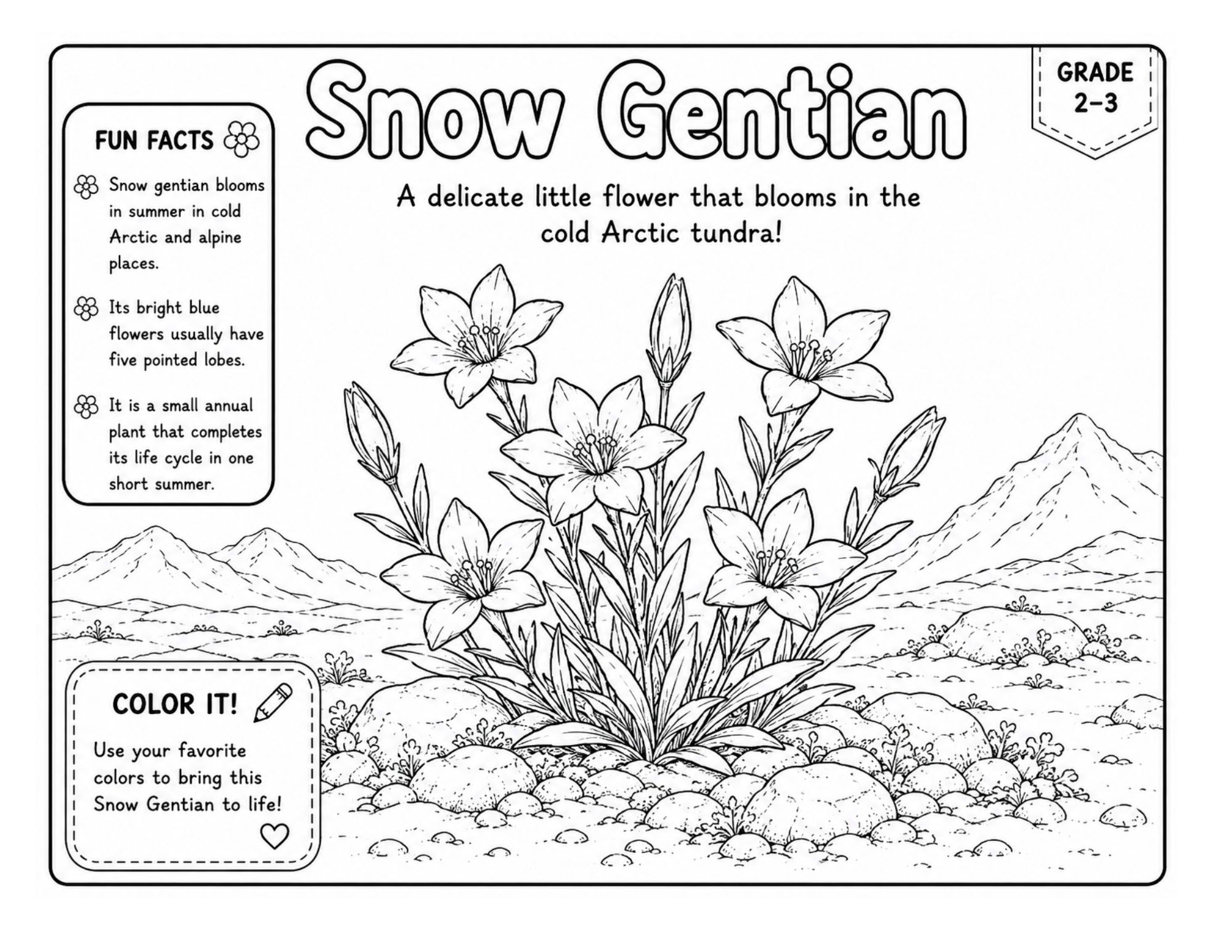
Help students in Grades 2–3 discover the iconic plants and lichens of the Arctic tundra through a creative and relaxing coloring activity. These printable pages introduce children to organisms such as Arctic moss, Arctic willow, reindeer moss (a type of lichen), cotton grass, and the Arctic poppy.
Cotton grass is a tussock-forming sedge commonly found alongside low-growing willows, mosses, and lichens in Arctic tundra habitats, as described by the U.S. National Park Service.
Arctic tundra vegetation includes flowering plants, sedges, dwarf shrubs, mosses, and lichens. Many tundra plants remain small, grow close to the ground, or form low mats and tussocks. These characteristics help them survive strong winds, cold temperatures, and a short growing season. The University of Alaska Fairbanks offers a helpful tundra plant adaptation lesson that teachers can use to extend this topic.
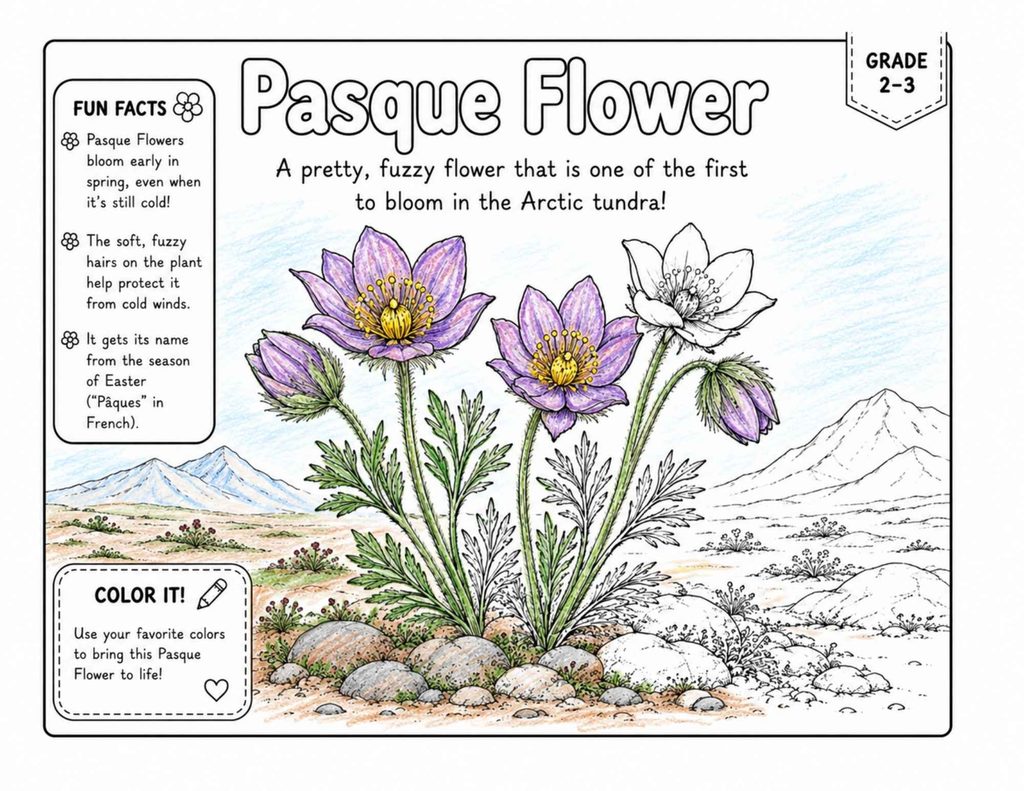
Each page combines a detailed plant illustration with short, student-friendly facts. As children color, they observe the plant’s shape, leaves, flowers, and other important features. This playful approach makes unfamiliar Arctic plants easier to recognize and remember.
Realistic photo flashcards can also be used alongside the coloring pages, helping students compare the illustrations with the plants as they appear in nature. The activities are ideal for Arctic habitat units, tundra ecosystem lessons, science centers, independent work, or homeschool learning.
By combining science with art, students can build vocabulary, practice observation skills, and learn how tundra organisms survive cold, windy environments. This focus on observing living things in different habitats also supports the ideas addressed in NGSS 2-LS4-1.


Frequently Asked Questions (FAQ)
This worksheet is specifically designed for students in 2nd and 3rd grade (ages 7–9).
Does this activity require advanced writing skills?
No, the low-frustration design focuses heavily on drawing and checkbox selections rather than long writing pieces.
Yes, the clear and simple English vocabulary makes it excellent for bilingual programs and language integration.
Students will learn about the Arctic Poppy, Arctic Willow, Arctic Moss, and Lichen.
You can download the full “Arctic Survivor Passport” activity sheet directly on Teachers Pay Teachers (TPT) using the link in the post.
Professional References and Further Reading
- Plants of Bering Land Bridge National Preserve – National Park Service
- Mosses and Liverworts of the Alaskan Tundra – National Park Service
- Arctic Willow and Other Tundra Shrubs – National Park Service
- Fire in Ecosystems: Arctic Tundra – National Park Service
- Plan Your Tundra Plant – University of Alaska Fairbanks
- NGSS 2-LS4-1: Diversity of Life in Different Habitats