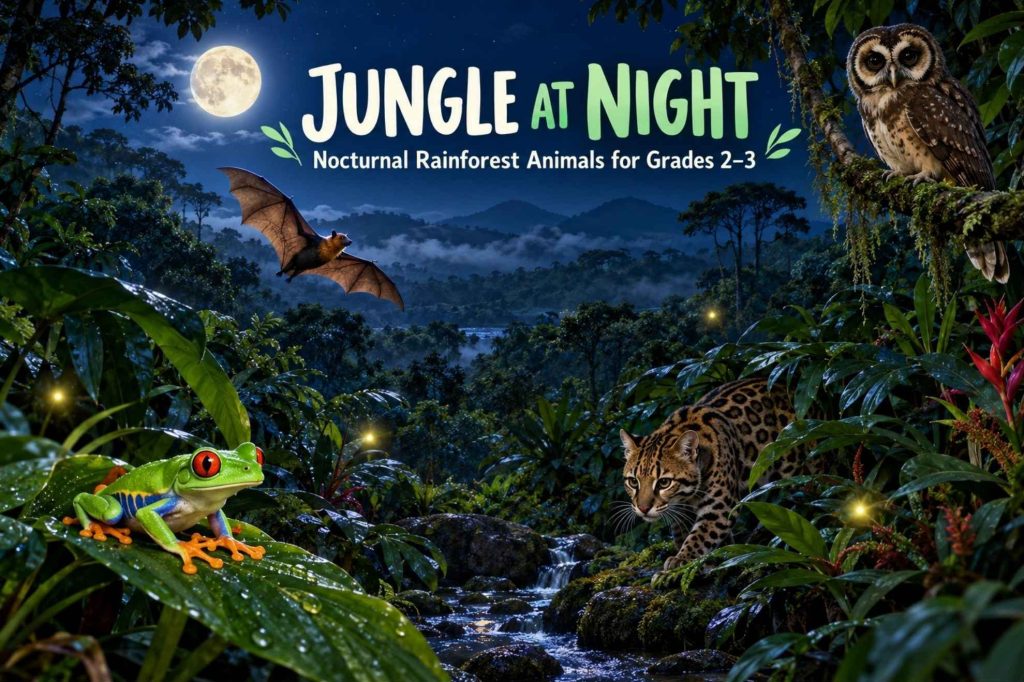
For many animals, nighttime is when the jungle really comes alive. Bats begin searching for food, owls listen for movement, frogs call from the leaves, and predators move through the shadows.
That makes nocturnal rainforest animals a fascinating science topic for second and third grade. It also gives students an easy way to explore bigger science ideas such as animal adaptations, habitats, camouflage, senses, and patterns of behavior.
Start With One Simple Question
A good way to begin is to ask:
What changes in the rainforest when the sun goes down?
Students usually know that some animals sleep at night, but they may not realize that many rainforest animals do the opposite.
Introduce the words:
diurnal – active during the day
nocturnal – active at night
Then show students several rainforest animals and let them predict which ones are active during the day and which are active at night.
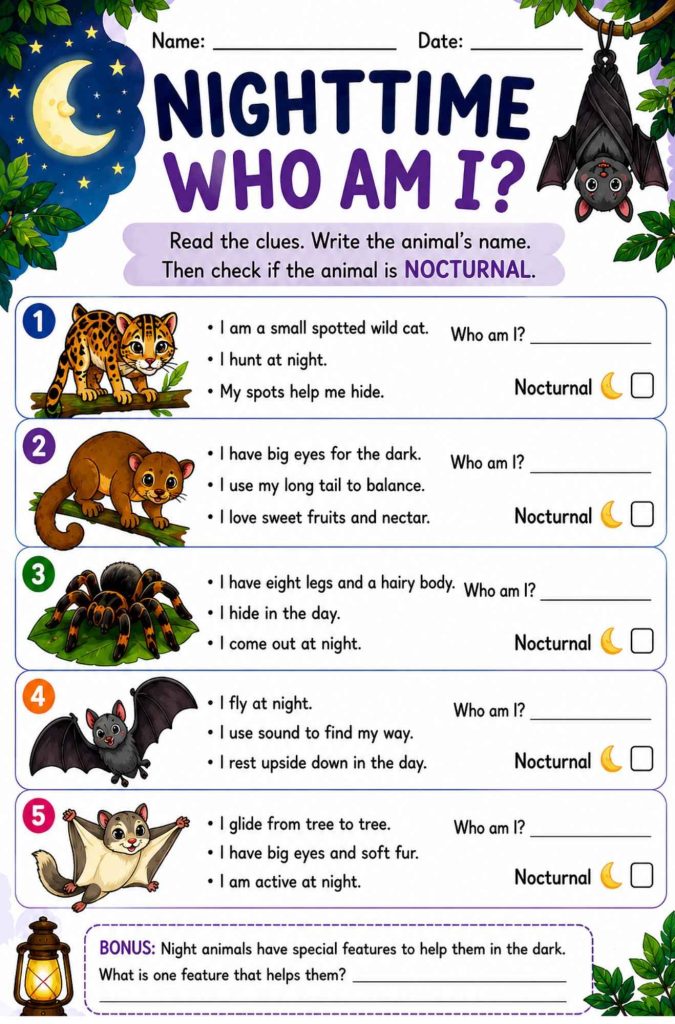
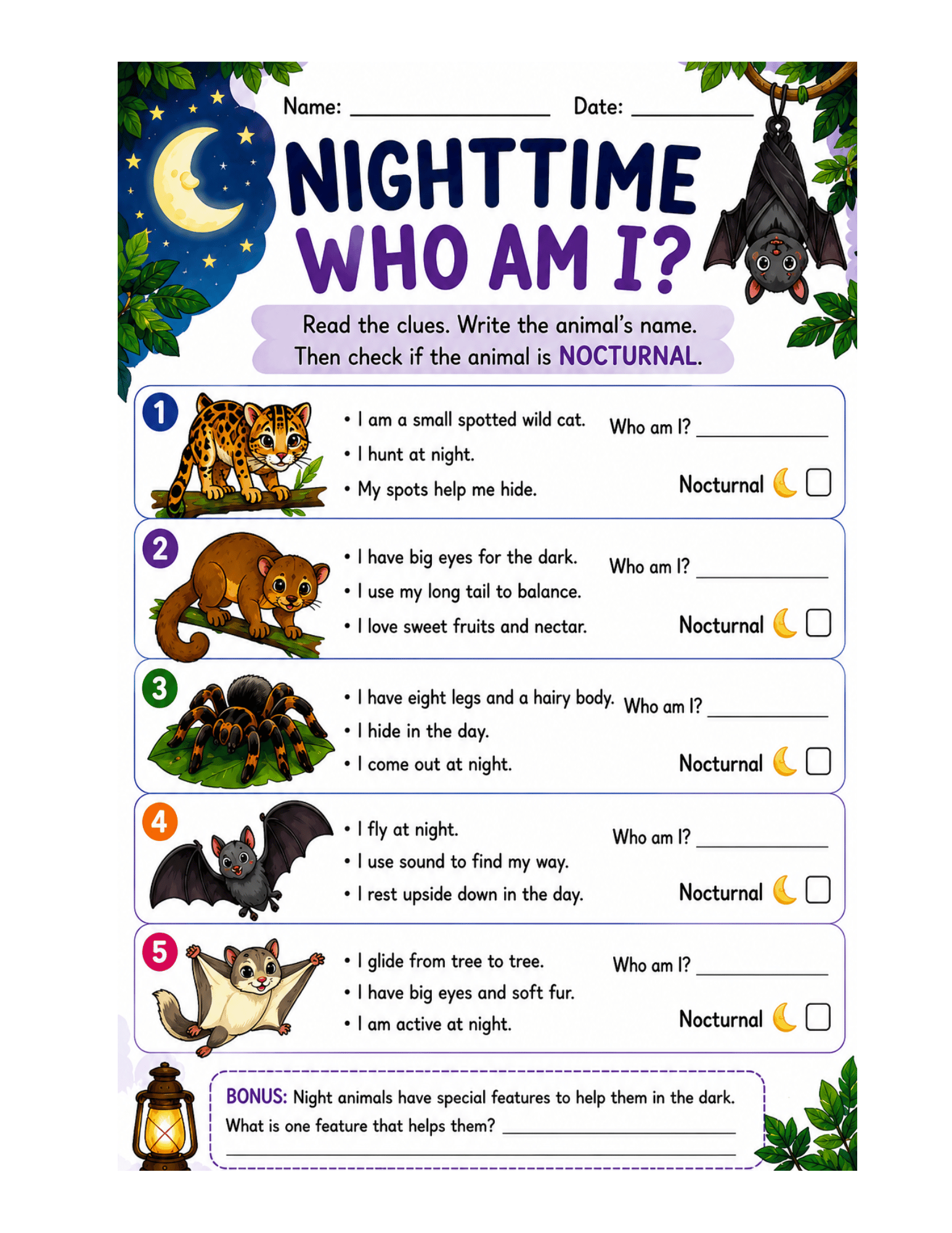
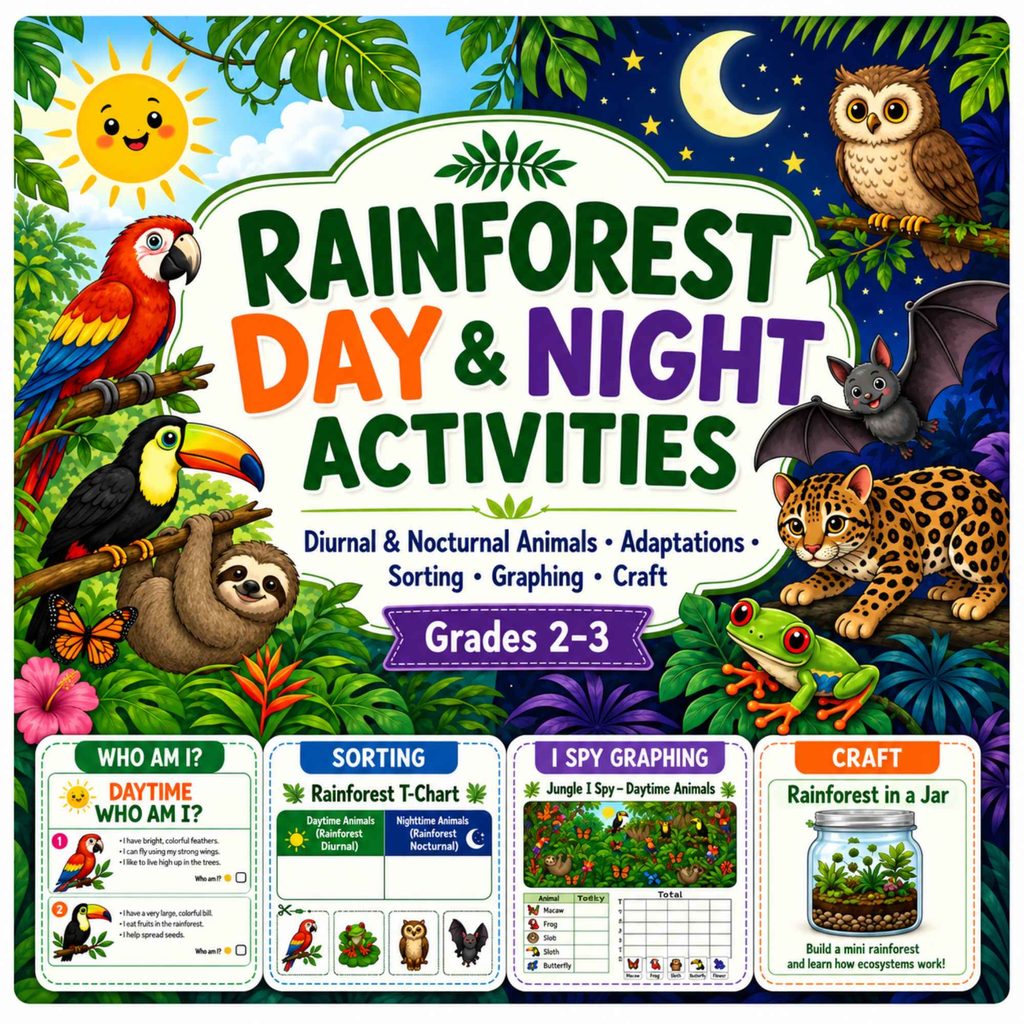
A simple “Who Am I?” guessing activity works especially well here because students have to use clues about an animal’s body, behavior, and habitat rather than simply memorizing names. The resource includes separate daytime and nighttime versions of this activity.
Compare the Rainforest by Day and Night
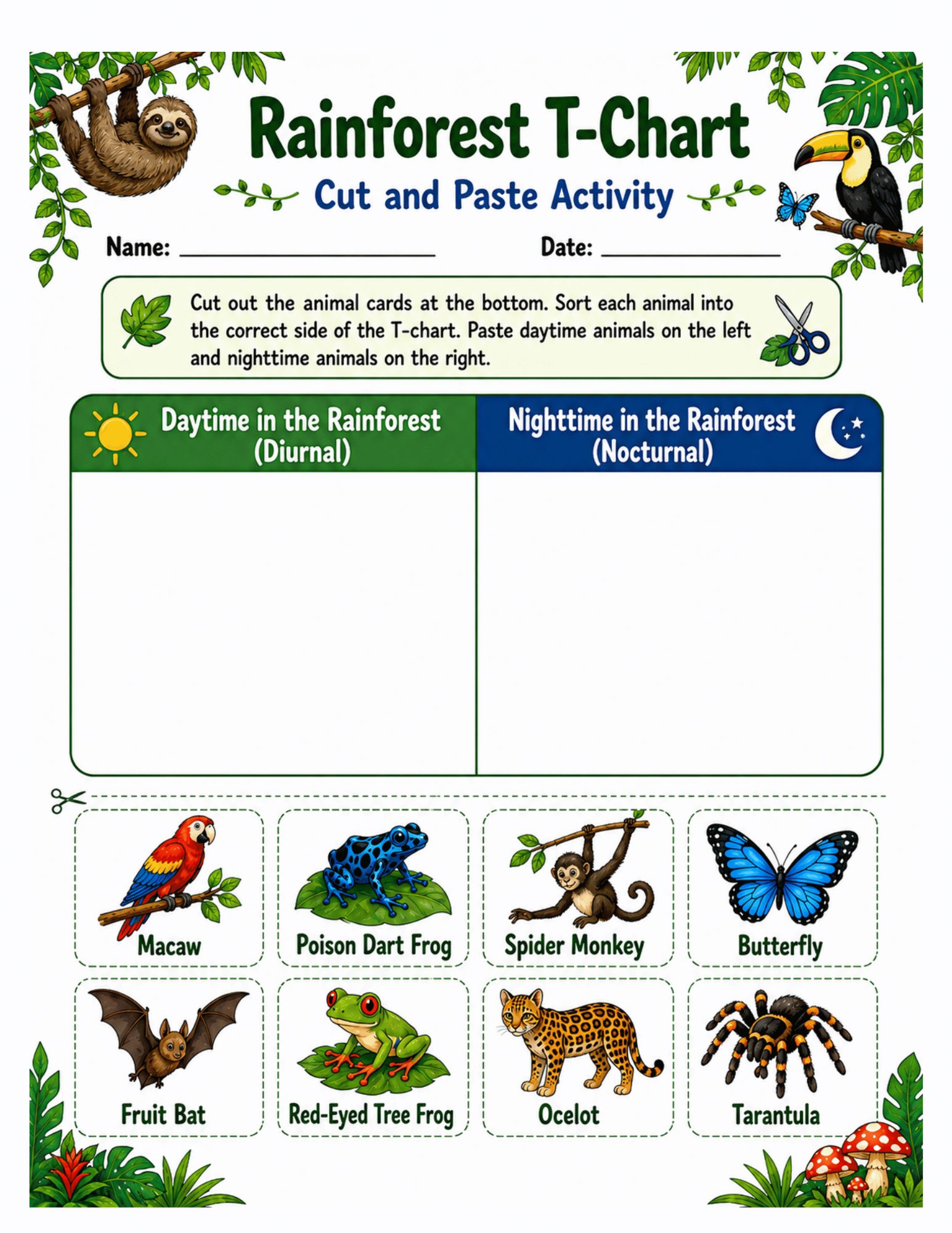
Next, turn the lesson into a sorting activity.
Students can classify animals as diurnal or nocturnal, then think about where those animals live within the rainforest.
For example, they might sort animals into the canopy or forest floor while also deciding whether each animal is more active during the day or at night.
This is a simple way to connect two important ideas:
Where an animal lives and when an animal is active.
A cut-and-paste T-chart can make this especially accessible for younger learners. jungle night and day rainforest…
Become an Animal Adaptation Detective
Once students understand nocturnal animals, ask a more interesting question:
How can animals survive when it is dark?
This is where the lesson moves beyond animal identification and into real life science.
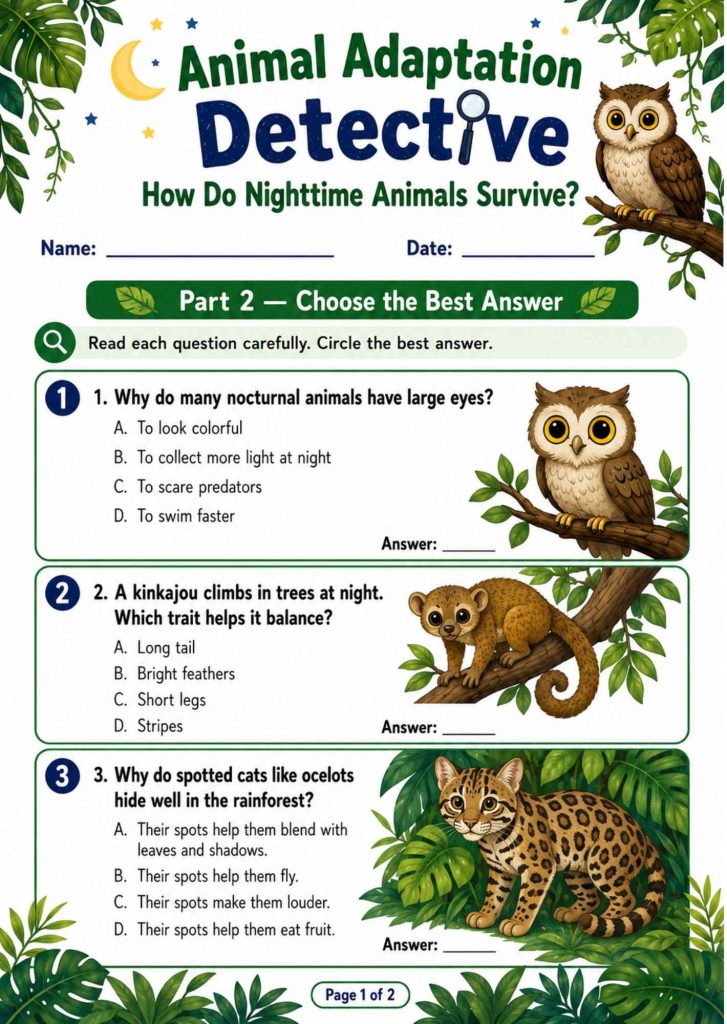
Students can investigate traits such as large eyes, sensitive body hairs, camouflage, sound, strong claws, long tails, and gliding membranes and decide how each feature might help an animal survive.
You can even turn this into a classroom “Animal Adaptation Detective” challenge. Give students a trait and ask them to explain what problem that adaptation might solve.
The adaptation activities in the printable resource use this exact type of trait-to-function thinking.
Add a Short Reading Activity
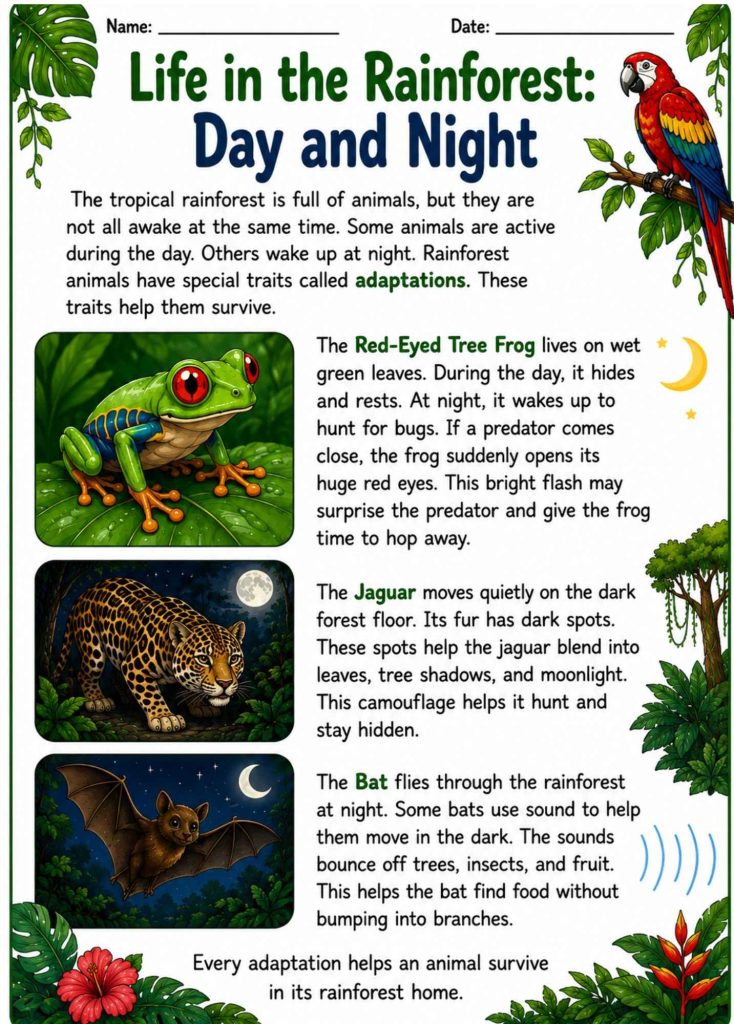
For Grades 2–3, I also like combining the hands-on activities with a short informational reading.
A short passage about rainforest animals can introduce vocabulary such as adaptation, while examples like the red-eyed tree frog, jaguar, and bat help students see how different animals use different survival strategies.
Students can then answer a few comprehension questions or choose one animal and explain how its adaptation helps it survive
Bring the Night Jungle Into Writing
Science does not have to stay on a worksheet.
Ask students to imagine that they are walking through a rainforest after sunset.
What would they hear?
What would they feel?
What would they see?
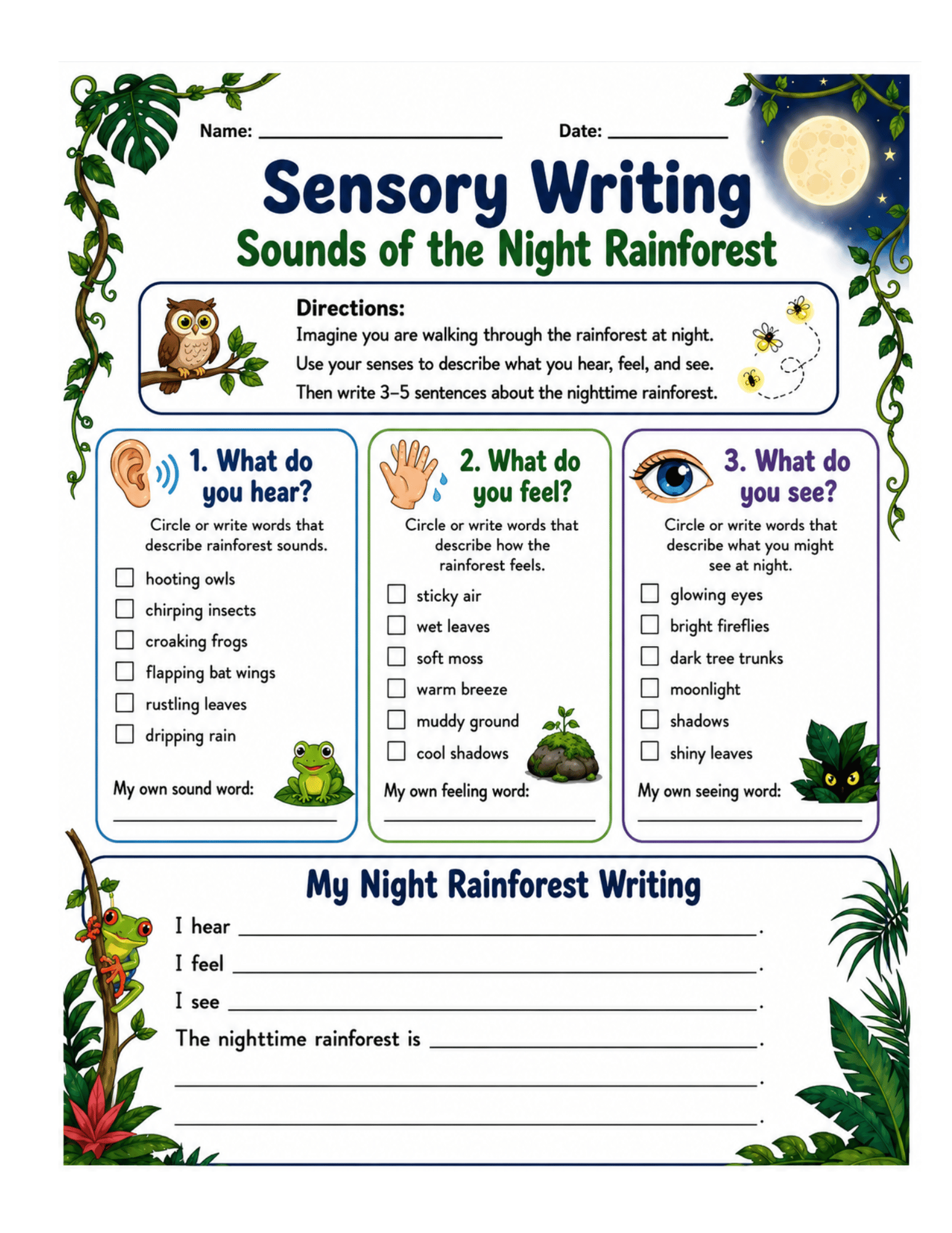
They might describe croaking frogs, rustling leaves, flapping wings, wet plants, soft moss, glowing insects, or shadows between the trees.
A short night rainforest sensory writing activity is a nice way to combine science vocabulary with descriptive writing, especially after students have already learned about nocturnal
animals.
Go One Step Further: A Glowing Jungle
One of the most memorable extensions is bioluminescence.
Some organisms can produce their own light, which makes the nighttime rainforest an especially engaging setting for introducing this phenomenon.
Students can investigate examples such as glowing fungi, fireflies, glowing millipedes, and fungus gnat larvae, then think about why producing light might be useful. The resource includes multiple-choice, matching, true-or-false, and short-response activities around this topic. jungle night and day rainforest…
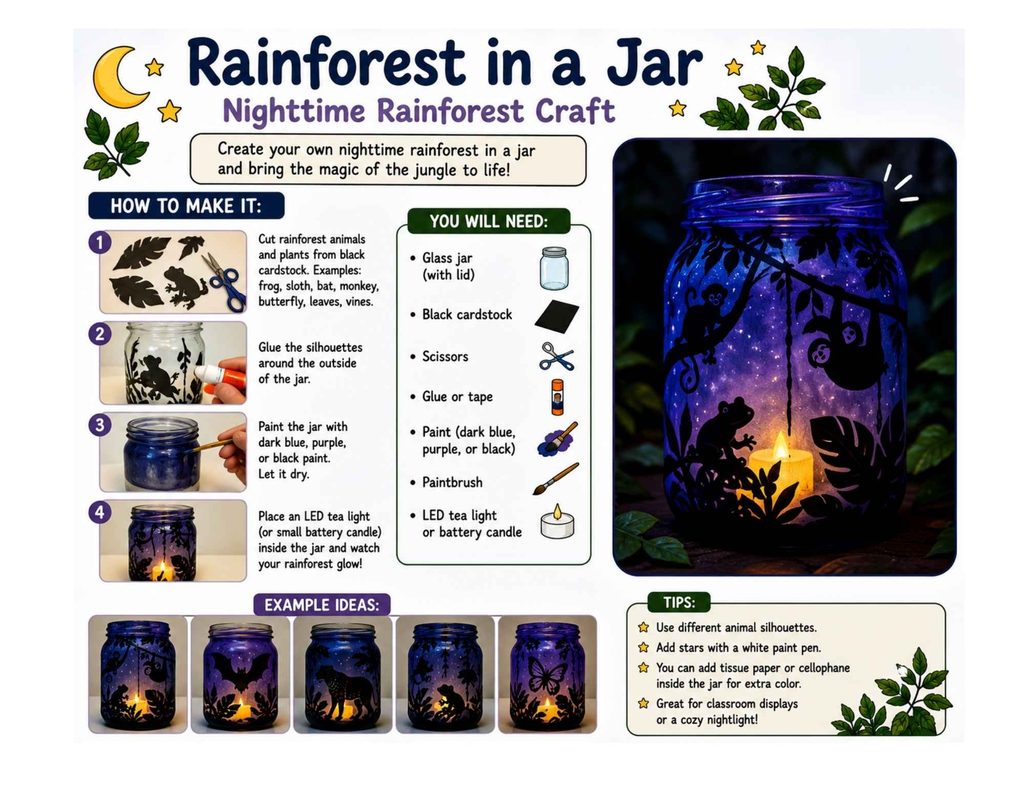
And if you want a creative STEM-style extension, students can make a Nighttime Rainforest in a Jar using rainforest silhouettes and a small LED light.
Free Jungle Night Pages for Your Classroom
Want to try this topic with your students?
Download these free Jungle at Night activities and explore nocturnal rainforest animals, day-and-night sorting, and rainforest sensory writing with your class.
Explore the Complete Rainforest Day & Night Resource
Want to take your Jungle at Night lesson further? The complete Rainforest Day & Night Science Activities resource gives students a deeper look at rainforest animals, habitats, and adaptations through a mix of hands-on and print-and-go activities.
Students can explore nocturnal and diurnal animals, rainforest layers, animal adaptations, informational reading, vocabulary, graphing, critical thinking, sensory writing, and bioluminescence. The resource also includes animal cards and a creative Nighttime Rainforest in a Jar activity, making it easy to build a complete rainforest mini-unit for Grades 2–3. jungle night and day rainforest… jungle night and day rainforest…
Perfect for: rainforest units, animal adaptations, habitats, nocturnal animals, science centers, early finishers, and cross-curricular science + literacy lessons.
→ Explore the Complete Rainforest Day & Night Resource on Teachers Pay Teachers https://www.teacherspayteachers.com/Product/Rainforest-Animals-Day-and-Night-Activities-Nocturnal-Animals-Adaptations-16801086
Frequently Asked Questions About Nocturnal Rainforest Animals
A nocturnal animal is an animal that is mainly active at night. Many rainforest animals rest during the day and become active after sunset to search for food, hunt, or move through their habitat.
Examples include bats, ocelots, kinkajous, tarantulas, owls, flying squirrels, and some frogs. These animals use different traits and behaviors to help them live and move in the rainforest at night.
Different animals use different adaptations. Some have large eyes that collect more light, while bats can use sound to help them move and locate food. Other animals rely on sensitive hairs, camouflage, or strong senses
Nocturnal animals are active mainly at night, while diurnal animals are active mainly during the day. Comparing the two is an easy way for students to explore animal behavior and rainforest habitats.
Start with a simple day-or-night sorting activity, then move into animal adaptations, short informational reading, vocabulary, and writing. Students can also compare where animals live in the rainforest and when they are most active.
Bioluminescence is light produced by living organisms. A jungle-at-night lesson can introduce students to glowing organisms such as fireflies, fungi, millipedes, and fungus gnat larvae while exploring why producing light may be useful.