Teaching animal adaptations and habitats doesn’t have to be limited to textbooks!
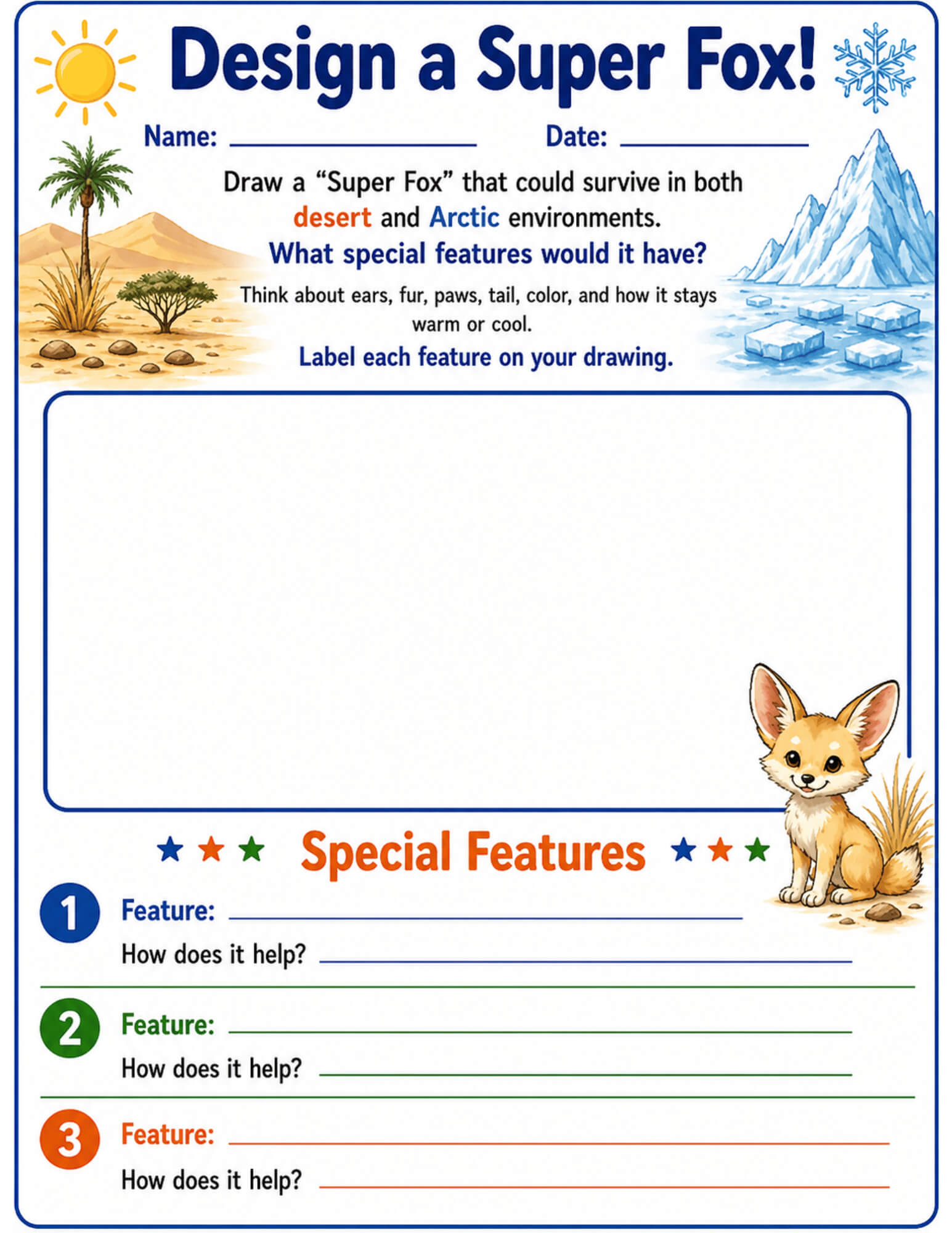
When young learners engage their imagination alongside scientific concepts, learning becomes memorable and exciting. This “Design a Super Fox!” activity is a fantastic, hands-on way to introduce elementary students (K–3) to how animals adapt to survive in extreme environments—specifically the scorching desert and the freezing Arctic.
💡 How the Activity Works:
In this creative science challenge, students are asked to invent a unique “Super Fox” capable of surviving in both desert and Arctic habitats.
- Brainstorming Adaptations: Students reflect on what physical features help animals stay cool or warm. They think about:
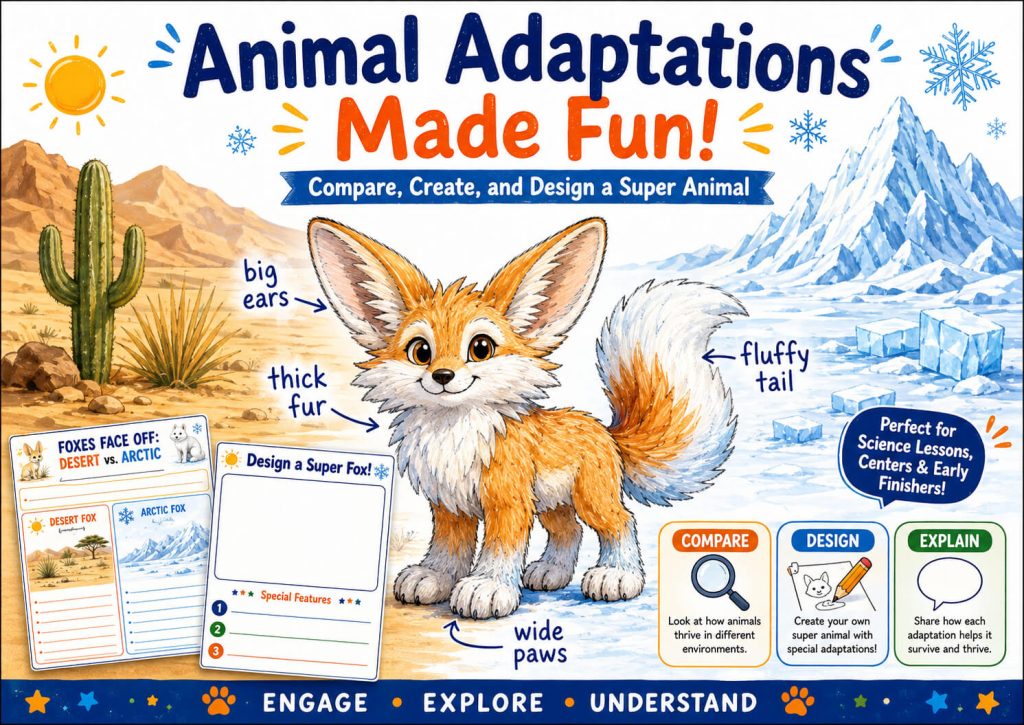
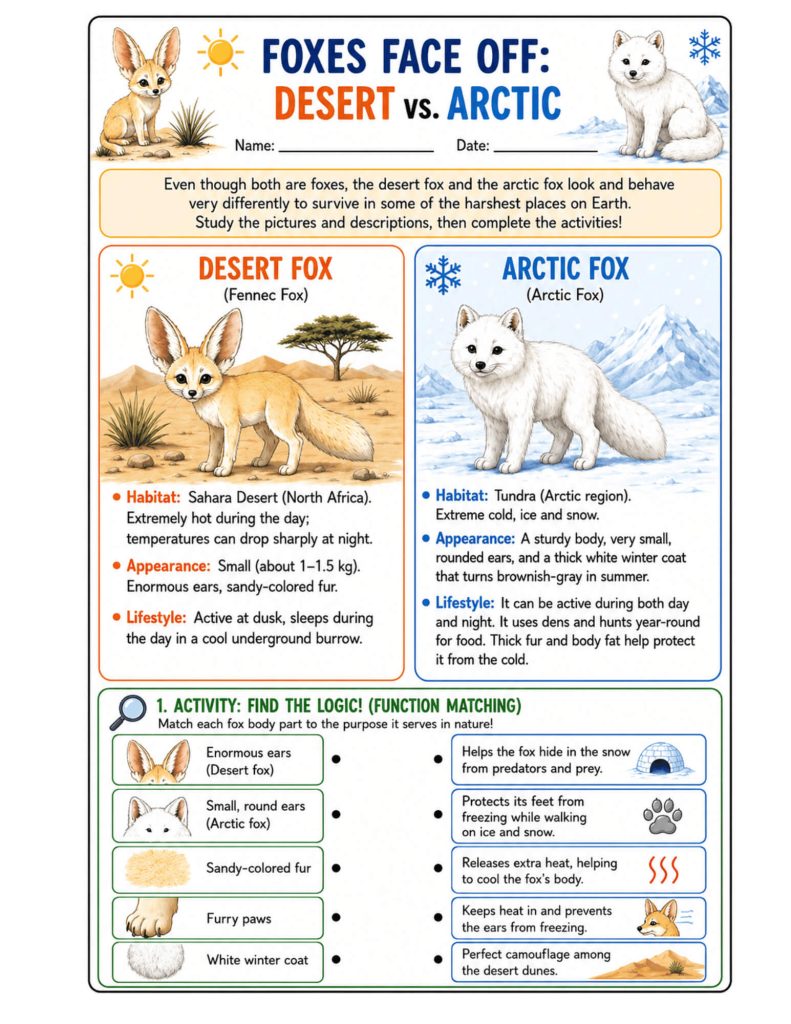
- Ears: Big ears to release heat (like a Fennec fox) vs. small ears to preserve warmth (like an Arctic fox).
- Fur & Color: Thick coats for insulation and colors suited for camouflage.
- Paws & Tails: Wide paws for traversing both loose sand and slippery snow, and fluffy tails for extra warmth.
- Drawing & Labeling: Students bring their imaginary creature to life by drawing it and pointing out key physical traits.
- Critical Thinking & Writing: In the bottom section, students explain how each special feature helps their Super Fox survive in its environment (e.g., “Big ears help keep it cool in the desert” or “Thick fur keeps it warm in the Arctic”).
🎨 Why Educators & Students Love It:
- Integrates STEM & Art: Blends science concepts (biology, habitats, adaptations) with creative drawing and writing practice.
- Encourages Critical Thinking: Instead of just memorizing facts, students apply their knowledge to solve a fun creative problem.
- Low-Prep & Ready to Go: Perfect for science centers, morning work, sub plans, or interactive notebook units!
📌 Ideas for the Classroom / Homeschool:
- Group Discussion: Before filling out the worksheet, compare real-life pictures of a Fennec Fox and an Arctic Fox with your class. Ask: “What differences do you notice? Why do you think their ears and fur look so different?”
- Show and Tell: Let students present their “Super Fox” to their peers and explain their design choices!
Looking for more engaging science and habitat resources for your classroom? Check out our printable worksheets and activities to make learning fun and interactive!