Introduction: Ditch the Textbook, Grab a Baggie!
Teaching the plant life cycle is a staple of the 2nd and 3rd-grade science curriculum. However, let’s be honest: just reading about it in a dry textbook rarely gets kids excited. Young learners need to see, touch, and experience science in action to truly understand it.
That is why the window bean germination experiment is an absolute game-changer for elementary classrooms! By growing a simple bean inside a clear Ziploc bag, you completely eliminate the mess of messy soil while giving your students a front-row seat to nature. Your students will be running to the window every single morning, eager to spot the first root, measure the tiny stem, and watch the magic of life unfold day by day. Seeds need water, oxygen, and a suitable temperature to germinate. During bean germination, the embryonic root, called the radicle, normally emerges before the shoot (University of Illinois Extension).
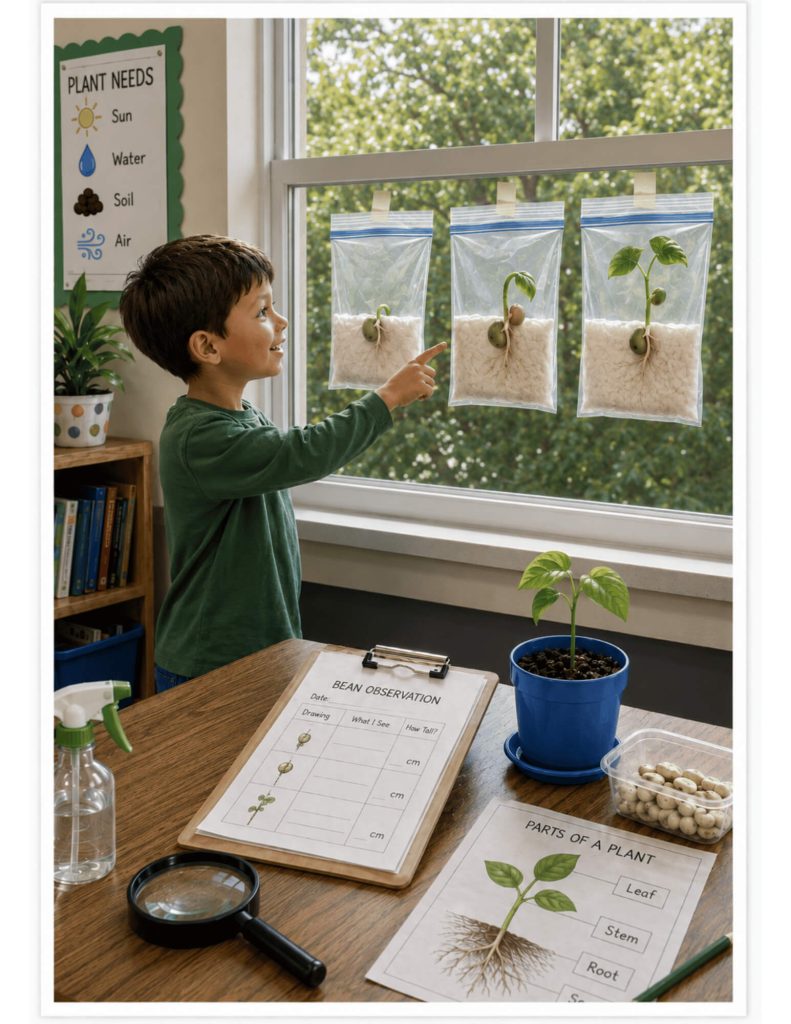
What You’ll Need (Materials)
One of the best things about this science lab is that it requires very few, budget-friendly materials. You probably already have most of these in your classroom or kitchen:
- Dry beans: Lima beans or Pinto beans work best because they are large and sprout quickly.
- Paper towels: Standard school paper towels are perfect.
- Clear plastic bags: Zip-top snack or sandwich bags.
- Tape: Painter’s tape or masking tape to secure the bags to the window.
- Water: Just enough to dampen the paper towel.
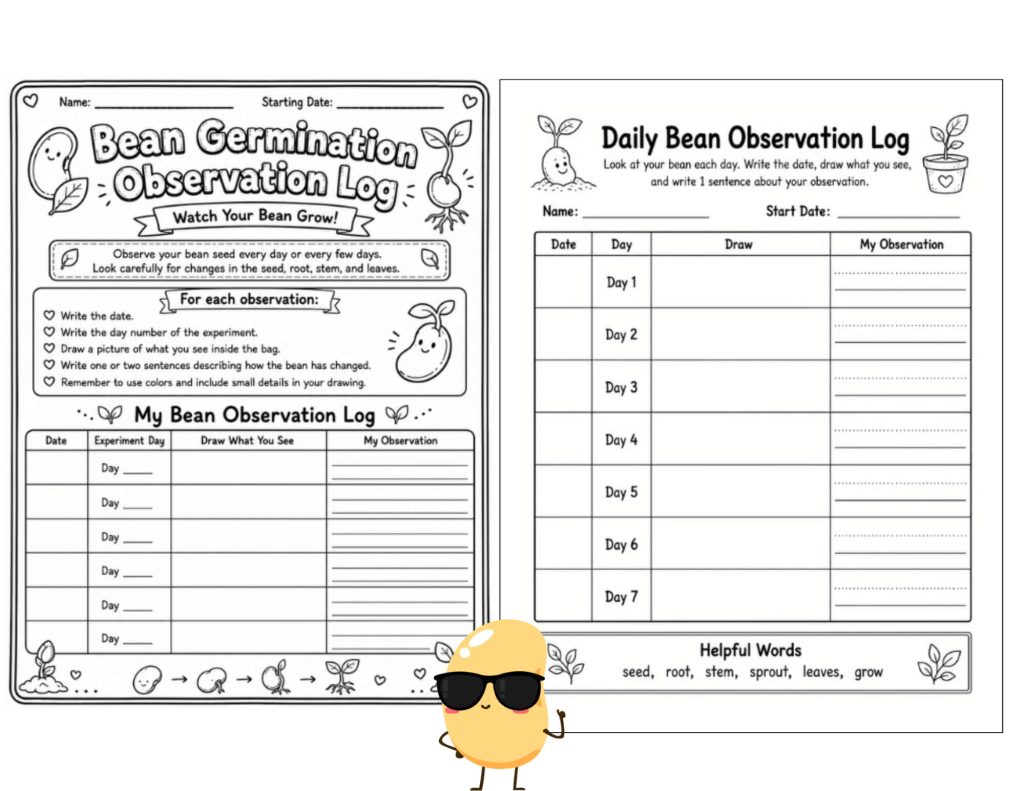
- The Ultimate Companion: A printed copy of my [Plant Observation Journal] https://www.teacherspayteachers.com/Product/Lima-Bean-Germination-Experiment-Plant-Life-Cycle-Worksheets-Observation-17276543for each student to record their findings.
Step-by-Step Guide: How to Set Up Your Window Garden
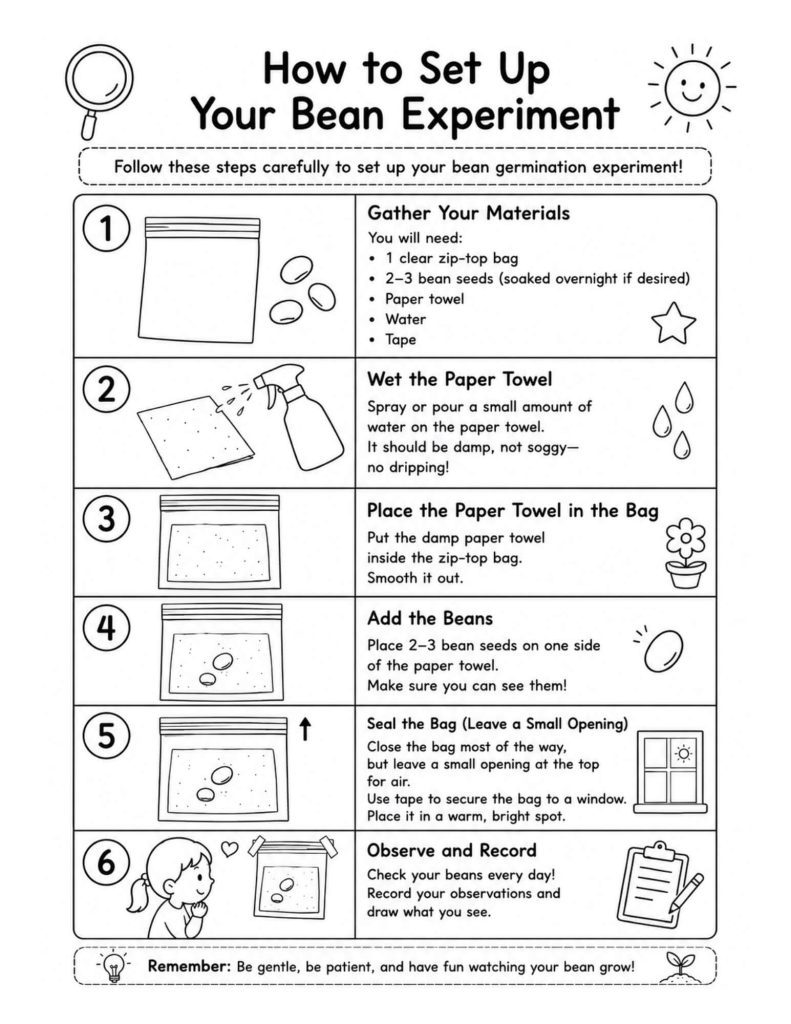
Setting up this experiment takes less than 15 minutes. Follow these simple steps with your class:
- Prep the Towel: Wet a paper towel and wring it out completely. It should be damp, not dripping wet (too much water will cause the beans to mold).
- Bag It: Fold the damp paper towel so it fits flat inside the clear plastic bag.
- Place the Beans: Gently slide 2 to 3 dry beans into the bag, placing them on one side of the paper towel. This ensures the beans stay in place and remain visible from the outside.
- Seal and Tape: Zip the bag shut (leave a tiny centimeter open at the top for air) and tape it directly onto a sunny window with the beans facing inside the classroom.
- Watch the Magic Happen: Within 3 to 5 days, your students will see the seed coat split and the seed coat splits and the first root, called the radicle, emerges.
Teacher Tips for Maximum Science Engagement
To turn this simple craft into a rigorous, standards-based science lesson, try these teacher-tested strategies in your classroom:
- Prep the Beans Overnight: Soak your dry beans in water the night before the experiment. This softens the tough outer seed coat (testa) and speeds up germination by 24 to 48 hours. Your students will see results much faster!
- Prevent the Dreaded Mold: Mold is the biggest enemy of this project. Make sure the paper towels are just damp, not soaking wet. If a bag starts to look fuzzy, simply open it up for a few hours to let some fresh air in, or replace the paper towel entirely.
- Encourage “Scientist Talk”: Don’t just let students say “the bean is growing.” Teach them to use academic vocabulary. Ask questions like: “Did the root or the shoot emerge first?” or “What do you notice about the cotyledon today?”
- Integrate Math: Have students bring rulers to the window every morning. Measuring the root and stem growth in centimeters or inches is a fantastic way to practice graphing and real-world math skills.
Make Your Plant Unit Zero-Prep!
Want to make this science lab completely stress-free? I’ve got you covered. Instead of spending your weekend creating charts, vocabulary matching pages, and prediction worksheets from scratch, you can instantly download my [printable 2nd-3rd Grade Plant Life Cycle and Observation Journal on Teachers Pay Teachers](A TE TPT BOLTOD LINKJE).
This ready-to-print resource includes everything your students need to think like real scientists:
- Hypothesis and Prediction Pages to kickstart critical thinking.
- Daily Observation Logs with space for both drawings and writing.
- Cut-and-Paste Sequencing Activities for hands-on learning.
- A Final Vocabulary Quiz to easily assess student understanding.
Click here to grab your copy from my TpT store and save hours of planning time today!
NGSS Connections
This activity supports NGSS 3-LS1-1, which asks students to develop models showing that organisms have life cycles with observable patterns of growth and change. Students can use their dated drawings and observations to create a model of the bean plant’s life cycle.
The experiment can also support NGSS 2-LS2-1, which focuses on planning and conducting investigations to determine whether plants need water and sunlight to grow. For a stronger standards-based investigation, students can compare two groups of beans while changing only one condition, such as light or water.
Scientific References and Further Reading
- University of Illinois Extension: Germination
- Iowa State University Extension: How to Successfully Start Seeds Indoors
- OpenStax Biology 2e: Development of the Seed and Seed Germination
- West Virginia University Extension: Bean in a Bag
- Next Generation Science Standards: 2-LS2-1
- Next Generation Science Standards: 3-LS1-1
Frequently Asked Questions About the Window Bean Germination Experiment
What are the best beans to use for a classroom germination experiment?
Lima beans, pinto beans, and kidney beans work well because they are large enough for young students to observe easily. Lima beans are especially popular for Grades 2–3 because their roots, shoots, and seed leaves are clearly visible as they develop.
How long does it take for a bean to germinate in a plastic bag?
Most beans begin to germinate within 3–7 days when they have enough moisture and warmth. Soaking the beans overnight allows them to begin absorbing water before the experiment and may help germination start sooner.
Do beans need sunlight to germinate?
Beans do not need sunlight to begin germinating. They primarily need water, oxygen, and a suitable temperature. After the shoot and first leaves appear, place the bag in bright, indirect light so the young plant can begin making food through photosynthesis.
How wet should the paper towel be?
The paper towel should be evenly damp but not dripping wet. Too much water can reduce the oxygen available to the seed and encourage mold growth. If water collects at the bottom of the bag, the towel is probably too wet.
How can I prevent mold from growing in the bean bag?
Use clean bags and fresh paper towels, avoid adding too much water, and do not place the bags in an excessively hot window. Check the beans daily. If mold appears, remove the affected bean and replace the paper towel.
Which part of the bean emerges first during germination?
The first structure to emerge is usually the radicle, or embryonic root. It grows downward and begins taking in water. The young shoot then grows upward, followed by the first leaves.
Can the sprouted bean be planted in soil afterward?
Yes. Once the bean has developed roots and a small shoot, it can be carefully transferred into moist potting soil. Handle the seedling gently because its new roots are fragile.
What can students record in a bean observation journal?
Students can draw and label changes in the seed, record the date, measure root and shoot growth, and describe what they notice. They can also compare their observations with their original predictions and create a simple growth graph.