Build a Sonoran Desert Habitat
with Cut-and-Paste Cards
______________________________________________________________________________________________________________________________________________
A low-prep way to explore desert plants, animals, and adaptations

| GRADE 2–3 | TIME 20–30 min | FORMAT Cut • Sort • Paste |
A Desert Habitat Students Can Build
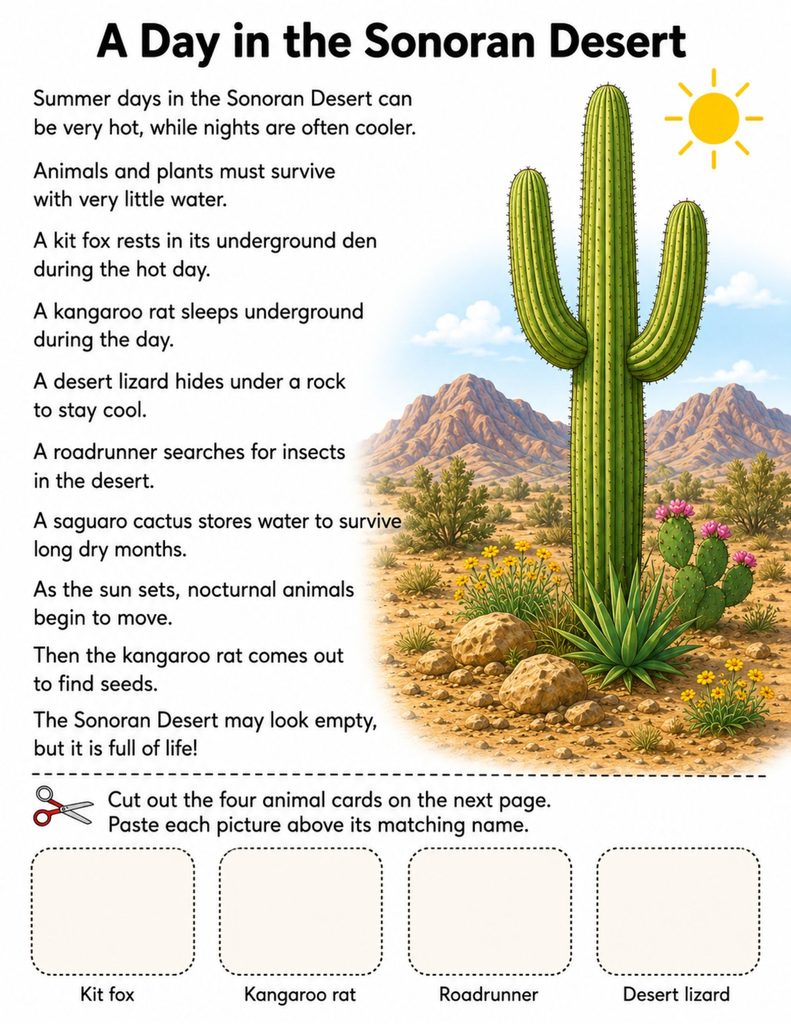
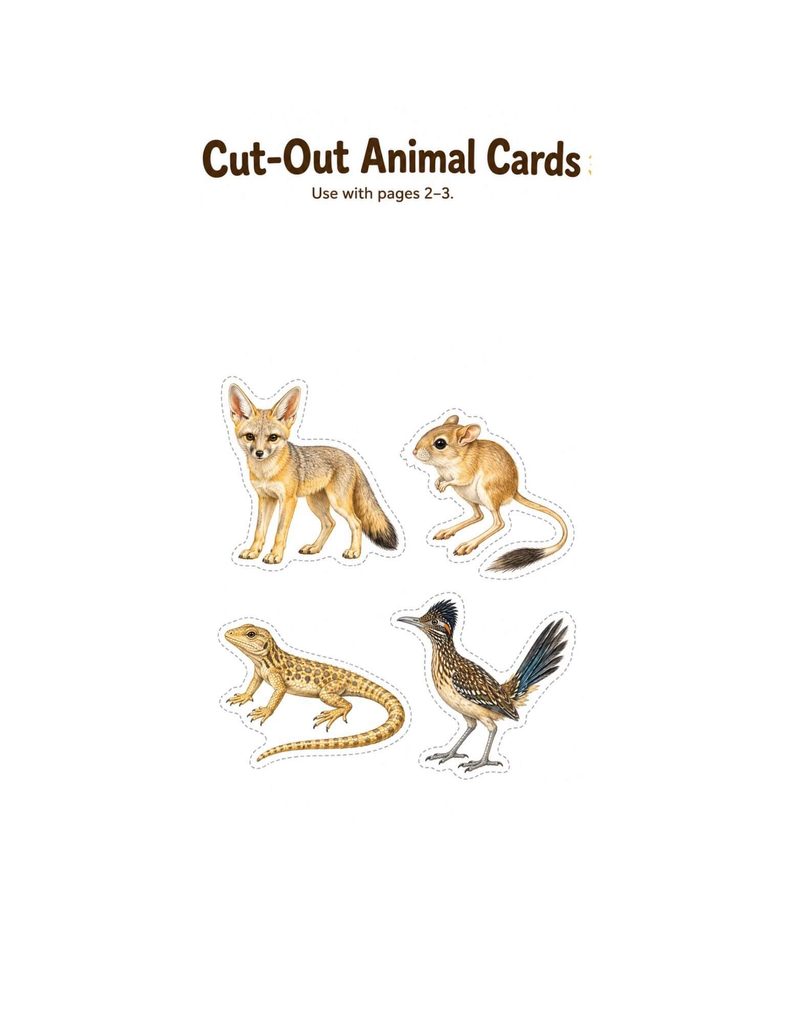
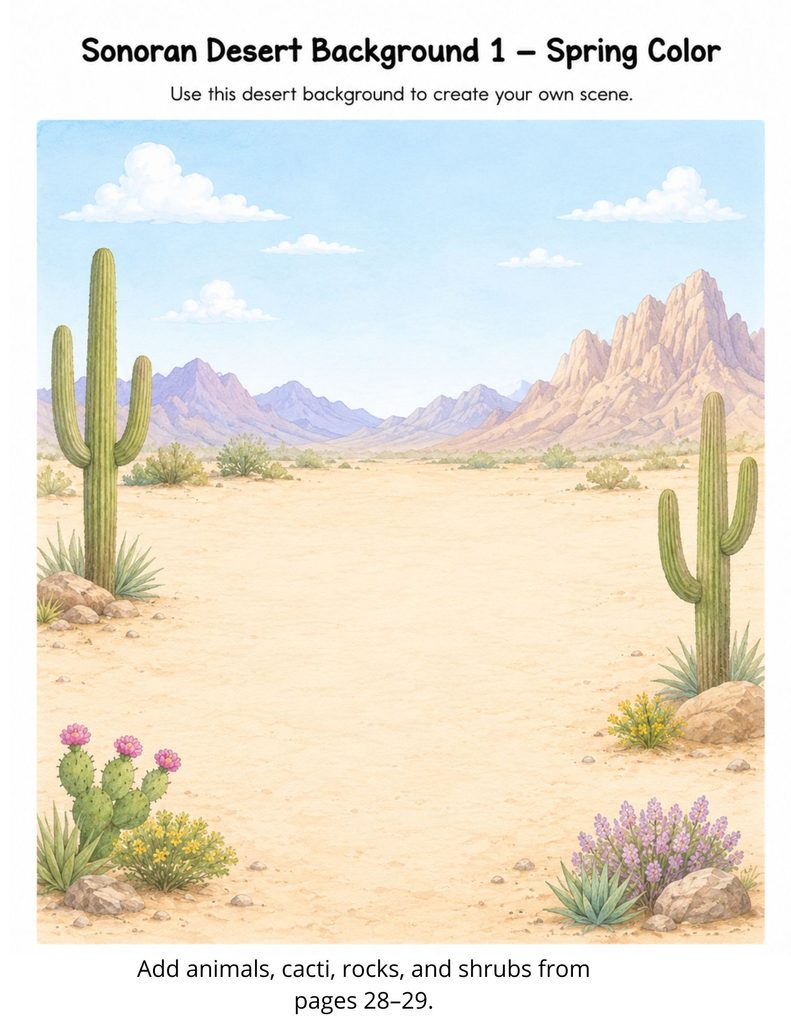
The Sonoran Desert is a lively habitat—not an empty place. It has tall saguaros, flowering plants, rocky ground, and animals adapted to heat and limited water. With this printable activity, students cut out habitat cards and use them to build their own desert scene.

Looking for another hands-on way to explore habitats? Try our Sahara Desert Collaborative Art Project for Grades 2–3, which combines desert habitats, camel adaptations, creative writing, and collaborative classroom art. https://lolliartscience.com/2026/09/05/sahara-desert-collaborative-art-project/

Cut, Sort, and Talk
The movable cards make the lesson flexible. Students can name each organism, compare body coverings and plant shapes, and explain their choices before anything is glued down.
Add a Flower Life Science Mini-Activity
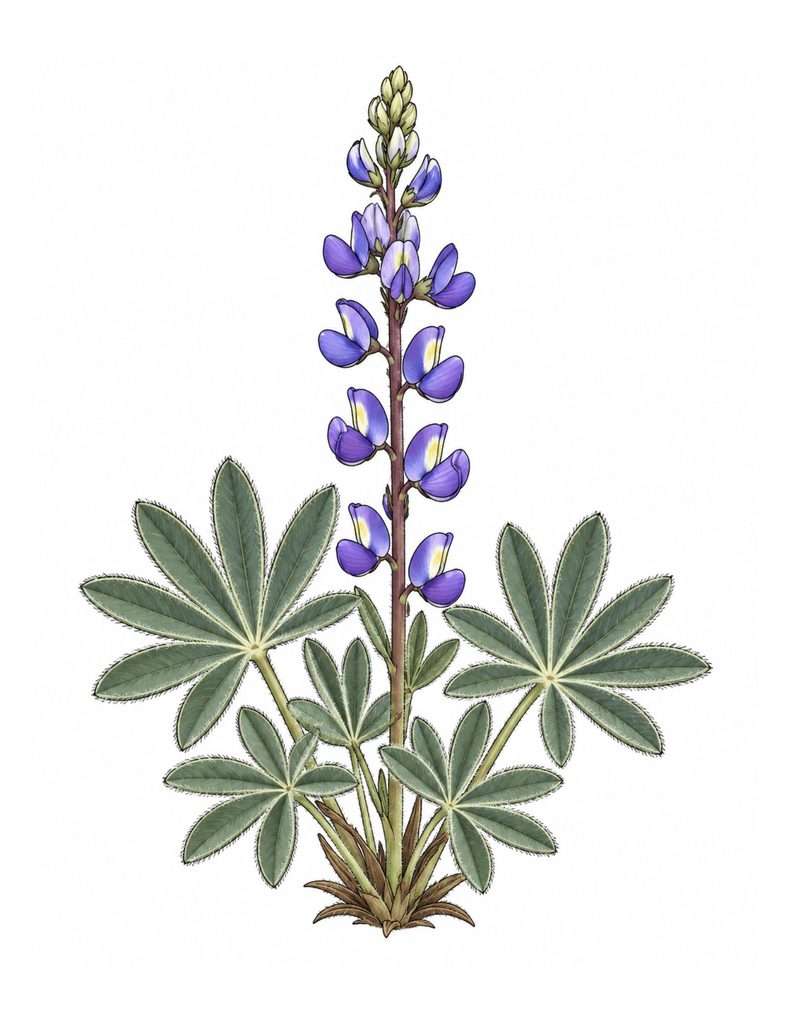
The desert lupine activity adds a simple plant focus. Students place the flower sections in order from the bottom of the stem to the top. The numbered pieces provide a clear visual sequence and fine-motor practice.
Build the Lupine


Quick Lupine Facts for Kids

Simple Discussion Questions
What makes the Sonoran Desert a habitat?
Which plants and animals did you add to your scene?
How might a desert animal stay safe from the daytime heat?
Why are flowers important to bees and other pollinators?
How does the lupine spread its seeds?

Easy Classroom Uses
| SCIENCE CENTER Use the cards for independent habitat review. | SMALL GROUP Build one scene together and discuss each placement. |
| INTERACTIVE NOTEBOOK Glue a mini scene into a science notebook. | EARLY FINISHER Add labels or write two desert facts. |

Desert lupines add spring color to a dry, rocky habitat.
Ready to Build a Desert Scene?
Use the printable cards for a hands-on Sonoran Desert lesson that combines habitat science, vocabulary, sequencing, and fine-motor practice. Students can create, explain, and compare their scenes—all in one low-prep activity.




Frequently Asked Questions
The Sonoran Desert is a hot desert in the southwestern United States and northwestern Mexico. It is home to saguaros, desert wildflowers, reptiles, birds, and mammals adapted to dry conditions.
Students can identify desert plants and animals, explore basic adaptations, and learn how living things meet their needs in a hot, dry habitat. The activity also supports science vocabulary and observation skills.
This printable is designed primarily for students in Grades 2–3. It can also be used with advanced first graders or as a simple review activity for older elementary students.
Students can cut out the plant and animal cards, sort them, and arrange them to create a Sonoran Desert scene. The cards work well for science centers, small-group lessons, interactive notebooks, and early-finisher activities.
The lupine activity combines plant science with sequencing and fine-motor practice. Students arrange the flower sections from bottom to top while learning about desert wildflowers, leaves, flowers, seed pods, and pollinators.
Trusted Sonoran Desert Resources for Teachers
Want to extend the lesson or check facts with reliable sources? These trusted U.S. resources offer information about Sonoran Desert habitats, plants, animals, and science standards.
- Saguaro National Park: Nature — Explore the plants, animals, environmental conditions, and biodiversity of the Sonoran Desert through the National Park Service.
- Saguaro National Park: Resources for Kids and Educators — Find student activities, Junior Ranger materials, and curriculum-based educational programs.
- Organ Pipe Cactus National Monument: Nature and Science — Learn how Sonoran Desert plants and animals survive extreme temperatures, intense sunlight, and limited rainfall.
- Arizona–Sonora Desert Museum: Sonoran Desert Fact Sheets — Browse child-friendly fact sheets about roadrunners, kangaroo rats, Gila monsters, desert tortoises, saguaros, prickly pears, and other desert organisms.
Related NGSS Performance Expectations
- NGSS 2-LS4-1: Diversity of Life in Different Habitats — Students observe and compare the diversity of living things found in different habitats.
- NGSS 3-LS4-3: Organisms and Their Environments — Students use evidence to explain how particular habitats support the survival of some organisms better than others.