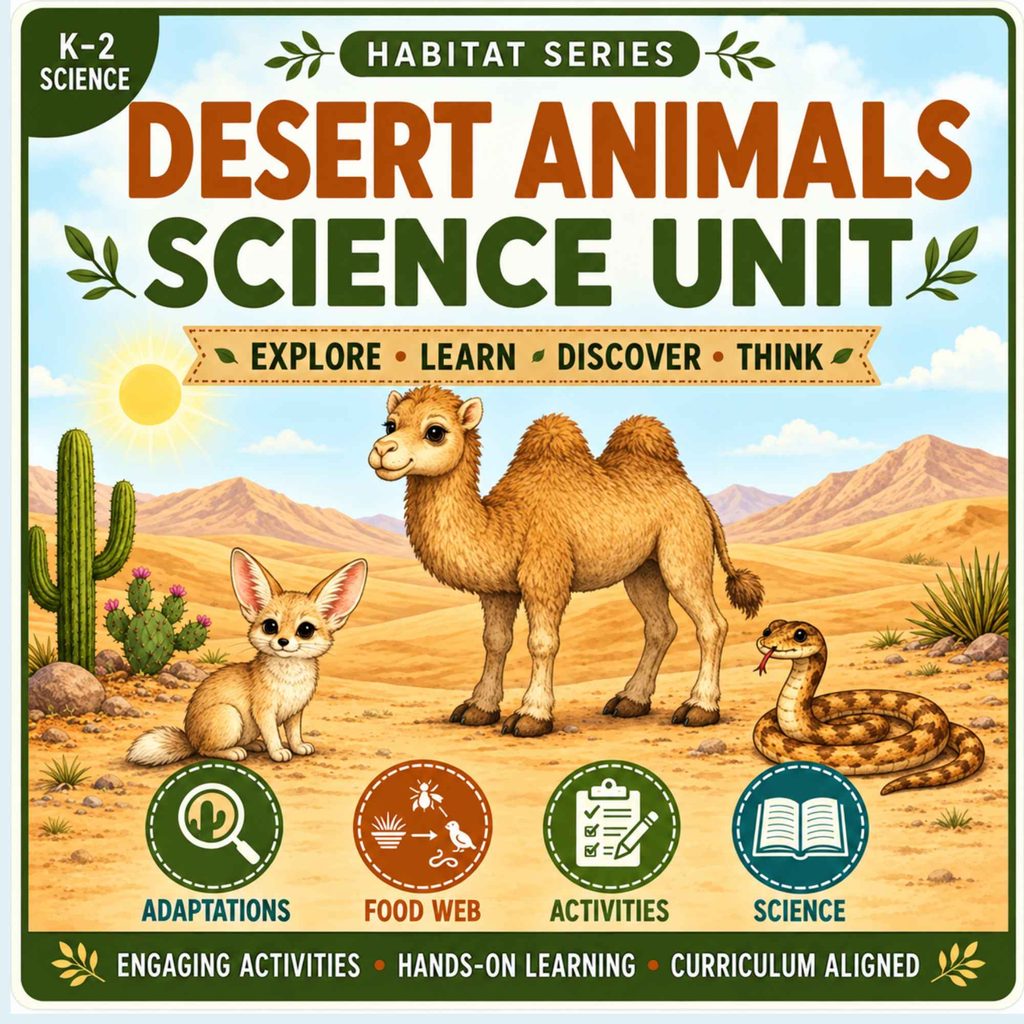
How can a tiny fox stay cool when the desert is scorching hot?
How can a kangaroo rat survive without stopping at a water hole?
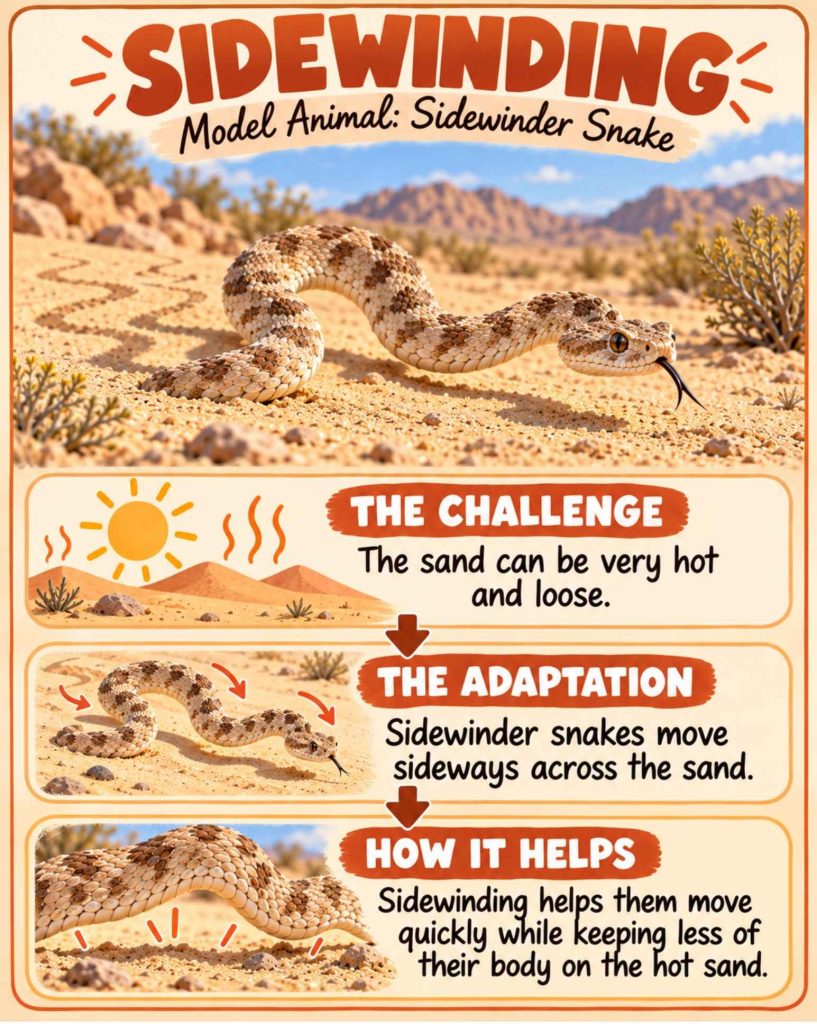
And why does a snake move sideways across the sand?

Deserts may look empty at first, but they are home to animals with some remarkable survival strategies.
A desert habitat can be hot, dry, windy, and short on water. During the day, the ground may become extremely hot, while temperatures can drop after sunset. Animals that live in these environments need special features and behaviors that help them find food, conserve water, avoid overheating, and stay safe.
These survival features are called adaptations.
For young learners, one of the easiest ways to understand adaptations is to connect each one with a real desert animal.
☀️ Extreme Heat
💧 Very Little Water
🏜️ Hot, Loose Sand
Desert animals have adaptations that help them solve these survival challenges.
What Is an Animal Adaptation?
An adaptation is a body feature or behavior that helps an animal survive in its habitat.
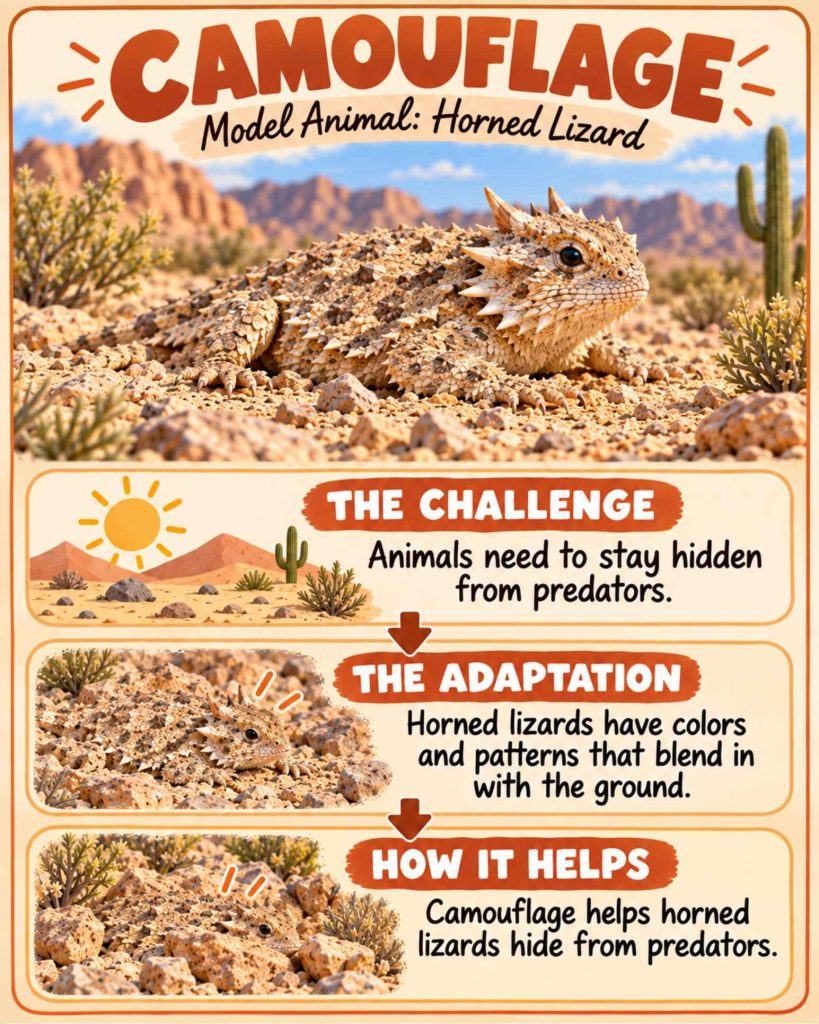
Some adaptations are physical adaptations, such as large ears, light-colored fur, or strong legs.
Others are behavioral adaptations, such as resting underground during the day or becoming active at night.
Desert animals often use several adaptations at the same time.
Here are some excellent examples.




Estivation – Waiting Out Extreme Conditions
Sometimes desert conditions become so hot and dry that being active is simply too costly.
Some reptiles and amphibians can enter a period of dormancy called estivation.
During this time, the animal becomes much less active and uses less energy and water.
You can think of estivation as one more strategy for dealing with extreme environmental conditions.
For younger students, a simple explanation works well:
Estivation means resting for a long time during very hot or dry weather.
Desert Animals Often Have More Than One Adaptation
One of the most important ideas for students to understand is that an animal usually does not survive because of a single special feature.
A fennec fox has large ears, light-colored fur, and nocturnal behavior.
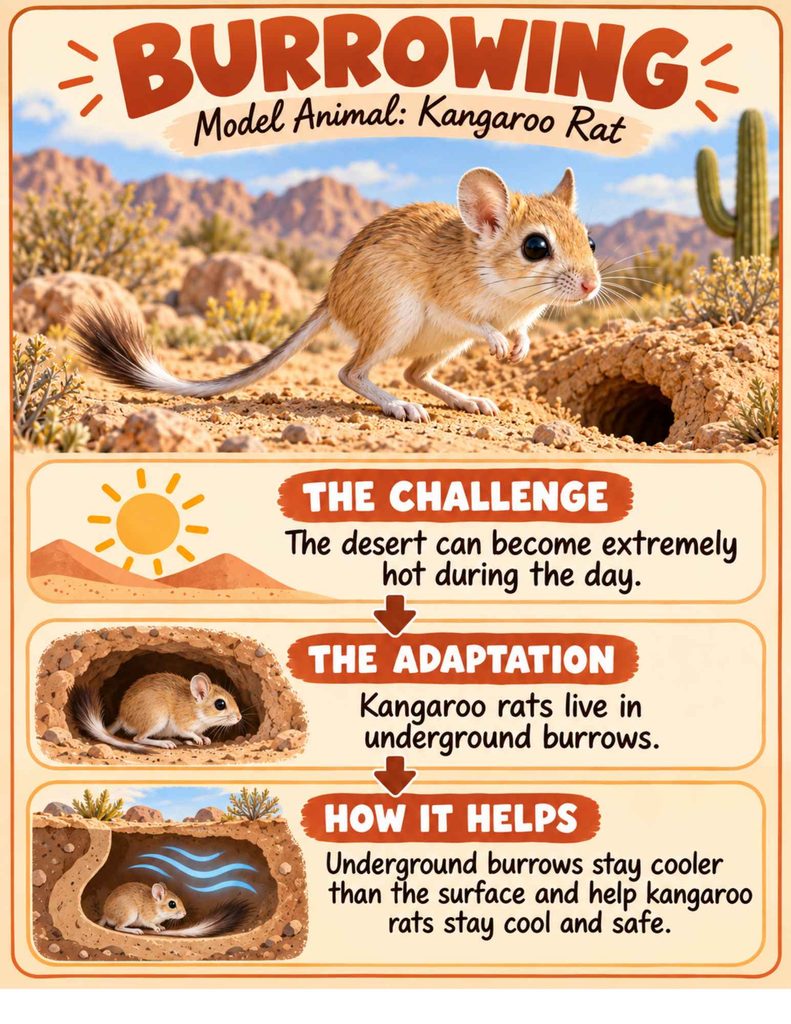
A kangaroo rat uses underground burrows, becomes active at night, and conserves water.
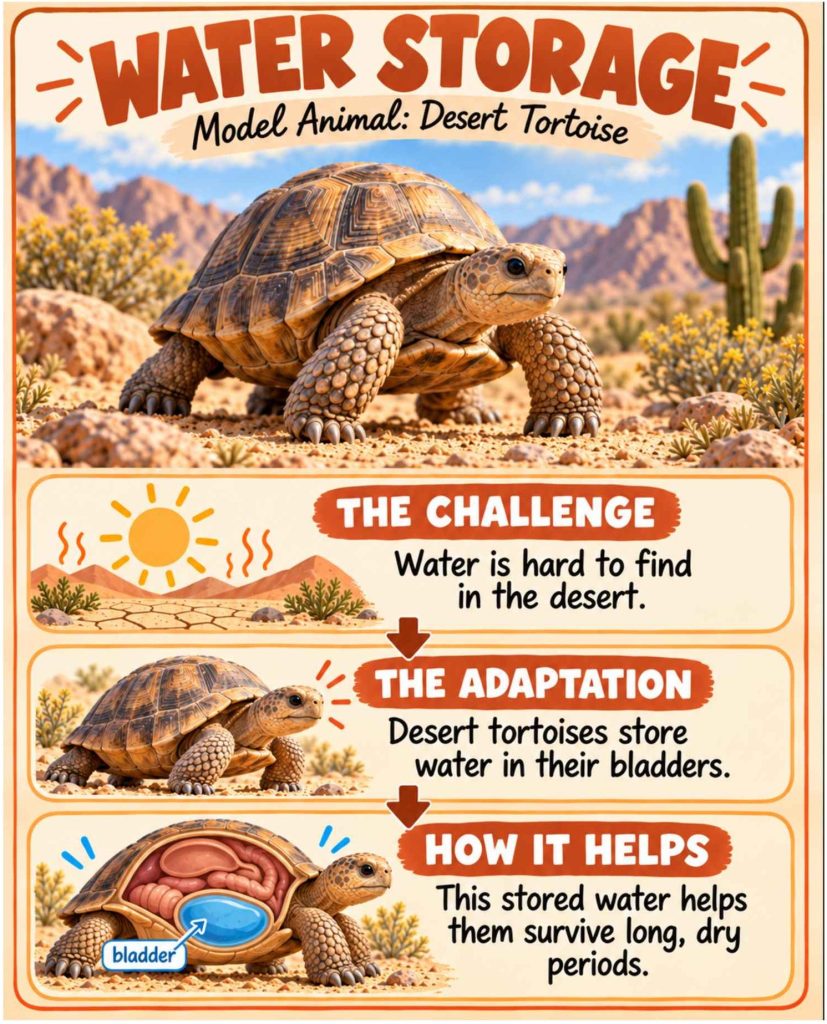
A desert tortoise uses burrows, stores water, and has a protective shell.
Adaptations work together.
That makes a useful classroom question:
“How do this animal’s adaptations work together to help it survive?”
A Simple Desert Adaptation Chart

Turn Desert Adaptations Into a Science Investigation
After students learn several examples, move beyond memorizing animal facts.
Ask them to look for the relationship between the habitat challenge and the adaptation.
For example:
Challenge: The desert is extremely hot during the day.
Adaptation: The animal is nocturnal.
Result: It can search for food when temperatures are cooler.
Or:
Challenge: Water is scarce.
Adaptation: A kangaroo rat obtains moisture from seeds.
Result: It does not need to find drinking water as often.
This simple challenge → adaptation → survival benefit pattern helps children begin thinking like scientists instead of simply memorizing vocabulary.
Design Your Own Desert Animal
A fun way to finish the lesson is to ask students to invent their own desert animal.
Have students decide:
Where does it live? What does it eat? How does it stay cool? How does it save water?
Then ask them to give their imaginary animal at least two adaptations and explain how each adaptation helps it survive.
Your printable already includes a Design Your Own Desert Animal activity built around exactly these questions, so this would make a very natural transition from the blog lesson into the resource.
Give your animal at least two adaptations.
How does it stay cool?
How does it save water?
Where does it find shelter?

Continue Learning About Desert Animals
If you’re teaching desert habitats, animal adaptations, food chains, or survival in extreme environments, the Desert Animal Adaptations Worksheets & Science Activities provide a ready-to-use way for students to explore these ideas in more depth. https://www.teacherspayteachers.com/Product/Desert-Animal-Adaptations-Worksheets-Science-Activities-1st3rd-Grade-15744927
Students can read about individual desert animals, compare adaptations, match animals with survival features, explore habitats and food chains, and even design their own adapted desert animal.