Have you ever cut open an apple and looked closely at the seeds inside?

Field: Life Science
Grades: K–3
Those little seeds are part of an amazing plant life cycle. With the right conditions, an apple seed can begin growing into a new plant. Over time, the young plant grows into a tree, the tree produces flowers, and some of those flowers develop into apples.
Learning about the apple life cycle is a simple way to introduce children to plant growth, flowering, pollination, fruits, and seeds. It is also an easy science topic to turn into a hands-on lesson at school or at home.
In this activity, students can observe a real apple, explore each stage of the apple tree life cycle, and use printable worksheets to practice what they learn.
Best for: Grade 2–3 science, elementary plant units, homeschool science, fall science lessons, and apple-themed learning.
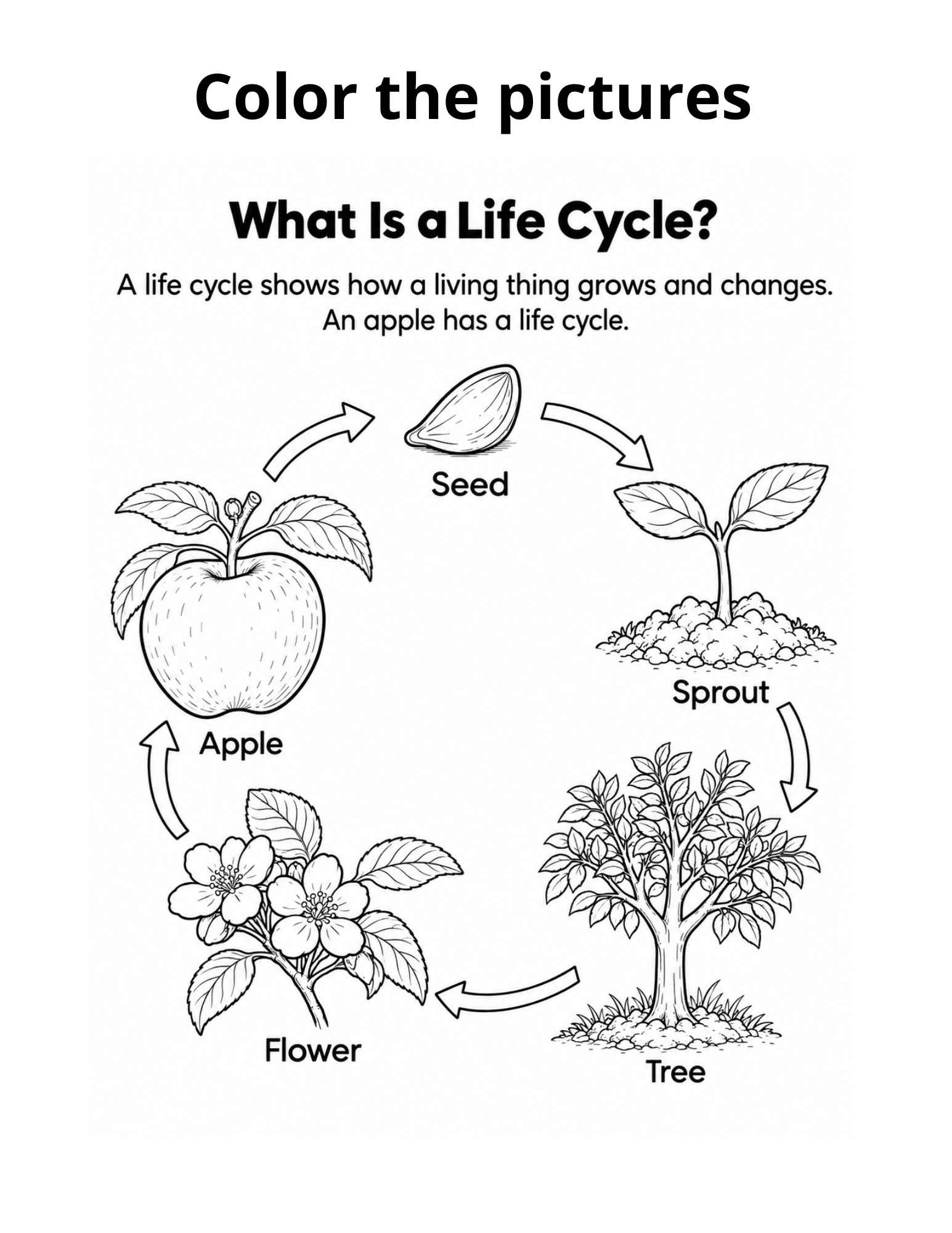
What Is a Life Cycle?
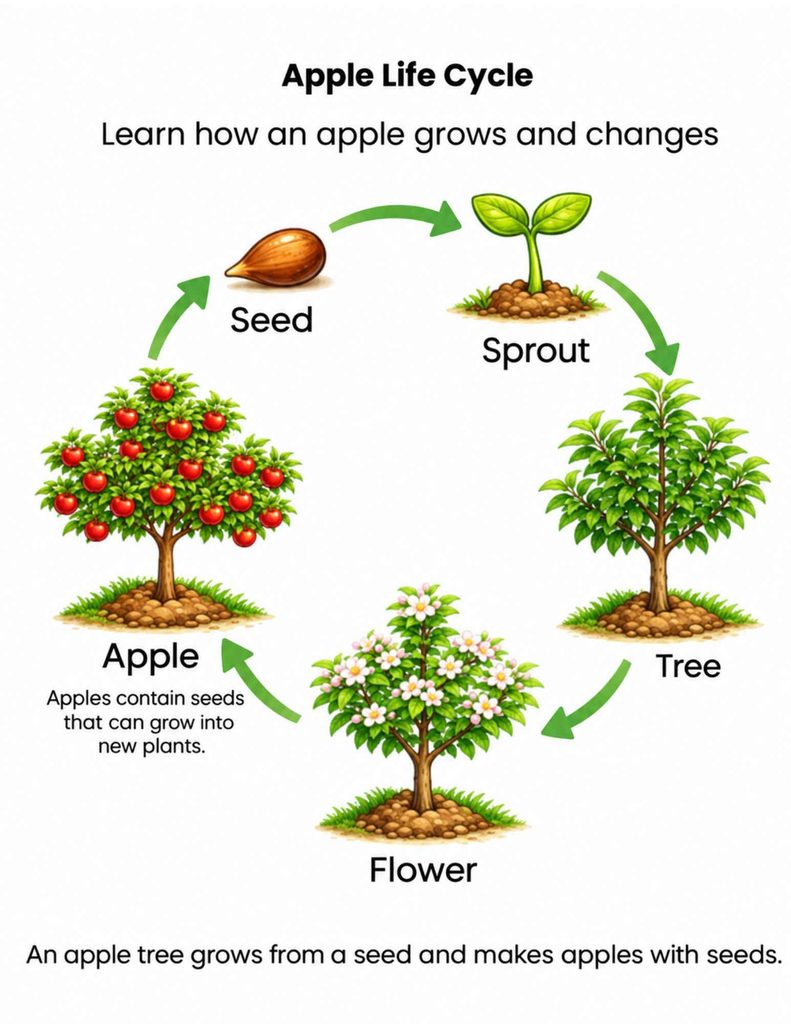
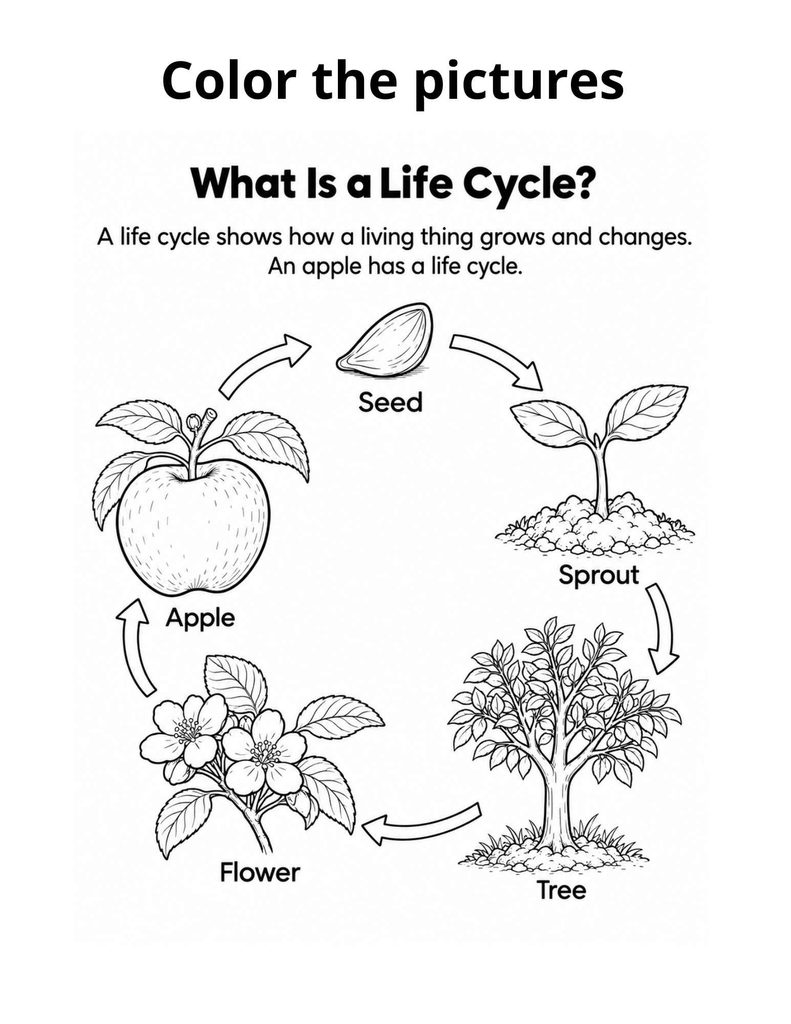
A life cycle shows how a living thing grows and changes over time.
Plants have life cycles, just like animals do.
For an apple tree, we can use a simple five-stage model:
Seed → Sprout → Tree → Flower → Apple → Seeds begin the cycle again
Your printable introduces these same five stages and helps children see that an apple contains seeds that can begin another generation of plants.
The 5 Stages of the Apple Life Cycle
1. Seed
The life cycle begins with a seed.
Apple seeds are found inside the fruit. Each seed contains a tiny developing plant and stored nutrients.
When conditions are suitable, a seed can begin to germinate.
Seeds usually need:
- water
- oxygen
- a suitable temperature
One important science note for children: planting a seed from an apple does not necessarily produce a tree with apples exactly like the apple it came from. Apple trees grown for orchards are often produced using grafting.
For a Grade 3 life-cycle lesson, however, the important concept is simple:
The seed can begin a new plant life cycle.
2. Sprout
After germination begins, the young plant starts to grow.
First, a root grows downward into the soil. Then a small shoot grows upward toward the light.
The young plant begins producing leaves that can capture sunlight.
At this stage, students may hear several words:
sprout – seedling – young plant
For this activity, we use the simple term sprout.
Quick Question
Ask your students:
Why do you think the root grows down while the shoot grows up?
This is a good opportunity to talk briefly about roots collecting water and the leaves growing toward light.
3. Tree
The young apple plant continues growing.
Its stem becomes thicker and develops into a woody trunk. More branches and leaves form until the plant becomes an apple tree.
Leaves are especially important because they use sunlight to help the plant make food through photosynthesis.
For Grade 3 students, a simple explanation is:
Leaves use sunlight, water, and carbon dioxide to help the plant make the food it needs to grow.
Apple trees do not produce apples immediately. A tree must grow and mature before it can produce flowers and fruit.
4. Flower
Before there can be apples, there must be flowers.
Apple trees usually produce beautiful white or pinkish flowers in spring.
These flowers are more than decorations. They are an important part of plant reproduction.
Pollinators such as bees can carry pollen from one flower to another.
Your printable also introduces this important connection: bees pollinate apple flowers and help apples develop. apple life cycle
Easy Pollination Demonstration
Try this simple classroom activity.
Use two paper flowers and a cotton swab.
Put a little colored chalk dust or another safe powder on the center of one flower. Let a student touch it with the cotton swab and then touch the second flower.
Ask:
What happened to the “pollen”?
Students can see how material can move from one flower to another, similar to the way pollinators carry pollen.
5. Apple
After successful pollination and fertilization, part of the flower develops into a fruit.
That fruit is the apple.
As the apple grows, seeds develop inside it.
And those seeds connect the final stage back to the beginning of the life cycle.
That means the apple life cycle is not really a straight line.
It is a cycle:
Seed → Sprout → Tree → Flower → Apple → Seed
This circular relationship is emphasized in the printable activities as well.
Try a Real Apple Observation
One of the easiest ways to make this lesson more meaningful is to give students a real apple.
Instead of only looking at pictures, let them become young scientists and make observations.
Your printable includes an Apple Observation Sheet where students can study both the outside and inside of an apple and count the seeds they find.

Students can record:
Outside of the apple
- color
- shape
- what they notice
Inside of the apple
- flesh color
- core shape
- seeds
Then ask students to count the seeds.
Questions to Ask
You could discuss:
- How many seeds did your apple have?
- Are all the seeds the same size?
- What color are they?
- Where are they located?
- What does the inside of the apple look like?
- Do you think every apple has the same number of seeds?
For a class, you can make this into a simple data activity.
Write each student’s seed count on the board and create a class graph.
That adds a little math to the science lesson.
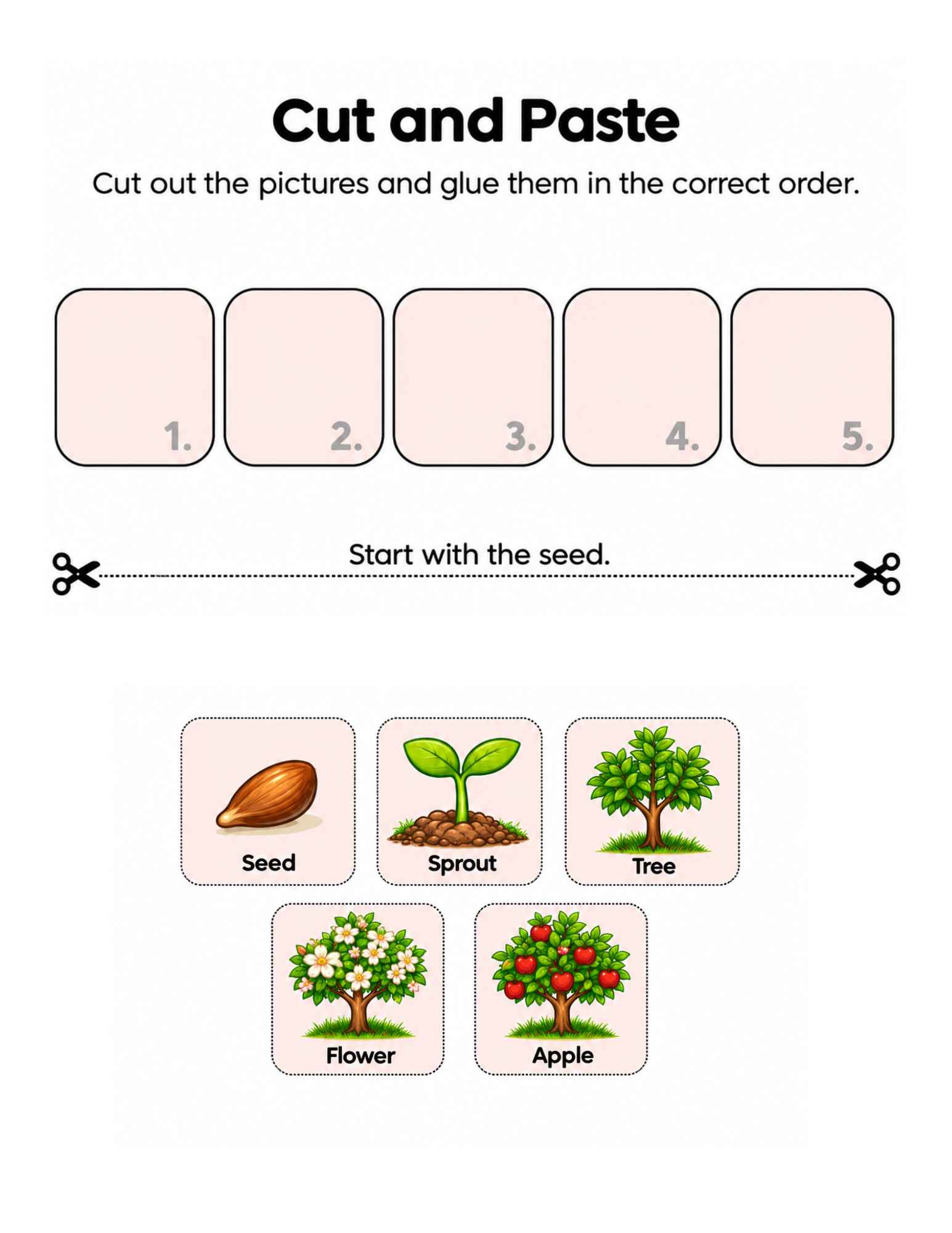
Apple Life Cycle Sequencing Activity
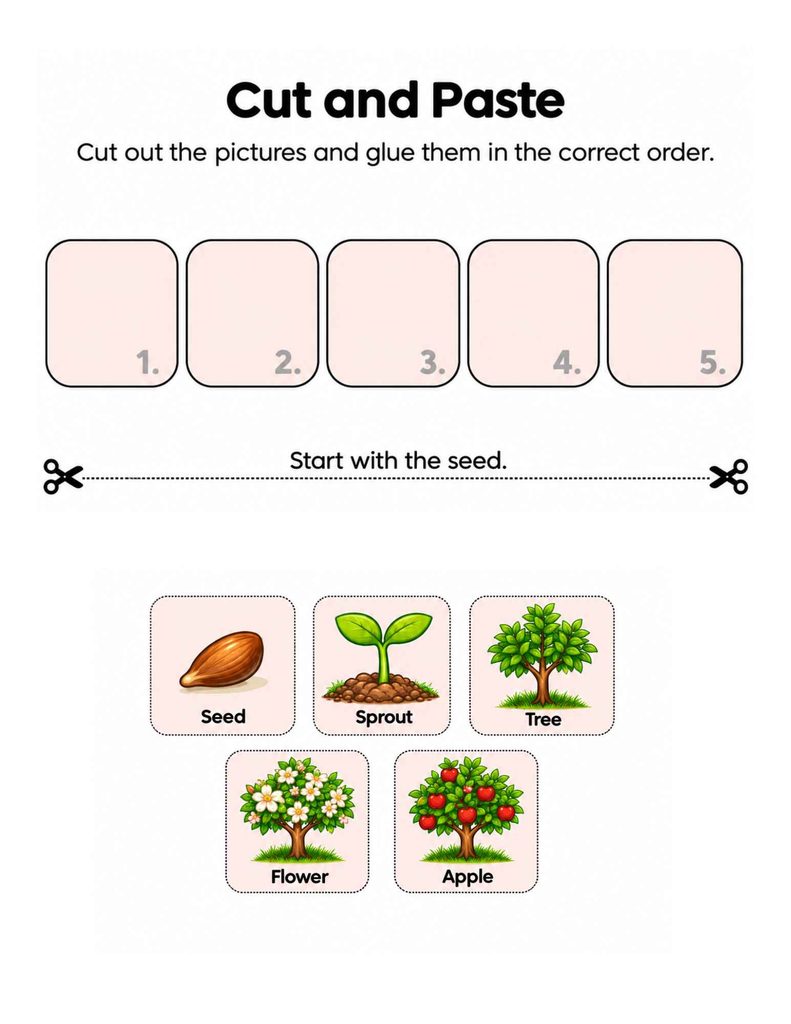
After children understand the stages, have them put the life cycle in order.
The printable cut-and-paste activity uses:
Seed → Sprout → Tree → Flower → Apple
For Grade 3 students, you can extend the activity by asking them to explain each transition.
For example:
Seed → Sprout
The seed germinates and begins growing.
Sprout → Tree
The young plant gets larger and develops roots, a trunk, branches, and leaves.
Tree → Flower
A mature apple tree produces flowers.
Flower → Apple
After pollination and fertilization, the fruit begins to develop.
Apple → Seed
Seeds are found inside the apple and can begin another life cycle.
Draw the Apple Life Cycle
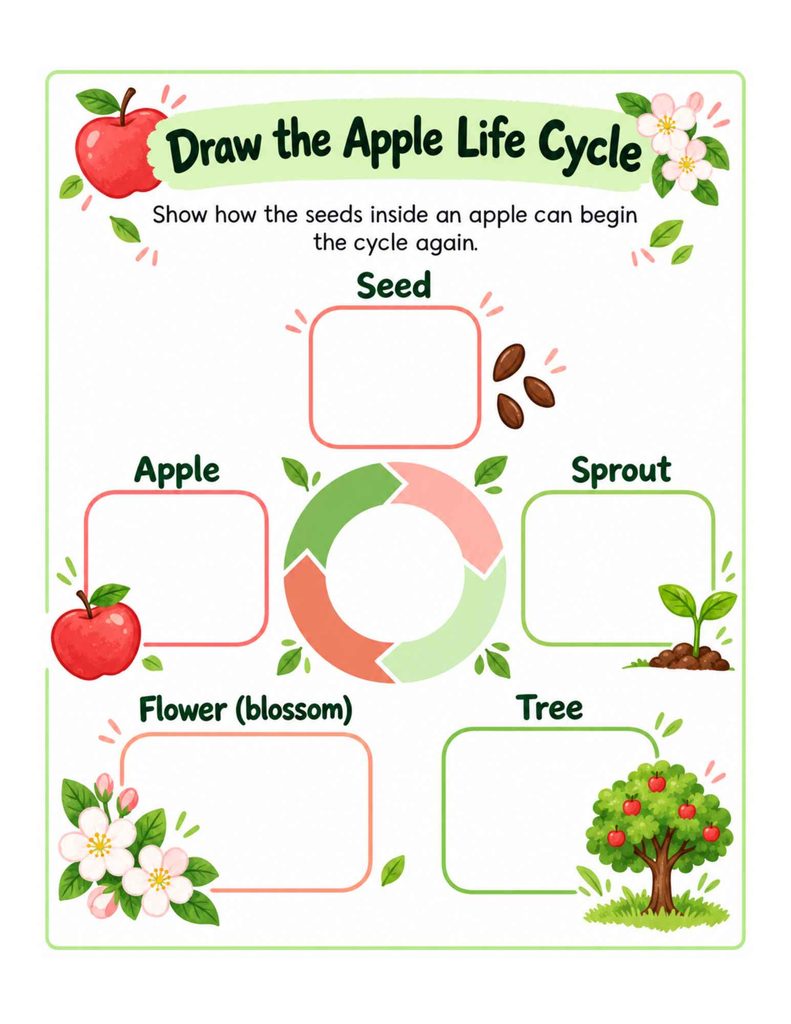
Once students have worked with the pictures, try removing some of the support.
Ask them to draw each stage themselves.
Your printable includes a circular Draw the Apple Life Cycle activity with spaces for Seed, Sprout, Tree, Flower, and Apple.This works particularly well as an informal assessment.
Instead of asking students only to memorize vocabulary, you can see whether they understand how the stages connect.
For an extra Grade 3 challenge, ask students to write one sentence beside each drawing.
For example:
Seed: A seed can begin growing when conditions are right.
Sprout: A young plant grows roots, a stem, and leaves.
Tree: The plant grows into a mature apple tree.
Flower: The tree produces flowers that can be pollinated.
Apple: The flower can develop into an apple containing seeds.
Match the Apple Life Cycle Stages
Another useful activity is matching each stage with what happens during that stage.
The worksheet connects the ideas like this:
- Seed → can grow into a sprout
- Sprout → grows into a tree
- Tree → grows and makes flowers
- Flower → can develop into an apple
- Apple → contains seeds that can grow into new plants apple life cycle
This is useful because children are not simply memorizing the names of five pictures. They must connect each stage with its function or change.
That makes it a stronger science activity.
Easy Apple Life Cycle Activity for Homeschool
This lesson also works well as a short homeschool science activity.
You do not need special supplies.
You Need
- one apple
- a knife for adult use
- paper or a science notebook
- crayons or colored pencils
- the printable apple life cycle worksheets
Start by showing your child the whole apple.
Ask:
“Where do you think the next apple tree could begin?”
Then cut the apple open.
Find the seeds together.
Count them and examine the core.
Next, introduce the five stages:
Seed → Sprout → Tree → Flower → Apple
Finish with the observation sheet or sequencing worksheet.
A complete lesson can easily fit into 30–45 minutes.
Take the Lesson Outside
If you have access to an apple tree, orchard, school garden, or community garden, take the lesson outdoors.
Students can look for:
- trunk
- branches
- leaves
- flower buds
- flowers
- developing fruit
- ripe apples
What children see will depend on the season.
You can also return to the same tree several times during the year and record how it changes.
That turns one apple lesson into a longer seasonal observation project.



Next, explore the [Strawberry Life Cycle for Kids] and compare how apples and strawberries grow and reproduce.https://lolliartscience.com/2026/08/24/strawberry-life-cycle-seeds-runners/
Frequently Asked Questions
The basic apple life cycle can be introduced in early elementary grades. These activities work especially well around Grades 2–3, while older students can explore pollination, germination, plant structures, and fruit development in more detail.
The fruit develops from part of the flower after pollination and fertilization. For elementary students, it is appropriate to summarize this as Flower → Apple, while explaining that pollination happens between these stages.
Apple seeds can germinate and grow into apple trees, although the new tree will not necessarily produce the same kind of apple as its parent. Commercial apple varieties are commonly reproduced using grafting.
Yes. The lesson can be completed with an apple, simple art supplies, and the worksheets. The observation activity is particularly useful for homeschool science because children can investigate a real object rather than relying only on a diagram.
Final Thought
An apple is something children already know, which makes it a useful starting point for learning about plant life cycles.
By observing a real apple, finding its seeds, sequencing the stages, and drawing the cycle, students can discover an important idea:
Plants grow, reproduce, and begin the cycle again.
And the next time they bite into an apple, they may notice that a whole new plant life cycle is hiding inside.
Ready to Teach the Apple Life Cycle?
Save prep time with a complete set of printable activities for classroom or homeschool use.
Explore the Apple Life Cycle Worksheets
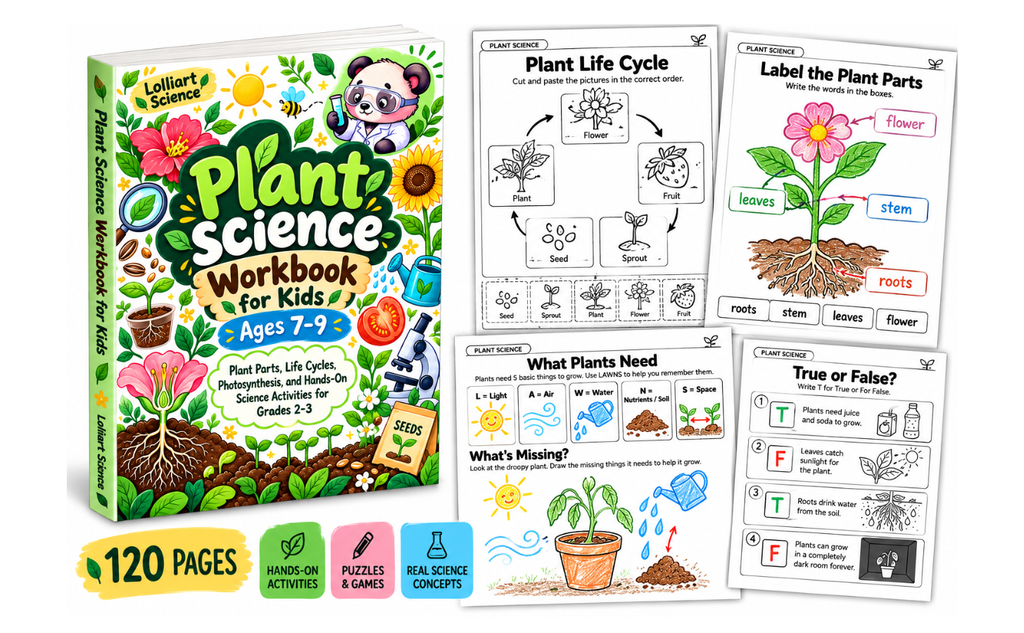
Explore the fascinating world of plants with engaging, age-appropriate science activities! Children ages 7–9 discover what plants need to grow, explore colorful bulb plants, and learn how new plants develop from seeds. Illustrated reading passages, word searches, coloring activities, and step-by-step diagrams make important plant science concepts easy to understand and fun to explore.