Category: Elementary Science & Life Biomes / Hands-on Craft Activities
Why Use an Aquarium to Teach Habitats?
Introducing young children to animal habitats and biology works best when grounded in concrete, visual experiences. While biomes like rainforests or oceans are exciting, an aquarium is an accessible micro-habitat that children can observe closely.
An aquarium is a managed artificial ecosystem where students can observe how living organisms, such as fish and plants, interact with non-living environmental factors, including water, light, temperature, and substrate. These biotic and abiotic components work together to create the conditions organisms need to survive.
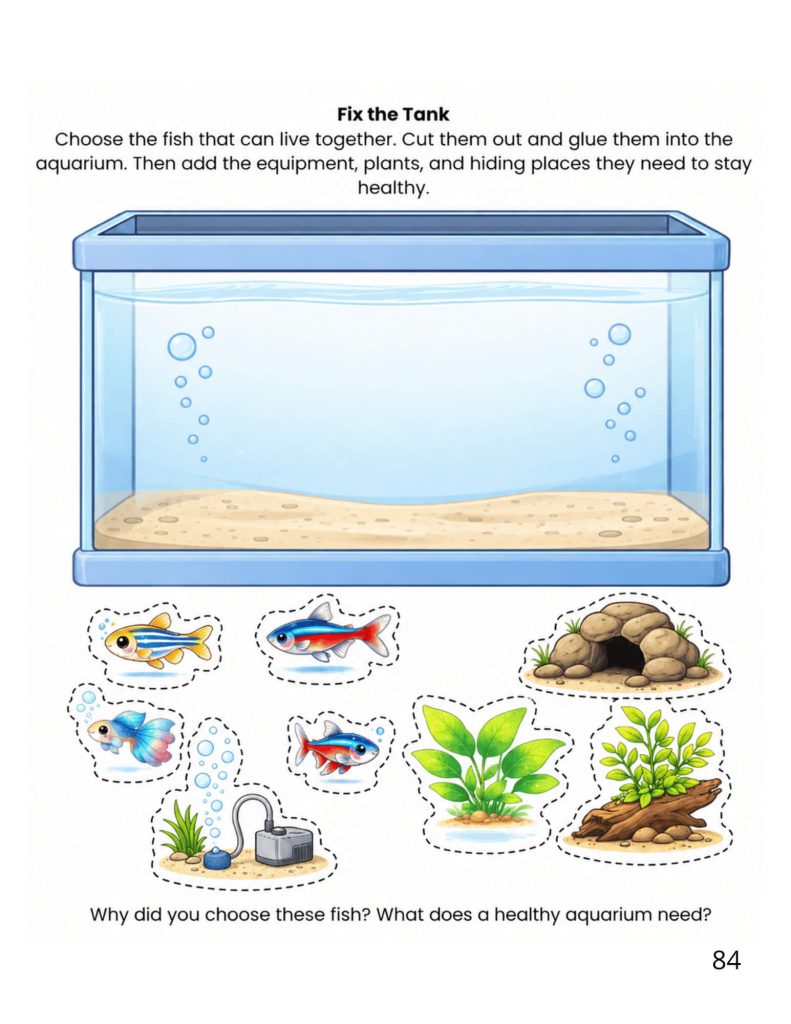
Core Biological Concepts (K–Grade 3 Level)
A. Basic Needs of Aquatic Animals
- Clean & Treated Water: Free from harmful chlorine/chemicals and kept at a stable temperature.
- Food & Nutrition: Right balance of fish food without overfeeding.
- Oxygen: Supplied by live plants and water movement from bubblers/filters.
- Shelter & Hiding Places: Caves, rocks, and plants that help fish feel safe and reduce stress.
B. Biotic vs. Abiotic Components
- Biotic (Living): Fish, snails, shrimp, live plants.
- Abiotic (Non-Living): Water, gravel/sand substrate, rocks, filter, bubbles, light.
3. Step-by-Step Hands-On Craft Activity
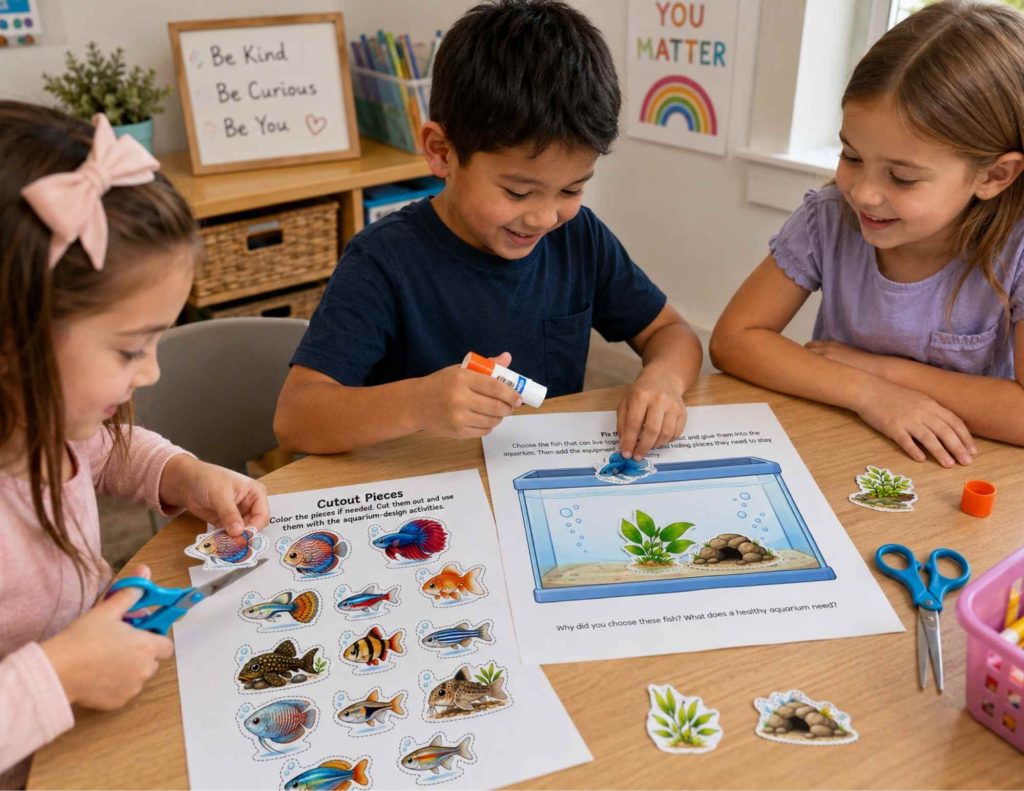
This hands-on craft translates scientific concepts into a visual art project ideal for Kindergarten through 3rd Grade:
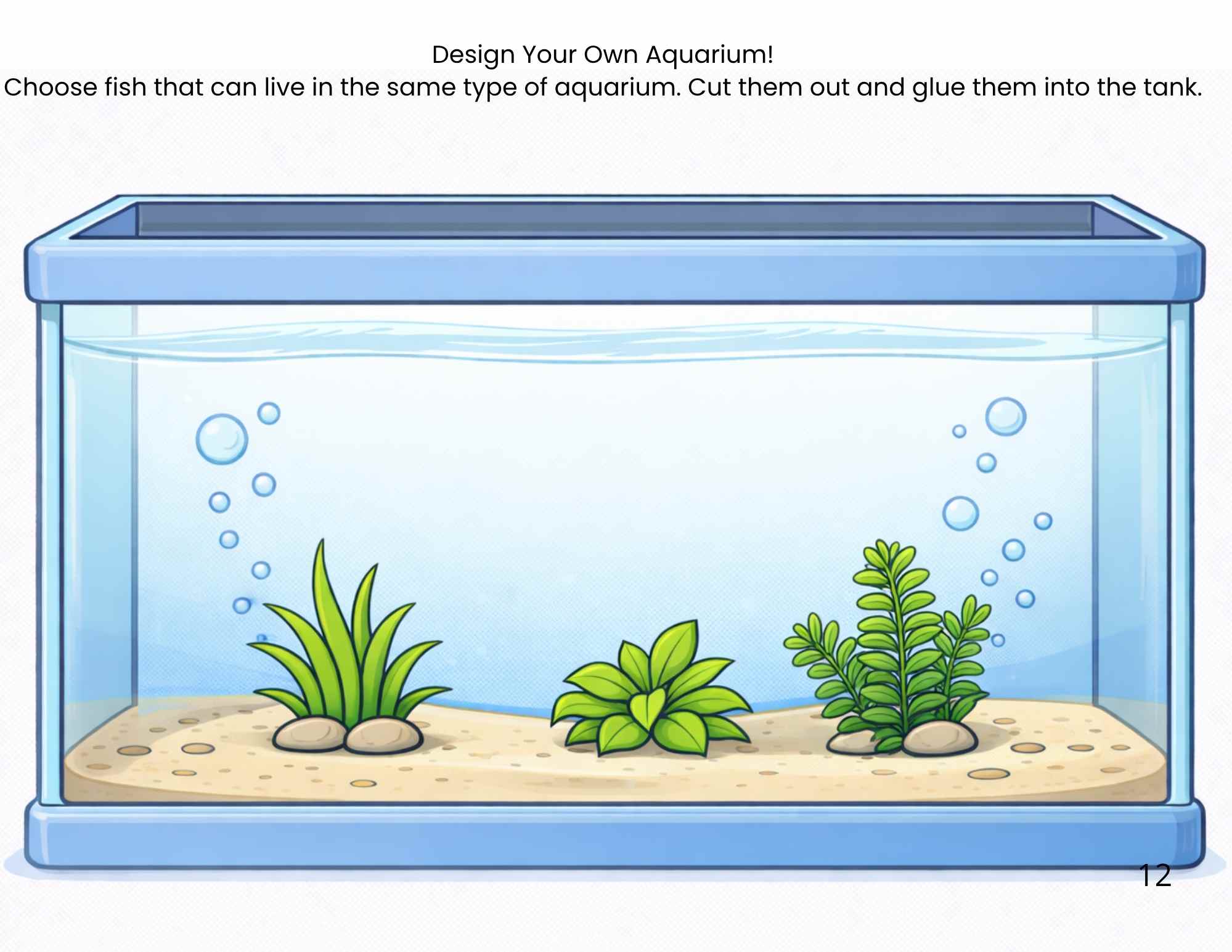
- Building the Tank Base: Use a blue paper plate or cardboard tank template. Glue gravel/sand or colored paper scraps at the bottom for substrate.
- Adding Plants & Caves: Glue green paper strips, silk leaves, or yarn to represent aquatic plants, and add small stone shapes/castles for hiding spots.
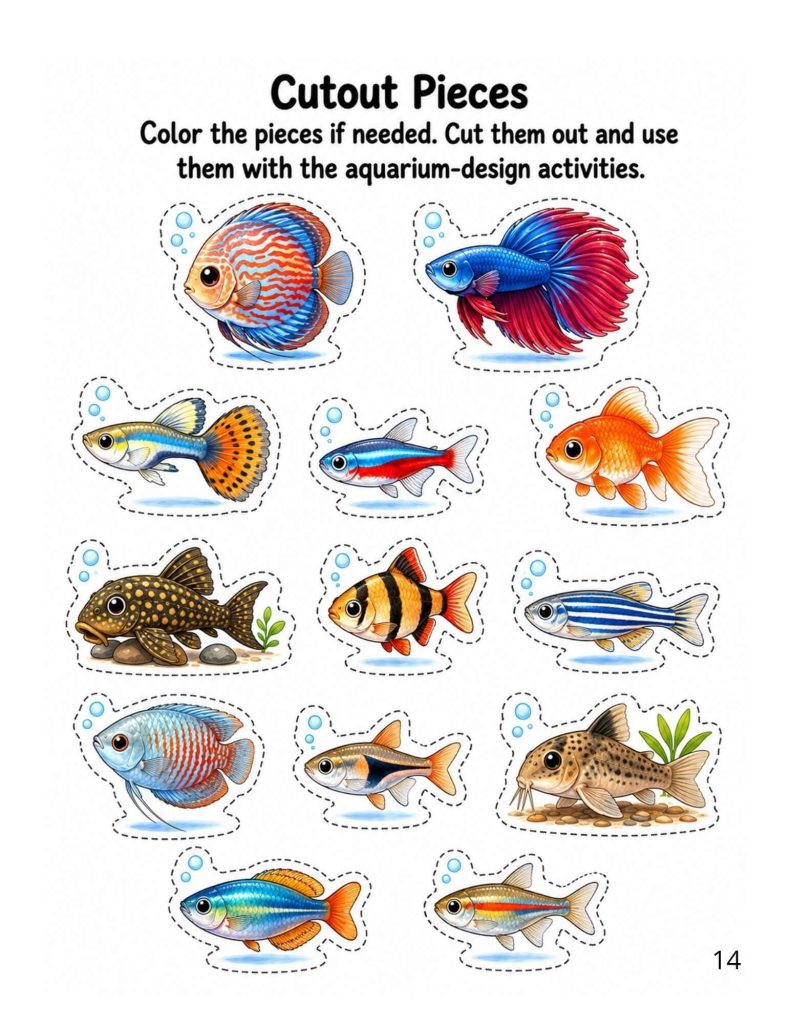
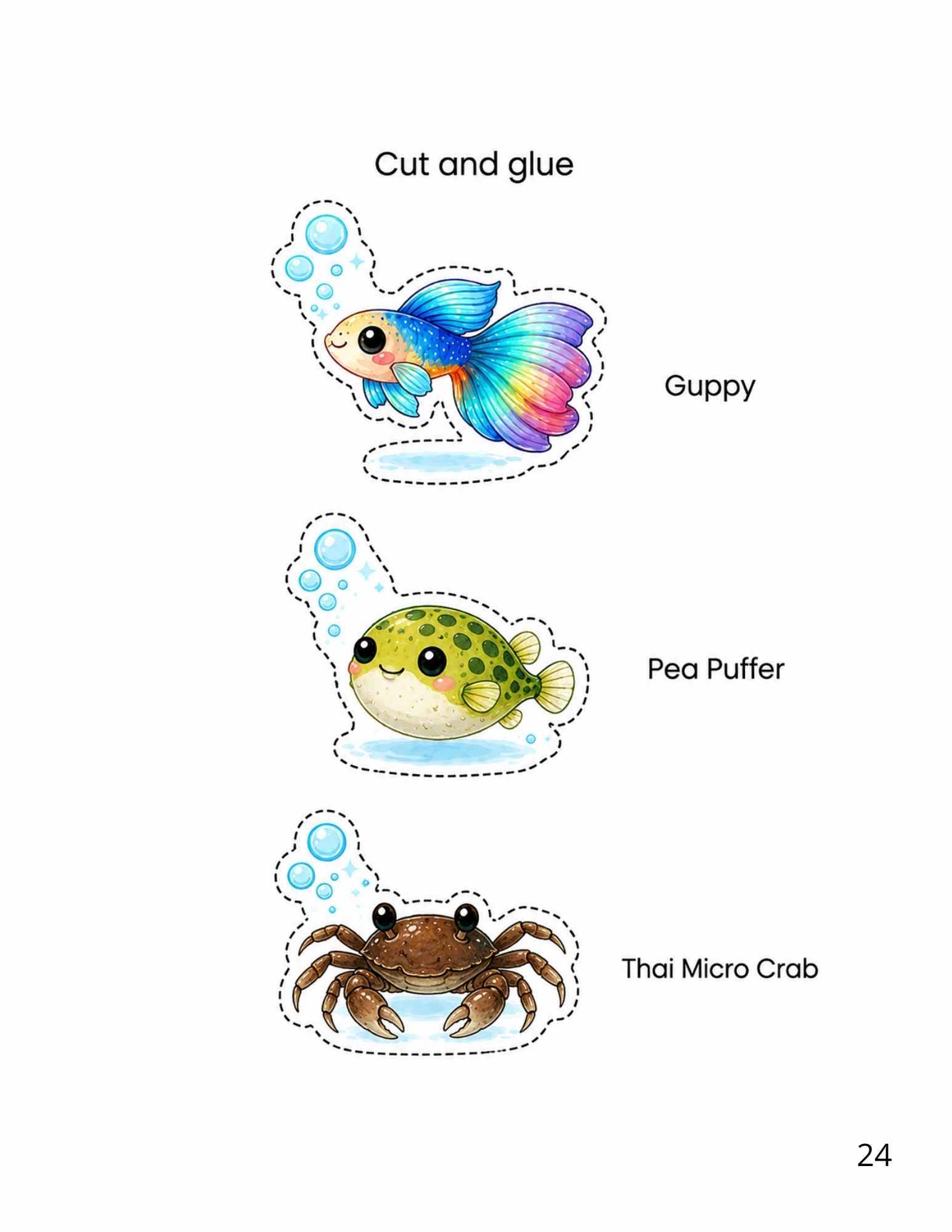
- Adding Fish & Aquatic Life: Color, cut out, and attach fish templates.
- Labeling Habitat Elements: Have students attach label tags (
Clean Water,Food,Shelter,Oxygen) to show their understanding of animal needs.
4. Key Lessons in Responsible Care
Unlike natural biomes, an aquarium requires human care to function:
- Daily Routines: Feeding fish once or twice daily, observing fish health.
- Weekly Maintenance: 15–20% partial water changes, checking filter operations, cleaning glass.
- Ecosystem Balance: Explaining how overfeeding ruins water quality and affects fish health.
Highlights of the Generated Printable PDF File:
- Professional Layout: Header banner, callout boxes, structured summary tables, and custom vector aquarium diagram.
- Pedagogical Structure: Clear learning objectives, biotic/abiotic element tables, step-by-step instructions, and discussion prompts.
- Ready-To-Use Printable: Optimized for printing or sharing as an educational blog download.
Frequently Asked Questions About Teaching Animal Habitats with an Aquarium
Children can learn that animals need food, water, oxygen, shelter, and suitable environmental conditions to survive. They can also observe how living and non-living parts work together within a habitat.
An aquarium is an artificial ecosystem created and maintained by people. It represents many features of a natural aquatic habitat, but it depends on human care, including feeding, cleaning, water treatment, and temperature control.
Biotic components are the living parts of the aquarium, such as fish, snails, shrimp, and aquatic plants. Abiotic components are the non-living parts, including water, light, rocks, gravel, temperature, and the filter.
Fish need clean, properly treated water, enough oxygen, suitable food, a safe temperature, and places to shelter. Their specific needs may vary depending on the species.
An aquarium gives children a small, observable example of a habitat. Students can examine its parts closely and discuss how each element helps aquatic animals meet their basic needs.
Yes. Students can create a paper aquarium model using printable fish, plants, rocks, gravel, and habitat labels. Photographs, books, or aquarium videos can also provide useful visual references.
The activity is designed for Kindergarten through 3rd Grade. Younger students can focus on identifying basic animal needs, while older students can classify biotic and abiotic components and explain how they interact.
The craft allows students to build a visual model of an aquatic habitat. As they add water, plants, shelter, food, and animals, they connect each habitat component to the needs of living organisms.
Ask students what might happen if the aquarium had no clean water, oxygen, food, plants, or hiding places. They can also explain which parts are living, which are non-living, and how people help keep an aquarium healthy.
References and Further Reading
- National Geographic Education: Ecosystem — An introduction to ecosystems and their biotic and abiotic components.
- Next Generation Science Standards: K-LS1-1 — Using observations to identify what plants and animals need to survive.
- University of Florida IFAS Extension: Chlorine—Friend or Foe? — Information about chlorine, chloramine, and their effects on fish and other aquatic organisms.
- University of Florida IFAS Extension: Ammonia in Aquatic Systems — Explains how fish waste and uneaten food can affect ammonia levels and water quality.