Birds are among the most colorful and fascinating animals in the natural world. From tiny hummingbirds and familiar backyard visitors to powerful eagles, tropical parrots, graceful water birds, and giant ostriches, every species offers something new for students to discover.
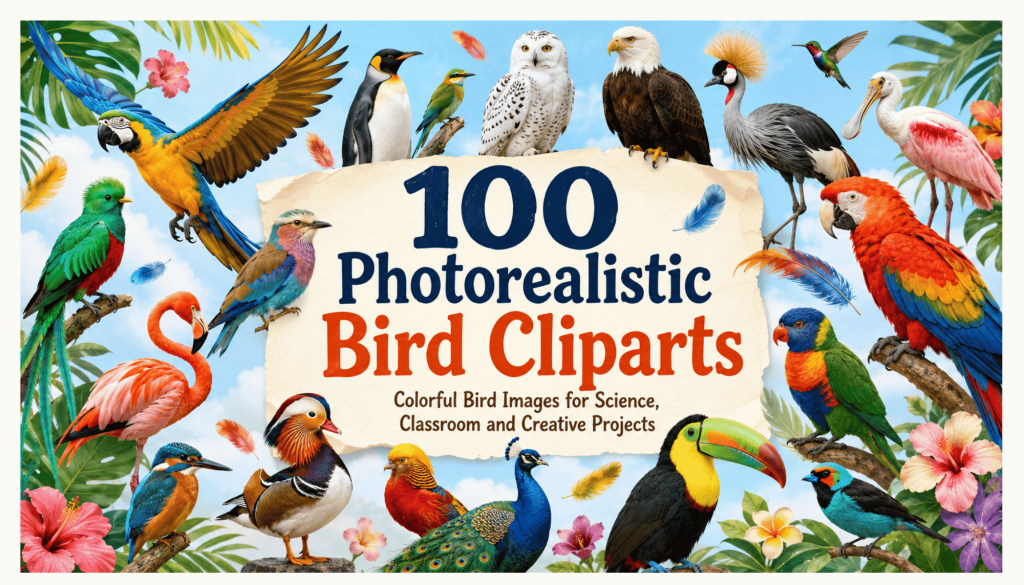
This collection of photorealistic bird clipart includes 100 realistic bird images designed for science lessons, habitat studies, worksheets, and creative classroom projects.
The collection includes an exciting variety of species, such as colorful macaws, toucans, flamingos, owls, penguins, songbirds, birds of prey, water birds, tropical birds, and flightless birds. Each bird is presented as an individual clipart image, making it easy to place, resize, layer, and combine the images in many different types of educational and creative projects.
Why Use Photorealistic Bird Clipart?
Cartoon-style illustrations can be fun, but realistic images offer additional learning opportunities. Photorealistic bird cliparts help children notice the real colors, shapes, feathers, beaks, legs, wings, and other physical features of different species.
Students can compare birds more carefully and begin to recognize how their appearances relate to their habitats and behaviors.
For example, children may notice:
- the large beak of a toucan,
- the hooked beak of an eagle,
- the long legs of a flamingo,
- the webbed feet of a duck,
- the colorful feathers of a peacock,
- or the compact body shape of a penguin.
These visual details make the cliparts especially useful for science lessons, animal classification activities, research projects, and nature studies.
Research with young children suggests that pictorial realism can support learning when students need to connect an image with a real-world object or animal. In one developmental study, children learned more animal labels and facts from a book containing realistic photographs than from versions using less realistic drawings or distracting interactive features. The researchers concluded that realistic illustrations can support young children’s learning from picture books.
A broader review of picture-book research also explains that images which closely resemble the objects they represent may help young learners recognize connections between printed images and the real world. This makes photorealistic bird images especially useful for identification, observation, vocabulary development, and introductory animal science activities. Read more about how pictorial realism can influence children’s learning and transfer.
Create Engaging Bird Flashcards
One of the easiest ways to use the cliparts is to create a set of bird flashcards.
Teach Bird Habitats
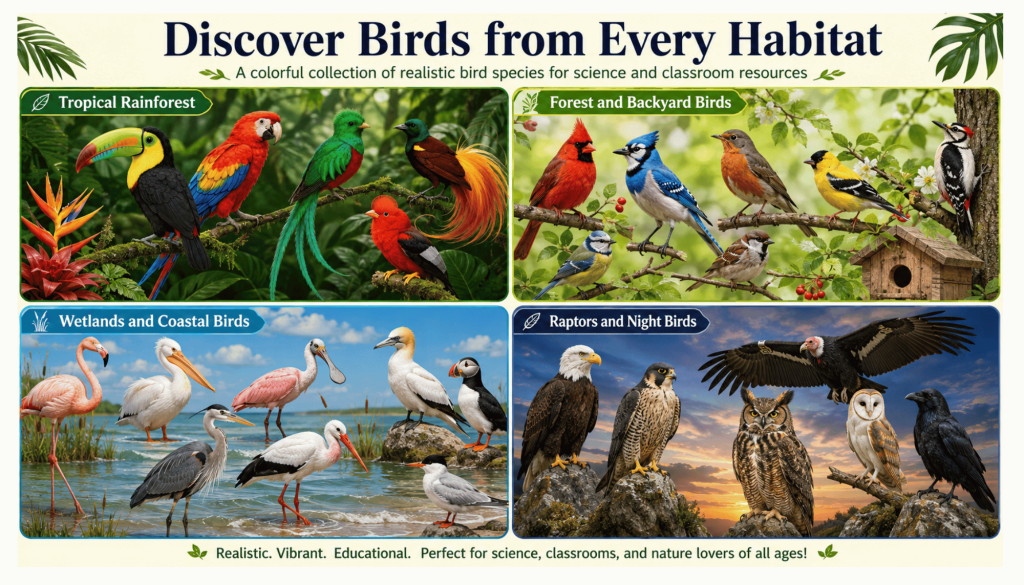
Birds live in an incredible variety of environments. This makes them perfect for habitat lessons.
Students can sort the bird cliparts into categories such as:
- tropical rainforest,
- woodland and forest,
- backyard and garden,
- wetland,
- coastal habitat,
- grassland,
- desert,
- mountains,
- Arctic regions,
- and urban environments.
A toucan or macaw can be placed in a tropical rainforest scene, while a puffin or tern can become part of a coastal habitat display. Flamingos, herons, pelicans, and spoonbills are excellent additions to wetland activities, while owls, eagles, falcons, and ravens can be used in forest, mountain, or nighttime scenes.
Teachers can use the images to create large habitat posters or allow students to build their own habitat dioramas, lapbooks, notebooks, and digital scenes.

Practice Sorting and Classification
The bird images can also support early classification skills.
Students can sort birds according to visible characteristics, including:
- large and small birds,
- colorful and neutral-colored birds,
- flying and flightless birds,
- birds with long or short beaks,
- birds with long or short legs,
- water birds and land birds,
- birds of prey and songbirds,
- nocturnal and daytime birds,
- wild birds and familiar domestic birds.
These activities encourage careful observation and help students understand that animals can be grouped in many different ways.
A simple sorting mat can turn the cliparts into an interactive science center. Students can place printed bird cards into the correct categories and explain the reason for each choice.
Observing and comparing realistic bird images can also support the observational work described in NGSS 2-LS4-1, which asks students to make observations of plants and animals—including observations made through media—to compare the diversity of life in different habitats.
Design Science Worksheets and Printables
Photorealistic cliparts can make ordinary worksheets more attractive and easier to understand.
The bird images can be added to:
- labeling activities,
- matching worksheets,
- cut-and-paste tasks,
- bird anatomy pages,
- habitat sorting worksheets,
- compare-and-contrast activities,
- writing prompts,
- observation sheets,
- research pages,
- and informational reading passages.
For a bird anatomy activity, students might label the beak, wings, feathers, tail, eyes, feet, and legs.
For a compare-and-contrast task, they could examine an owl and an eagle, a penguin and a puffin, or a hummingbird and an ostrich.
The images also work well as visual prompts for nonfiction writing. Students can choose a bird, observe its physical features, and write what they notice before beginning a longer research project.

Make Vocabulary Cards and Word Walls
Bird vocabulary can be challenging, especially for younger students and English language learners. Visual support helps make new words easier to remember.
Use the cliparts to create vocabulary cards for words such as:
- beak,
- feathers,
- wings,
- talons,
- nest,
- eggs,
- migration,
- predator,
- prey,
- habitat,
- wetland,
- rainforest,
- and flightless bird.
Species cards can also be added to a science word wall. Students can refer to the display while completing writing activities, participating in discussions, or working on research projects.
Because the images are realistic, they provide a clear visual connection between the word and the actual animal.
Create Classroom Games and Science Centers
The bird cliparts can be turned into many reusable classroom games.
Possible activities include:
Bird Bingo
Add different bird species to bingo boards. Call out the bird names, habitats, colors, or identifying features and ask students to find the correct image.
Bird Memory Game
Print two copies of selected birds and use them to create a matching game.
Guess the Bird
Show part of a bird image or read a series of clues. Students must identify the correct species.
Habitat Challenge
Give students a bird card and ask them to place it in the correct habitat.
Bird Classification Race
Students work in teams to sort birds into groups such as water birds, birds of prey, songbirds, parrots, or flightless birds.
Find the Difference
Choose two species and ask students to list similarities and differences in their appearance.
These activities can be used during science centers, morning work, early-finisher time, review lessons, or indoor activity periods.
Decorate Bulletin Boards and Classroom Displays
Bird cliparts are not limited to worksheets. They can also be used to create colorful classroom decorations.
Possible bulletin board themes include:
- Birds Around the World
- Welcome to Our Learning Nest
- Spread Your Wings and Learn
- Our Class Is Full of Color
- Amazing Bird Adaptations
- Birds of Every Habitat
- Soaring into a New School Year
- Watch Our Knowledge Take Flight
The birds can be resized and arranged around titles, student work, vocabulary cards, maps, or habitat scenes.
Because the collection contains so many different species, it is easy to create a varied display without repeating the same few images.
Create Digital Learning Materials
The individual cliparts are also useful for digital resources.
They can be added to:
- digital worksheets,
- interactive slides,
- online matching activities,
- digital task cards,
- presentation slides,
- virtual classroom activities,
- educational games,
- and video lessons.
Students can drag and drop birds into the correct habitat, sort species into categories, or build a digital food chain.
Individual clipart files make it simple to layer the birds over different backgrounds and adjust their size to fit each project.
Add Birds to Creative Projects
These realistic bird images can also be used outside traditional science lessons.
They are suitable for:
- nature journals,
- scrapbook pages,
- classroom newsletters,
- library displays,
- printable bookmarks,
- greeting cards,
- labels,
- invitations,
- posters,
- calendars,
- reward charts,
- and birdwatching logs.
Students might create their own field guide, design a bird sanctuary poster, illustrate a poem, or make a travel journal featuring birds from different continents.
The same collection can support science, geography, reading, writing, art, and vocabulary development.
Explore an Incredible Variety of Birds
One of the greatest advantages of this collection is its variety.
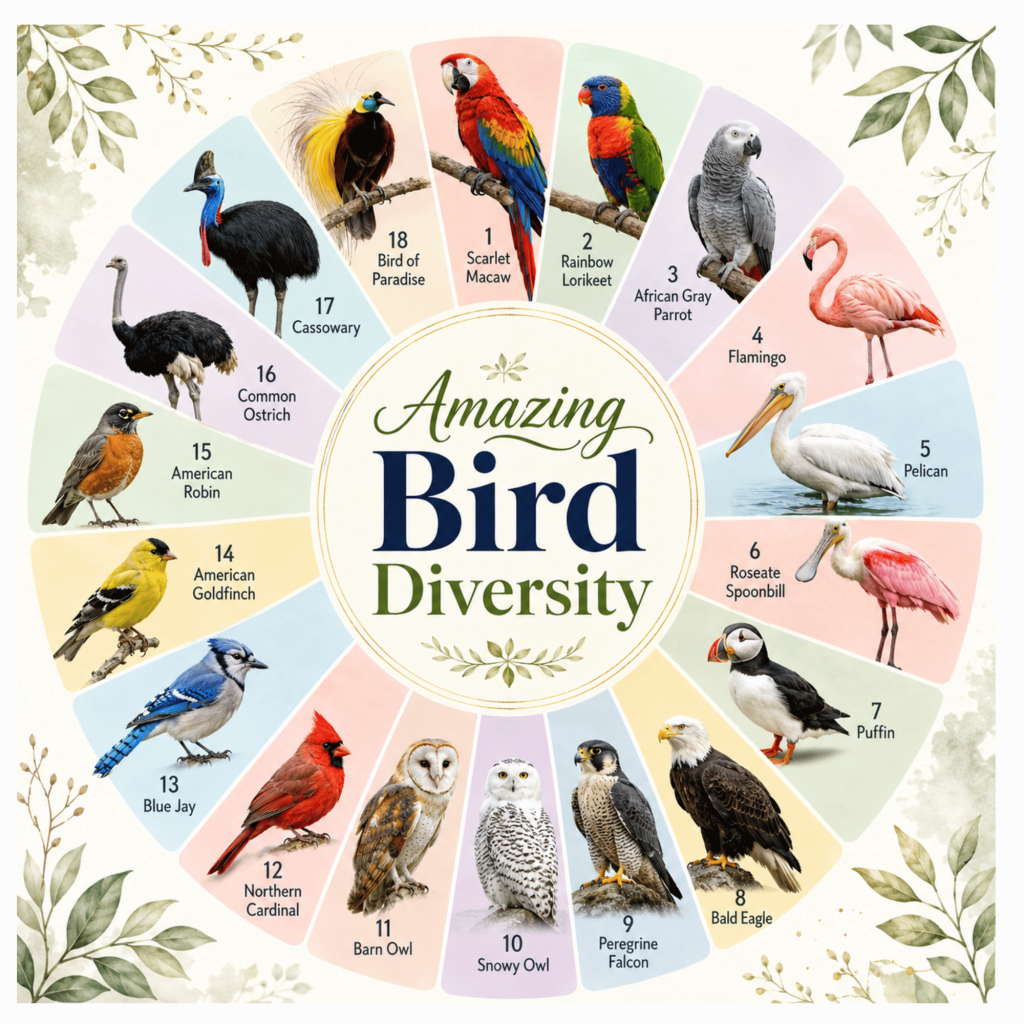
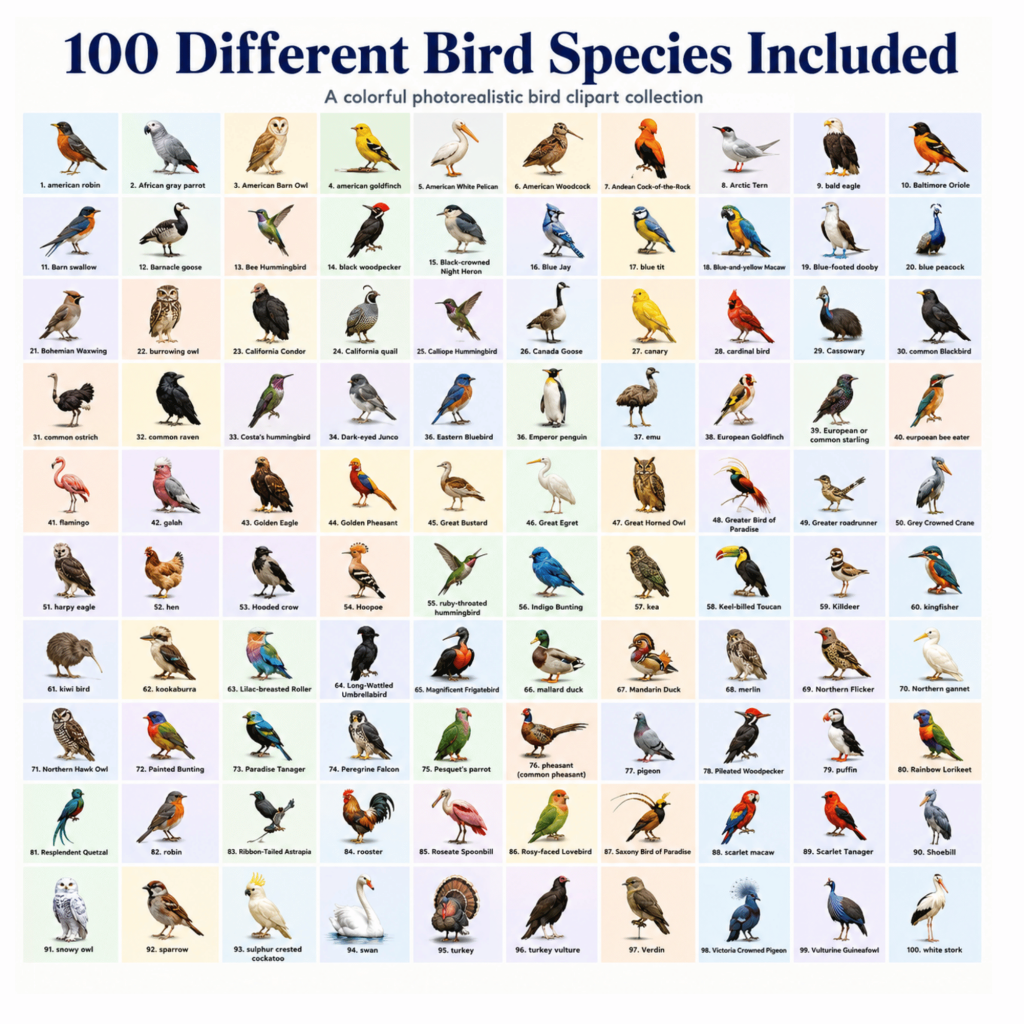
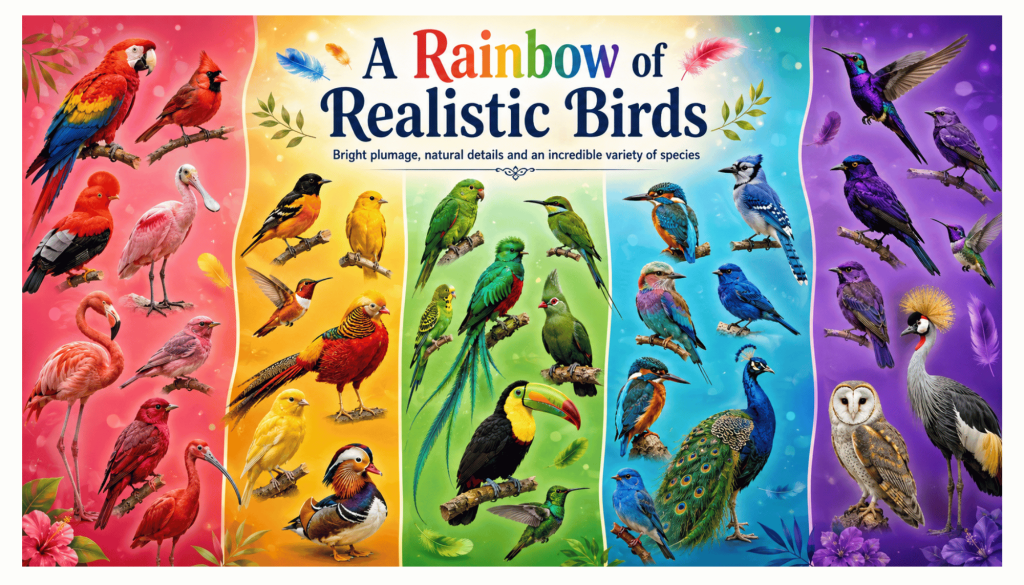
Students can compare a tiny Bee Hummingbird with a Common Ostrich, explore colorful tropical species such as the Keel-billed Toucan and Scarlet Macaw, or study impressive birds of prey such as the Bald Eagle and Peregrine Falcon.
The collection also includes familiar birds such as robins, sparrows, ducks, pigeons, and Blue Jays, along with more unusual species such as the Cassowary, Shoebill, Resplendent Quetzal, Victoria Crowned Pigeon, and birds of paradise.
This combination of familiar and less familiar birds encourages curiosity and gives students opportunities to discover animals they may never have seen before.
A Flexible Resource for Teachers and Creators
A large bird clipart collection can be reused throughout the school year.
The same images may appear in a habitat lesson, a vocabulary activity, a science game, a bulletin board, and a student research project. Teachers can select only the birds needed for a particular topic or combine many species in larger classification and biodiversity activities.
Whether you are preparing a quick printable, designing a complete science unit, creating digital activities, or decorating your classroom, these 100 photorealistic bird cliparts provide a colorful and flexible visual resource.
From tiny hummingbirds to giant ostriches, the collection helps students discover the remarkable diversity of the bird world—one species at a time.
Ready to Explore the World of Birds?
Use these realistic bird images to create engaging science lessons, colorful classroom resources, interactive games, research projects, and creative nature activities.
With 100 different species to explore, the possibilities are almost endless.
Realistic bird images encourage students to observe visible characteristics such as beak shape, body size, feet, wings, feathers, and color patterns. Students can use these details to compare, identify, describe, and classify different bird species.
The images can be adapted for Preschool, Kindergarten, and elementary classrooms. Younger students can practice matching and visual identification, while older learners can use them for classification, habitat studies, research projects, and informational writing.
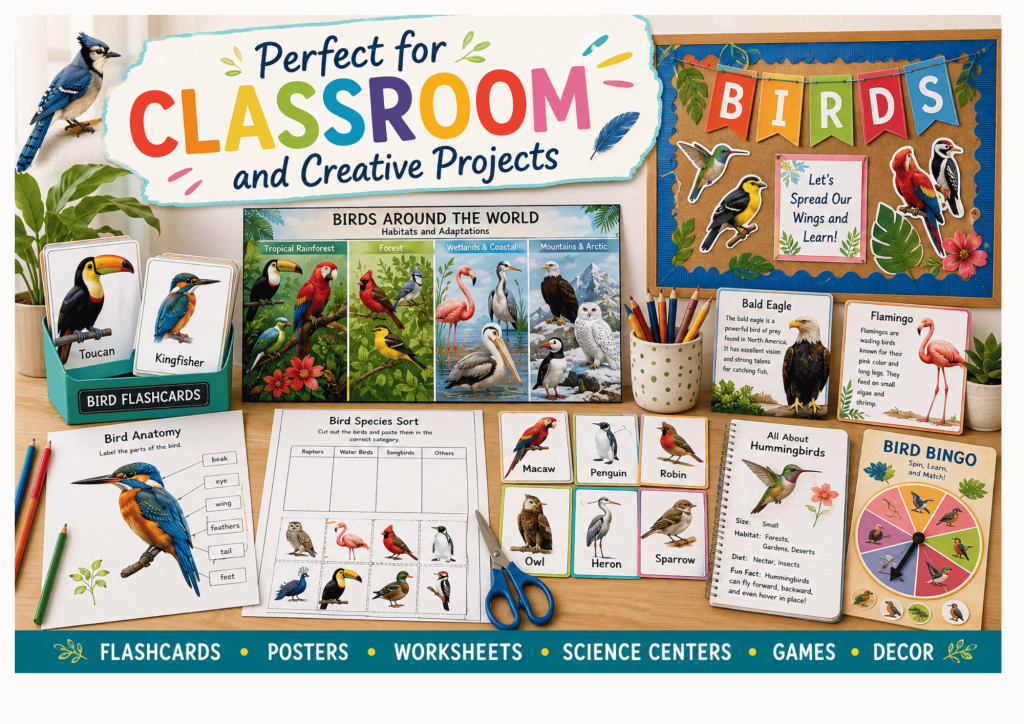
Teachers can use the images to create flashcards, vocabulary cards, matching games, sorting mats, science worksheets, habitat scenes, research pages, task cards, bulletin boards, digital activities, and bird identification games.
Yes. Students can sort birds into habitats such as forests, wetlands, grasslands, deserts, coastal areas, tropical rainforests, and Arctic regions. Teachers should provide additional habitat information because an isolated bird image does not show where the species lives.
Yes. Students can group the birds by visible features, including beak shape, leg length, body size, color pattern, feet, or wing shape. They can also classify them as water birds, birds of prey, songbirds, parrots, or flightless birds.
No. Photorealistic clipart works best as a visual learning aid. When possible, combine the images with wildlife photographs, videos, field guides, or observations of real birds so students can also explore natural behavior, movement, habitats, and variation within a species.
The images can support activities related to NGSS 2-LS4-1, particularly when students observe and compare the diversity of birds found in different habitats. A complete NGSS-aligned lesson should also include student observations, discussion, evidence collection, and comparison.
The complete collection contains 100 different bird images, including familiar backyard birds, tropical birds, water birds, birds of prey, songbirds, parrots, penguins, and flightless birds.
The complete collection is available on Teachers Pay Teachers.
Professional References and Further Reading
- Less Is More: How Manipulative Features Affect Children’s Learning from Picture Books – NIH/PubMed Central
- The Role of Book Features in Children’s Transfer of Information to Real-World Contexts
- Transfer Between Picture Books and the Real World by Very Young Children
- Teaching with Objects and Photographs – Indiana University
- Four Keys to Bird Identification – Cornell Lab of Ornithology
- NGSS 2-LS4-1: Observing Life in Different Habitats